From Handwritten Verses to Hallmark, the History of Valentine Cards
More than 145 million Valentine’s cards still go out each year, because the best ones have always been personal.
The oldest Valentine cards were already personal
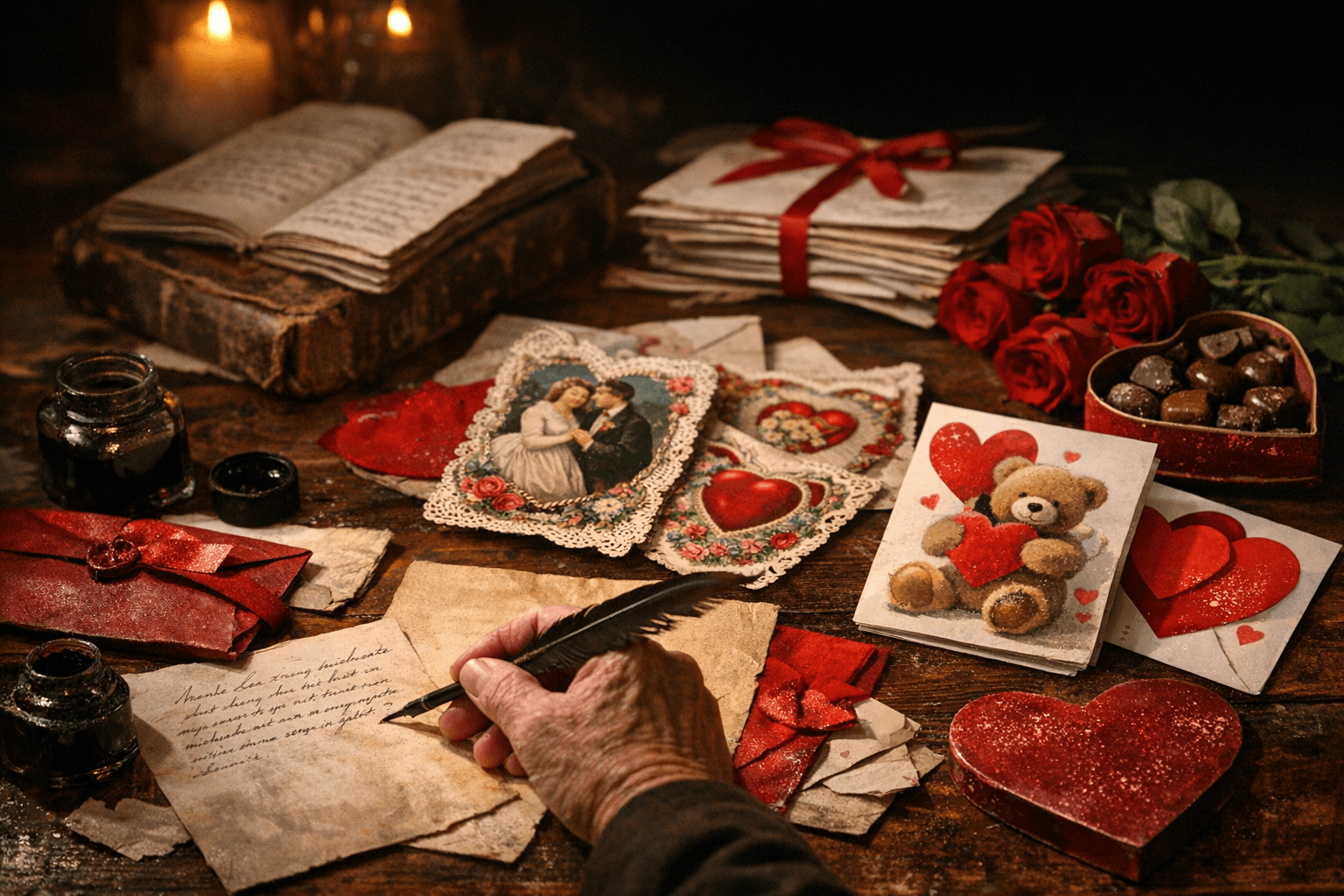
The best Valentine cards have always been personal, which is why they still work in the age of texts and e-cards. Britannica places formal Valentine messages in the 1500s, and TIME describes the earliest English, French and American valentines as little more than a few handwritten lines of verse on paper. By the 18th century, makers were already decorating them with pictures, proof that customization was never a modern marketing trick. It was the whole point.
That history matters because it solves the biggest modern Valentine problem: not how to spend more, but how to sound like yourself. Guides existed early on to help people write something more original and heartfelt, which means the anxiety around the blank card is centuries old. The pressure is not new. The fix is also not new.
How handmade cards became a real business
The leap from private note to commercial object happened in stages. Britannica says commercially printed valentines were being used by the late 1700s, and the first commercial valentines in the United States were printed in the mid-1800s. Fisher Company in New York introduced domestically printed valentines in 1835, and by 1860 greeting card production in commercial quantities had begun, with valentines among the first offerings.
The turning point most people remember is Esther Howland. In 1849, the first American-made valentines were sold in Worcester, Massachusetts, and Howland was the one behind them. The Smithsonian National Postal Museum identifies her as the “Mother of the American Valentine,” and the title fits because she understood the emotional logic of the form. Her father’s store sold imported English valentines, and after graduating from Mount Holyoke College in 1847, she began experimenting with her own designs using imported paper lace and floral cut-outs. At age 19, after receiving an elaborate European valentine, she saw what the American market was missing: not sentiment, but better presentation of it.
That is the real lesson in all the lace and paper. Even when Valentine cards became commercial, their value still came from looking and feeling chosen.
Hallmark did not invent sentiment, it standardized it
Once the card industry scaled up, the tradition became more familiar and more uniform. J.C. Hall began selling Valentine postcards in 1910. Hallmark added greeting cards in 1912, valentines in 1913, began printing its own designs in 1915, and had its first Valentine’s Day cards on store shelves in 1916. By then, the holiday was no longer a niche craft market. It was a national habit.
That shift helps explain why so many Valentine cards now feel polished but oddly interchangeable. The industry learned how to package romance, but the packaging was never the same thing as meaning. A mass-produced card can still work beautifully if it carries one line that sounds specific to the person receiving it. The moment it slips into generic mush, it loses the whole point of the tradition.
How to write a Valentine card that actually feels like you
If you want your note to land, borrow from the oldest version of the card, not the newest. The earliest valentines were short, handwritten and often direct. The 18th-century versions added pictures. The most memorable modern cards do the same thing: they make one clear emotional point and then give it a detail that belongs only to your relationship.
Start here:
1. Name one real memory. Pick a dinner, trip, joke, playlist, or tiny habit that belongs to the two of you.
Specificity beats eloquence every time because it proves you were paying attention.
2. Choose one feeling, not five. Say what you admire most, whether that is their steadiness, their humor, or the way they make ordinary days feel lighter.
A card that tries to praise everything usually ends up saying nothing.
3. Add one sensory detail. The old handmade valentines worked partly because they were embellished with pictures; your modern version can do the same with a small image or physical detail.
A hallway full of winter coats, coffee on a Saturday morning, the exact song that played in the car, all of that makes the note feel lived-in.
4. End with something that sounds like your life. A promise, an inside joke, or a plan for the next month will always beat a stock closing line.
The final sentence should sound like it could only have come from you.
The beauty of Valentine cards is that they have never required grandeur. The earliest English, French and American examples were often only a few lines long, and the decorated handmade cards that followed still relied on the same basic formula: make it intimate, make it specific, and do not waste words pretending to be someone else.
The tradition has a sharper side too
Not every Valentine was meant to charm. Some 19th-century “vinegar valentines” were cheap, mocking cards used to insult or reject an unwanted suitor. That ugly little offshoot is useful to remember because it shows how social the holiday has always been. Valentine cards were never just private keepsakes. They were also signals, jokes, declarations, and occasionally refusals.
The holiday is still enormous, which is part of why the personal touch matters so much. HISTORY says more than 145 million Valentine’s Day cards are sent each year in the United States, making it the second largest card-sending holiday after Christmas. With numbers that big, the generic card disappears into the pile. The one that survives is the one that sounds unmistakably specific, a small piece of paper that does what the first handwritten valentines did centuries ago: make one person feel singled out in the best possible way.
This article was produced by Prism’s automated news system from verified source data, official records, and press releases, then run through automated quality and moderation checks before publishing. The system is built and supervised by the people who set the standards it runs under. Read our full AI policy.
Did this article answer your question?