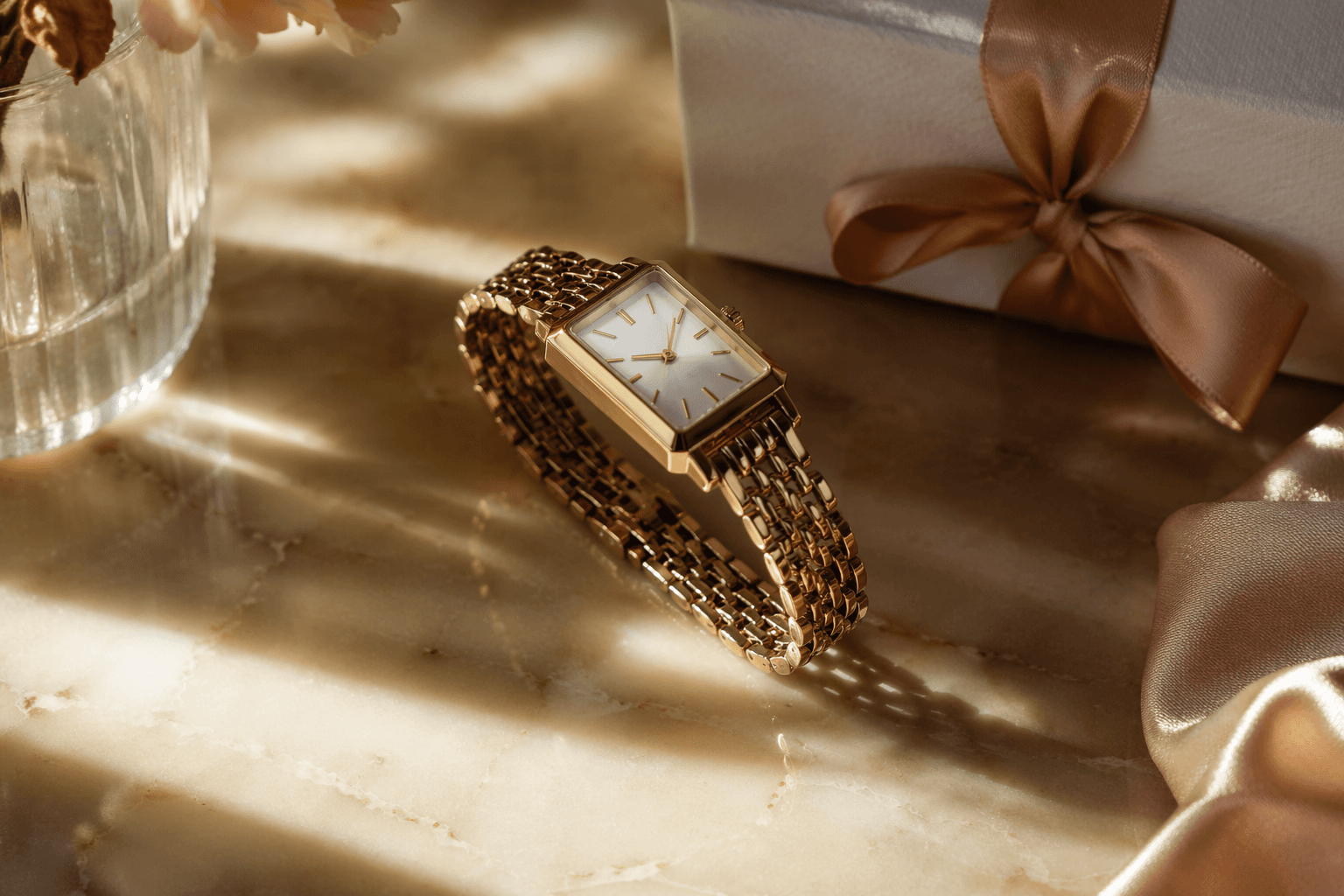
Why Jewelry and Accessories Became Valentine's Most Meaningful Gifts
Valentine’s most moving gifts were never just jewels; they were secrets you could wear, from engraved busks to hairwork and lover’s eyes.
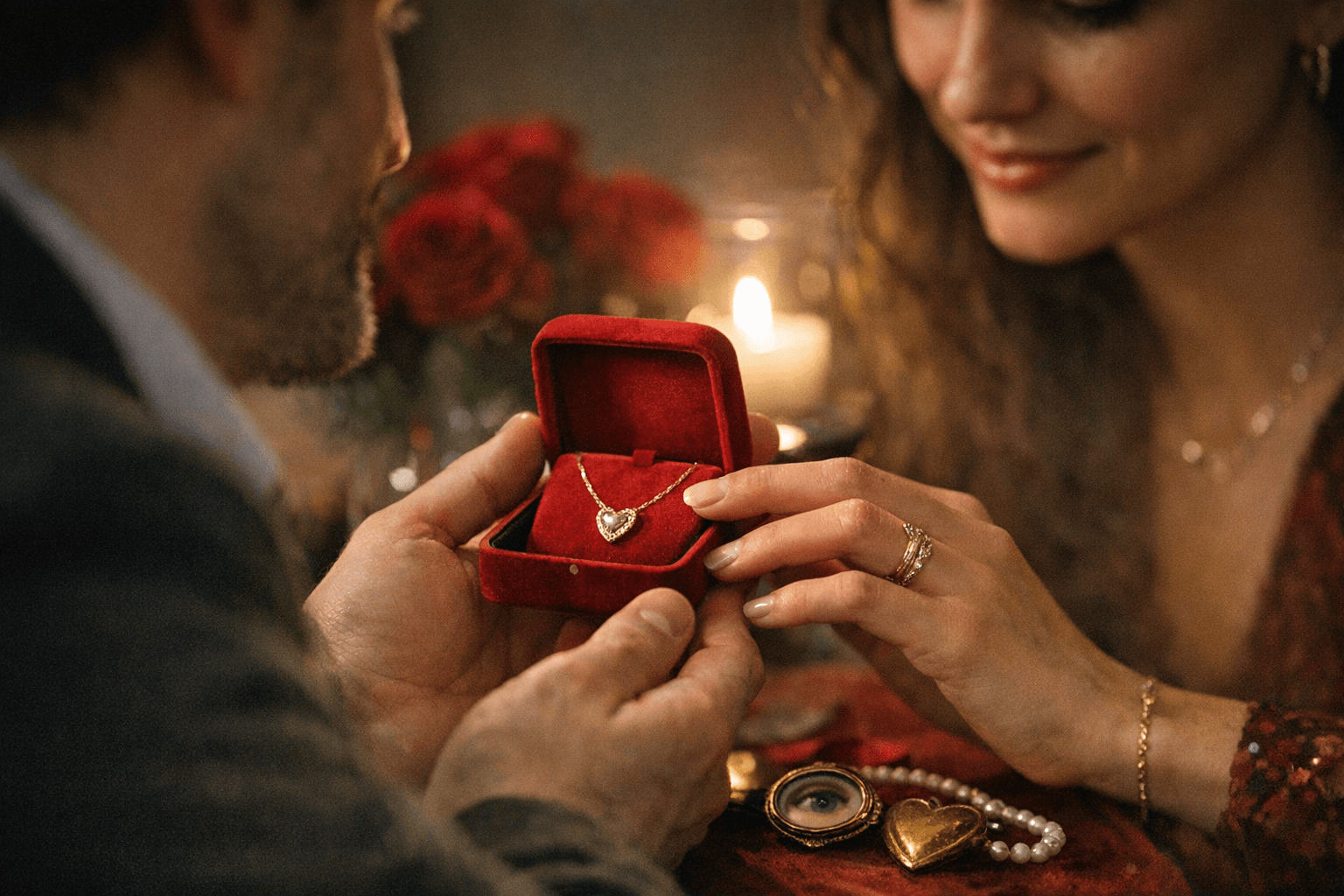
Why jewelry and accessories became Valentine’s most meaningful gifts
Valentine’s Day has always rewarded the gift that can be worn close to the body. In the United States, spending on jewelry alone was estimated at $6.5 billion in 2024, with another $3 billion going to clothing, a reminder that romance still leans toward things you can touch, keep, and put on. Long before modern retail made the day feel like a shopping event, love tokens were already circulating in huge numbers. By the 1860s, more than 1 million Valentine cards were in circulation in London alone, and the tradition reaches back even further, to the 15th century surviving valentines and Geoffrey Chaucer’s 1380s poem, The Parliament of Fowls, which is often treated as the first reference to February 14 as a day tied to love.
The oldest Valentine gift was never just decorative
What makes jewelry and accessories so powerful is not only their beauty, but their intimacy. They sit against skin, move through daily life, and carry meaning even when no one else sees them. That is why the most striking Valentine pieces in fashion history were often not showy necklaces or glittering bracelets, but objects with a private charge: engraved busks hidden inside a corset, tiny painted eyes worn on rings and brooches, and hairwork kept as a token of remembrance. These are gifts that do more than sparkle. They preserve a relationship.
Engraved busks turned hidden dressmaking into private love notes
A busk was originally a corset support, a practical piece meant to shape the body. In The Metropolitan Museum of Art’s collection, however, some examples carry engraved poems and courtship imagery, with references to love, jealousy, and desire. That turns an undergarment component into something much more intimate: a message meant to be worn close to the heart and shielded from public view.
For a modern Valentine’s gift, the appeal is obvious. A hidden engraving inside a cuff, ring, or pendant can feel far more personal than a larger, louder piece. This is the ideal route if you want a gift that feels like a secret shared between two people, not a statement made for a room. It is also one of the easiest ideas to adapt at many price points, since the emotional value comes from the inscription and placement, not just the size of the stone.
Lovers’ eyes were the ultimate private portrait
Lovers’ eye miniatures, also called eye miniatures, appeared in Britain around 1785 and remained fashionable for less than half a century. They were usually commissioned as intimate gifts or memorials, then set into brooches, rings, pendants, bracelets, or charms. The appeal was immediate and slightly uncanny: instead of a full face, the gift showed only an eye, which made the piece feel both personal and discreet.
That is precisely why this idea still resonates. A modern version can be as simple as a tiny portrait locket, a custom iris illustration, or a miniature set into a wearable frame. It suits the partner who likes symbolism more than flash, and it works especially well for anniversaries, long-distance relationships, or any gift that needs to say, “I see you,” without leaning on cliché. Bespoke work will cost more than mass-market jewelry, but the result is far more singular than a standard heart pendant.
Hair jewelry carried love, memory, and family history
Hair jewelry had one of the longest emotional lives in Victorian culture. The Victoria and Albert Museum notes that it was used in gifts of love and remembrance, was fashionable through much of the 19th century, and was made both by professional hairworkers and amateurs at home. Queen Victoria herself wore and gave jewelry set with hair, which helped make the practice feel both fashionable and deeply personal. These pieces were not only about mourning, either. The same tradition could commemorate births, romance, and family milestones.
That range is what makes hair jewelry so compelling now. It is less about sentimentality in the abstract than about preserving a physical connection to a person or moment. A contemporary interpretation might be a lock of hair tucked into a locket, a braided keepsake bracelet, or a more refined piece that uses the same idea of bodily memory without feeling fussy. If you want a Valentine gift that feels almost impossible to duplicate, this is the category to consider. It can be modest in cost if you choose a simple handcrafted keepsake, or much more expensive if you commission a finely finished piece.
Why these pieces feel more original than standard Valentine jewelry
The reason these historical examples still matter is that they solve a problem modern gifting often creates: how do you give something beautiful without making it generic? A diamond heart can be lovely, but an engraved busk, a lover’s eye, or a strand of hairwork gives the recipient a story. It says the gift was chosen for its meaning, not just its price tag.
That is also why accessories often outperform bigger-ticket jewelry in emotional impact. A ring with a hidden engraving can feel more luxurious than a large, impersonal necklace. A brooch set with a tiny eye miniature can hold more resonance than a flashy stone, especially if the design is understated and the craftsmanship is precise. Even a small budget can buy something memorable when the object is wearable, personal, and tied to a specific memory.
How to choose the right kind of wearable Valentine token
The best modern gifts inspired by this history are the ones that match the kind of intimacy you want to express.
- Choose engraved pieces if you want a message only the wearer fully knows.
- Choose a miniature or portrait-based piece if the recipient loves storytelling and unusual details.
- Choose hairwork-inspired jewelry if the gift marks a birth, remembrance, anniversary, or family milestone.
- Choose a small charm, bracelet, or pendant if you want something practical enough to wear often, which is part of what makes it feel loved rather than merely admired.
What ties all of these together is their scale. They are small enough to be private, but meaningful enough to become part of a person’s daily life. That is why jewelry and accessories became Valentine’s most meaningful gifts in the first place, and why the smartest ones still do the same thing now: they turn affection into something visible, durable, and beautifully close.
This article was produced by Prism’s automated news system from verified source data, official records, and press releases, then run through automated quality and moderation checks before publishing. The system is built and supervised by the people who set the standards it runs under. Read our full AI policy.
Did this article answer your question?