3D Printed Pinhole Camera Switches Between Panorama and Stereo Modes
A 3D printed pinhole camera turns one printable body into panoramic and stereo shooting modes, opening a playful path into wigglegrams and analog depth.
A printable camera with a split personality
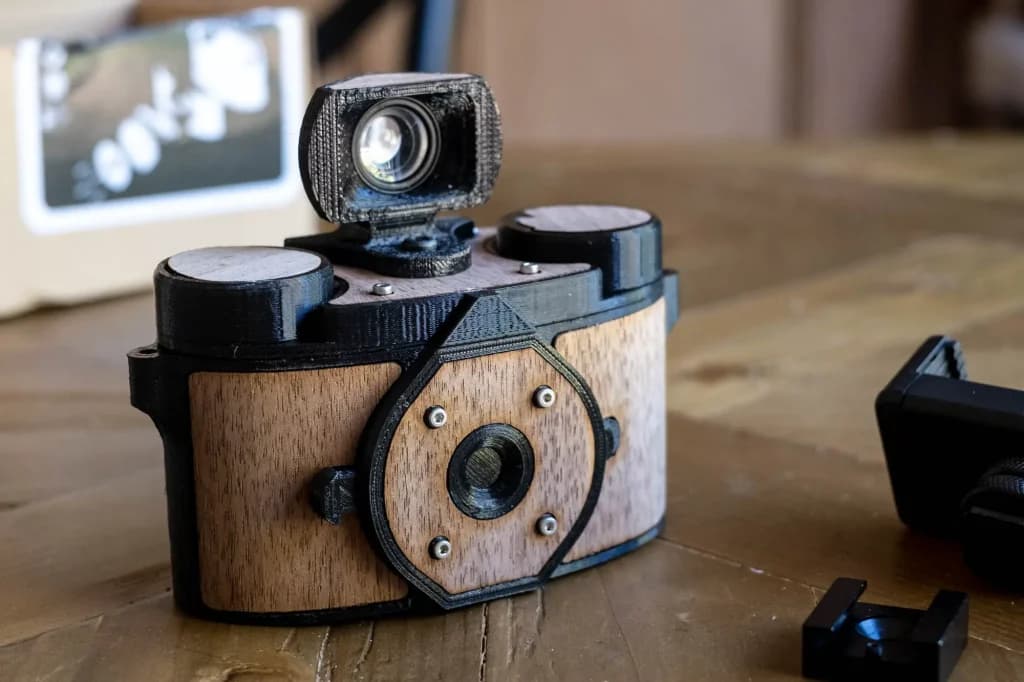
Socialmocracy’s 3D printed pinhole camera is a small reminder that home fabrication can do more than hold shelves together or organize a desk. It turns a single printed box into two very different imaging tools: in landscape orientation it behaves like a pair of panoramic cameras, and in portrait mode it becomes a stereo camera for wigglegrams. The result is less about technical bravado and more about the pleasure of making something that produces a visibly unusual image, right from a weekend print.
That novelty matters because pinhole photography has always rewarded patience, curiosity, and a willingness to experiment. A pinhole camera is, at heart, a light-tight box with a tiny aperture that projects an inverted image onto film or paper. It is one of photography’s oldest ideas, and that retro simplicity is exactly why a modern printed version feels so fresh. The appeal is not in chasing perfect sharpness. It is in turning a basic optical principle into a custom object that you can build, tune, and use yourself.
Why this format is so approachable
The hardware list is refreshingly spare. This build uses 4x5 photographic paper, magnets for the shutter, and thumbscrews to secure the lid. Those choices give the camera a workshop-grade feel without demanding complicated machining or a pile of specialty parts. The magnetic shutter keeps the operation simple, while the thumbscrews suggest a body designed to be opened, loaded, and adjusted repeatedly rather than treated as a one-off novelty.
That simplicity is part of the charm for 3D printing. The printer is doing what it does best here: creating a light-tight enclosure, clean mounting points, and a body that matches the exact format the maker wants. In the analog camera world, those are not trivial details. A printable body can be shaped around the film size, the shutter layout, the stereo spacing, and the access hardware, which is why this kind of project lands so well with people who like both printing and photography.
From a single box to two kinds of images
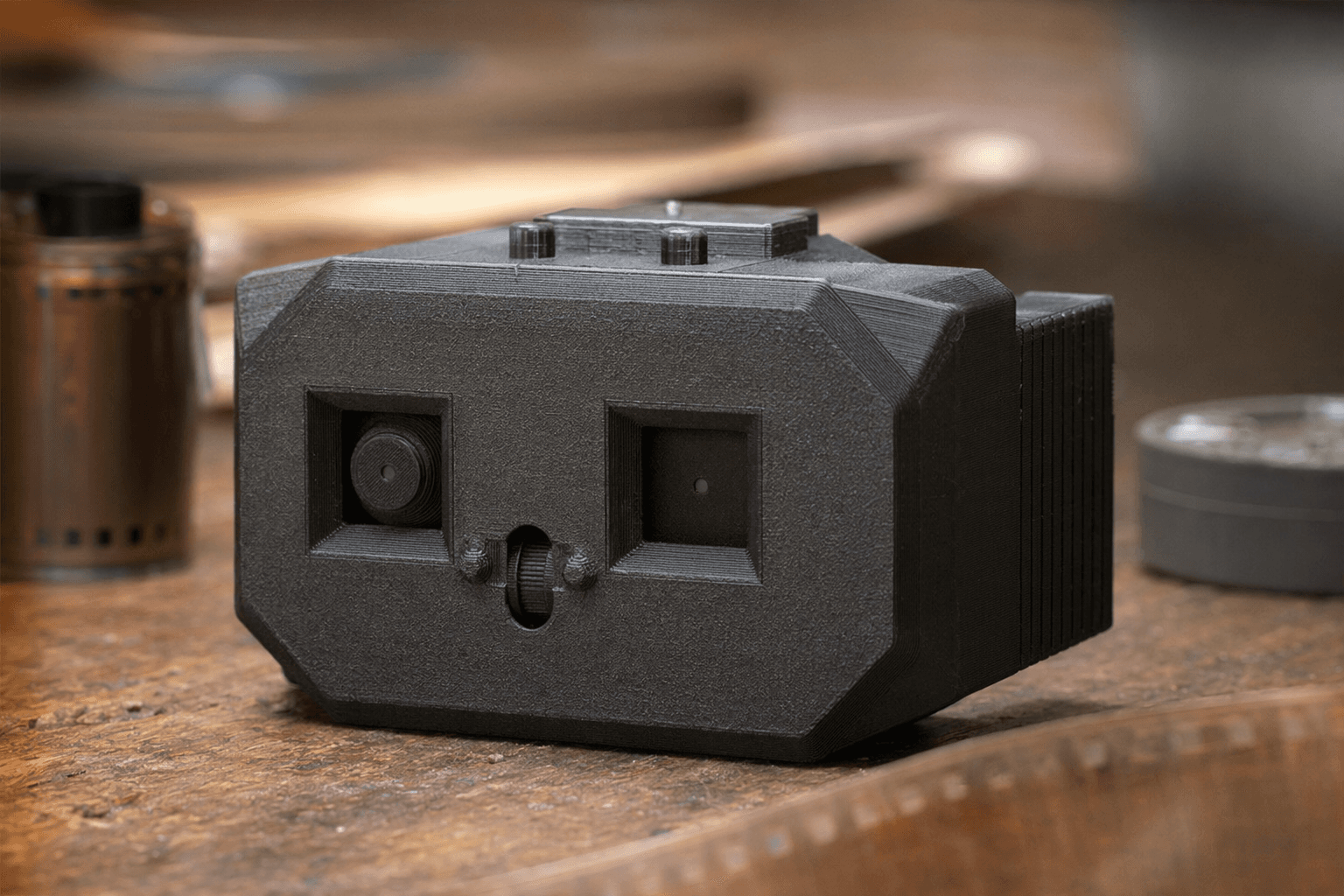
The most distinctive feature is the camera’s ability to switch personalities based on orientation. In landscape mode, the design works as a pair of panoramic cameras. In portrait mode, it shifts into stereo capture, which gives you the slightly offset viewpoints needed for wigglegrams. That means the same printed shell can support two creative workflows without requiring a second camera body.
Wigglegrams are animated stereoscopic images made from slightly different viewpoints. The depth effect comes from parallax and changes in occlusion, which is what makes the scene feel like it has motion and spatial separation when the frames are animated. In practical terms, that gives you a way to turn a still subject into a living image with a subtle 3D pulse. It is a clever fit for a pinhole camera because the low-tech capture method and the playful output reinforce each other.
A modern remix of an old analog idea
Pinhole photography has never disappeared; it has simply gone through waves of renewed interest. It drew fresh attention again in the 1970s and 1980s, when commercial pinhole cameras returned and the format found a new generation of makers. The first annual Worldwide Pinhole Photography Day followed in 2001, which is a useful marker of how durable the community has become around such a stripped-down form of image making.
Wigglegrams have their own remix history. The Nishika N8000, a four-lens 3D lenticular camera produced in 1989, became a cult object long after its original era ended. Used Nishika cameras later found new life because people scanned and animated their frames into wigglegrams, turning a once-niche stereo tool into a social-media-friendly image source. That same spirit is what makes Socialmocracy’s printed camera compelling: it takes the old stereo impulse and makes it accessible without the hunt for a collectible body.
Jenny List’s coverage at Hackaday places this project inside that broader maker conversation, where analog photography, printable hardware, and clever reuse meet. The real story is not just that a camera was printed. It is that the camera body itself becomes part of the creative process, shaping how the image is captured and how the final effect feels.
What you need to make it work
This is the kind of project that rewards careful printing more than exotic equipment. A successful build depends on a body that stays light-tight, hardware that closes securely, and alignment that preserves the stereo or panoramic geometry the design depends on. Because the camera uses photographic paper rather than a more elaborate digital workflow, the maker is dealing with a format that is direct, tactile, and relatively low-cost.
A practical workflow would look something like this:
1. Print the body and lid components with enough precision to keep stray light out.
2. Install the magnetic shutter so the aperture opens and closes cleanly.
3. Use the thumbscrews to secure the lid and make loading straightforward.
4. Load 4x5 photographic paper.
5. Shoot in landscape for panoramic output or rotate to portrait for stereo capture and wigglegram use.
6. Develop and scan the results for the animated depth effect.
The value of that workflow is its simplicity. You do not need to build a complicated camera from scratch or track down a discontinued stereo novelty to get started. The printed body does the heavy lifting, and the rest is standard analog discipline: keep it dark, keep it aligned, and expose with care.
Why the community will care if the files are released
The creator is considering whether to release the STLs, and that detail matters more than it might first appear. If the files do become available, this could evolve from a neat one-off into a modifiable template for other formats, shutter ideas, or stereo baselines. That is where printable camera projects often gain momentum in maker circles: one working design becomes a platform for remixing, improving, and adapting.
That potential is especially strong here because the design already touches multiple communities at once. Photographers get a custom analog tool. Printers get a satisfying, functional object. Stereo-image fans get a path toward wigglegrams without relying on rare hardware. In a hobby world that often chases bigger machines and more complicated mods, this project stands out for doing the opposite: it uses 3D printing to make a simpler, stranger, and more creatively open camera.
This article was produced by Prism’s automated news system from verified source data, official records, and press releases, then run through automated quality and moderation checks before publishing. The system is built and supervised by the people who set the standards it runs under. Read our full AI policy.
Did this article answer your question?