3D Printed WHASER Drone System Measures Humpback Whales in Iceland
A 170-gram 3D-printed WHASER unit helped measure more than 115 humpback whales in Iceland, turning a field idea into a drone-ready tool.
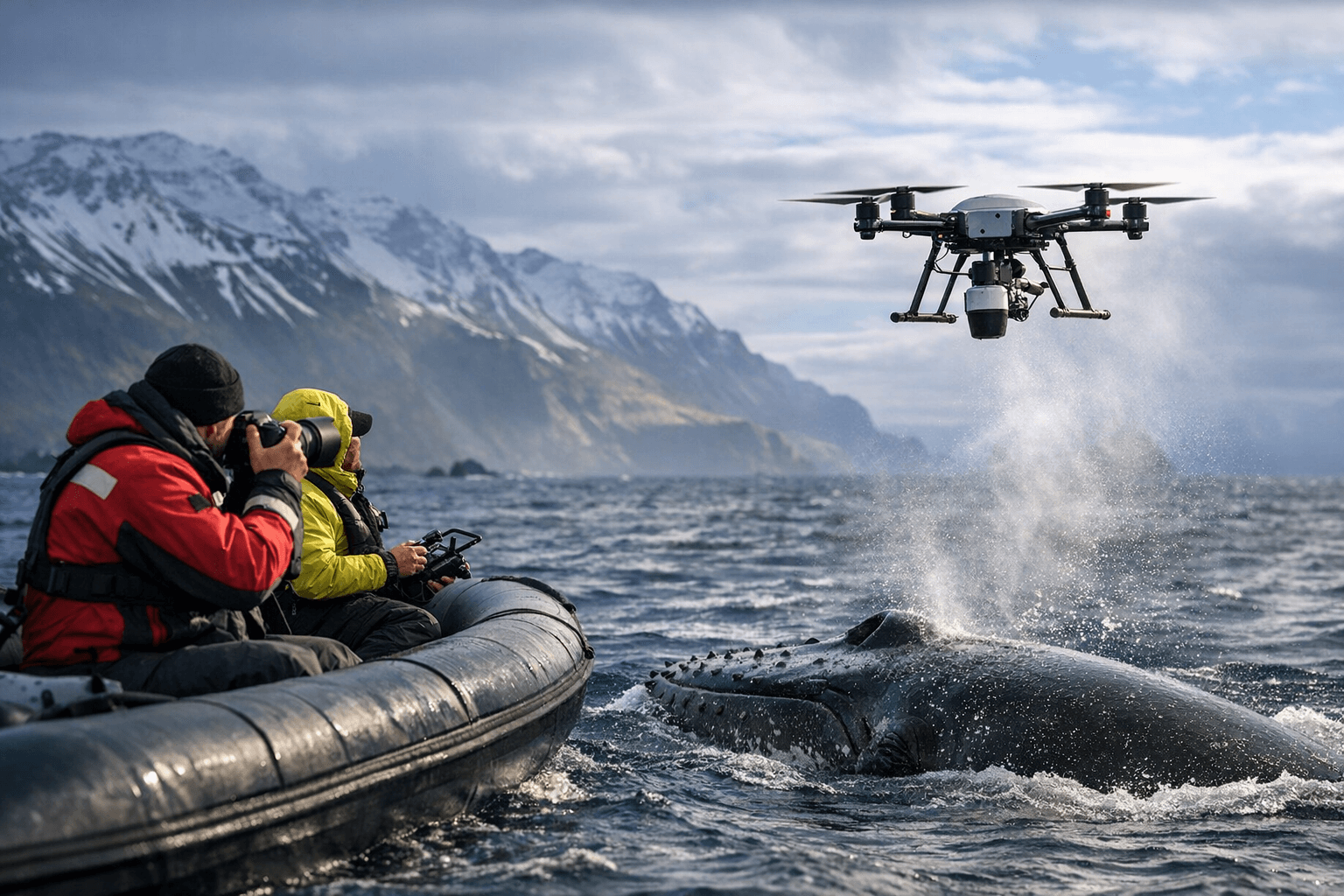
A compact 3D-printed whale-measuring rig in Iceland moved from field prototype to working hardware fast enough to log more than 115 humpback whales. The WHASER system, built by Tandem Ventures with Whale Wise, pairs a drone with a LiDAR range-finding setup and was trimmed down to just 170 grams after the redesign.
That weight matters because the whole point of WHASER was to keep the tool small, sturdy, and easy to fly over whales without forcing researchers into a bulky custom build. The device packs a microcontroller, LiDAR sensor, GPS module, IMU, microSD reader, USB-C rechargeable battery, and OLED display into an enclosure that was reworked with 3D printing to make it more compact, lighter, and tougher against splash water and salty air. The team also used printed parts for custom transport-case inlays, a detail that sounds minor until you have to drag sensitive gear across a wet field site and keep it alive for the next flight.
That kind of iteration is where desktop printing beats machining or outsourcing. WHASER was not a product line with a polished industrial finish to protect. It was a one-off scientific instrument that had to fit a drone, survive marine weather, hold a bigger battery, and improve internal geometry between test runs. Printing let the team change the housing without waiting on a machine shop or paying for a short run of parts that might still be wrong. The result, the team says, was faster setup in the field and longer drone flight times, both of which matter when the work happens around live whales and short weather windows.
The measurements were collected off Iceland, including work in the Westfjords, where Whale Wise focuses on aerial images of humpback whales to assess scars from above and gauge the long-term effects of fishing gear entanglement. The charity describes entanglement as a major threat to humpbacks, and the aerial approach matters because scars photographed from boats may capture only a small portion of the animals’ bodies and can underestimate how widespread the damage really is.
WHASER also fits into a longer line of drone-based whale measurement. In 2019, researchers from the Aarhus Institute of Advanced Studies and Woods Hole Oceanographic Institution showed that drone images of 86 southern right whales off Península Valdés, Argentina, could be used to estimate body volume and mass. WHASER takes that idea closer to field deployment: print the housing, shrink the mass, seal the electronics, and keep the tool compatible with any drone. For specialized scientific gear, that is the sweet spot where 3D printing stops being a prototyping trick and starts saving the whole project.
This article was produced by Prism’s automated news system from verified source data, official records, and press releases, then run through automated quality and moderation checks before publishing. The system is built and supervised by the people who set the standards it runs under. Read our full AI policy.
Did this article answer your question?