3D Printing Reshapes Footwear With Custom Fits, Faster Local Production
Custom-fit 3D-printed footwear is moving from novelty to real utility, but the make-or-break issues are scan accuracy, elastomers, durability, and repeatable fit.
The market is large enough to reward the experiment
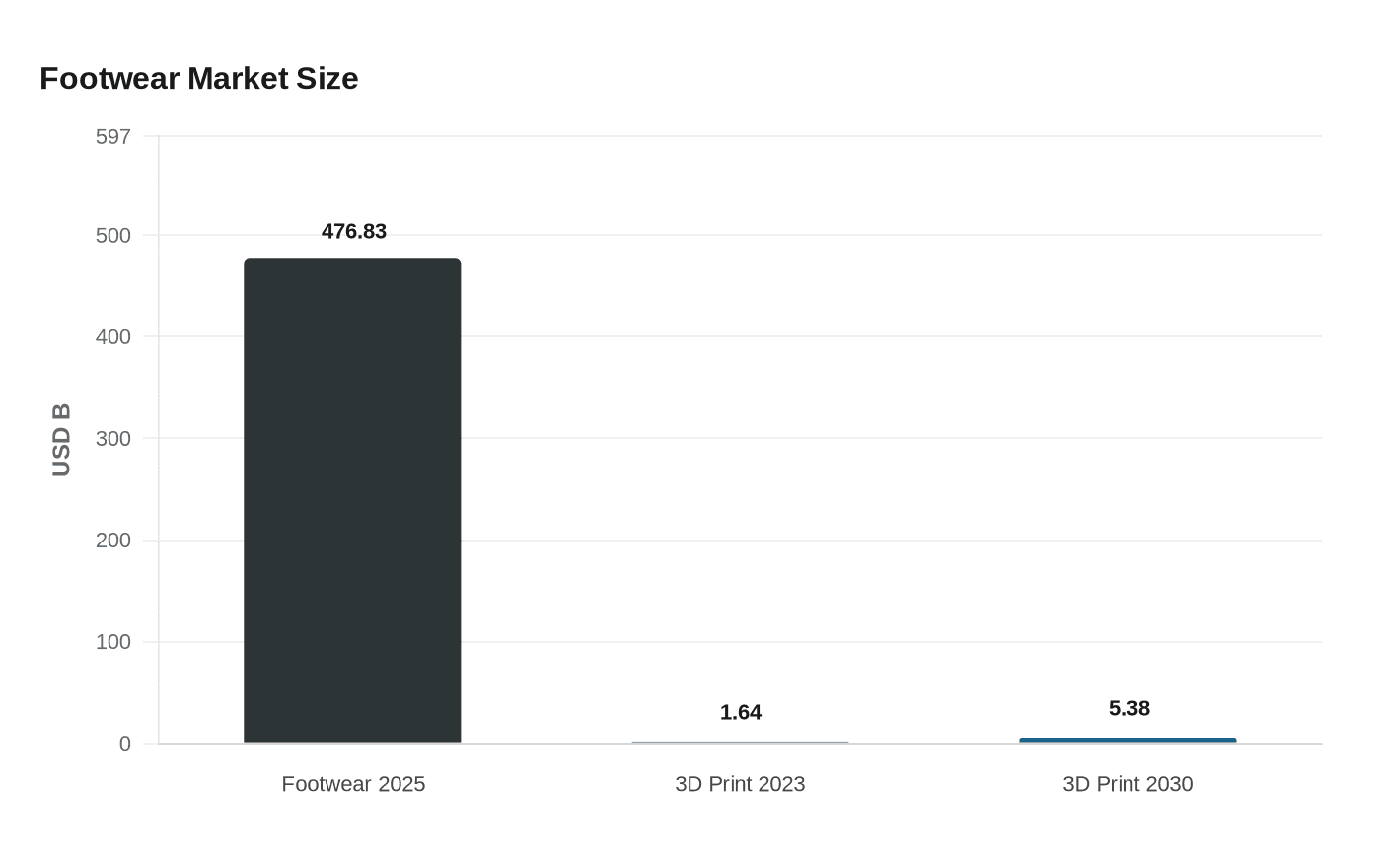
Footwear is not a side quest for 3D printing anymore. Grand View Research estimated the global footwear market at USD 476.83 billion in 2025, while the global 3D printed shoes market was estimated at USD 1.64 billion in 2023 and projected to reach USD 5.38 billion by 2030. That gap says everything about where the category sits right now: tiny next to the whole industry, but big enough that every meaningful improvement in fit, waste, or turnaround time matters.
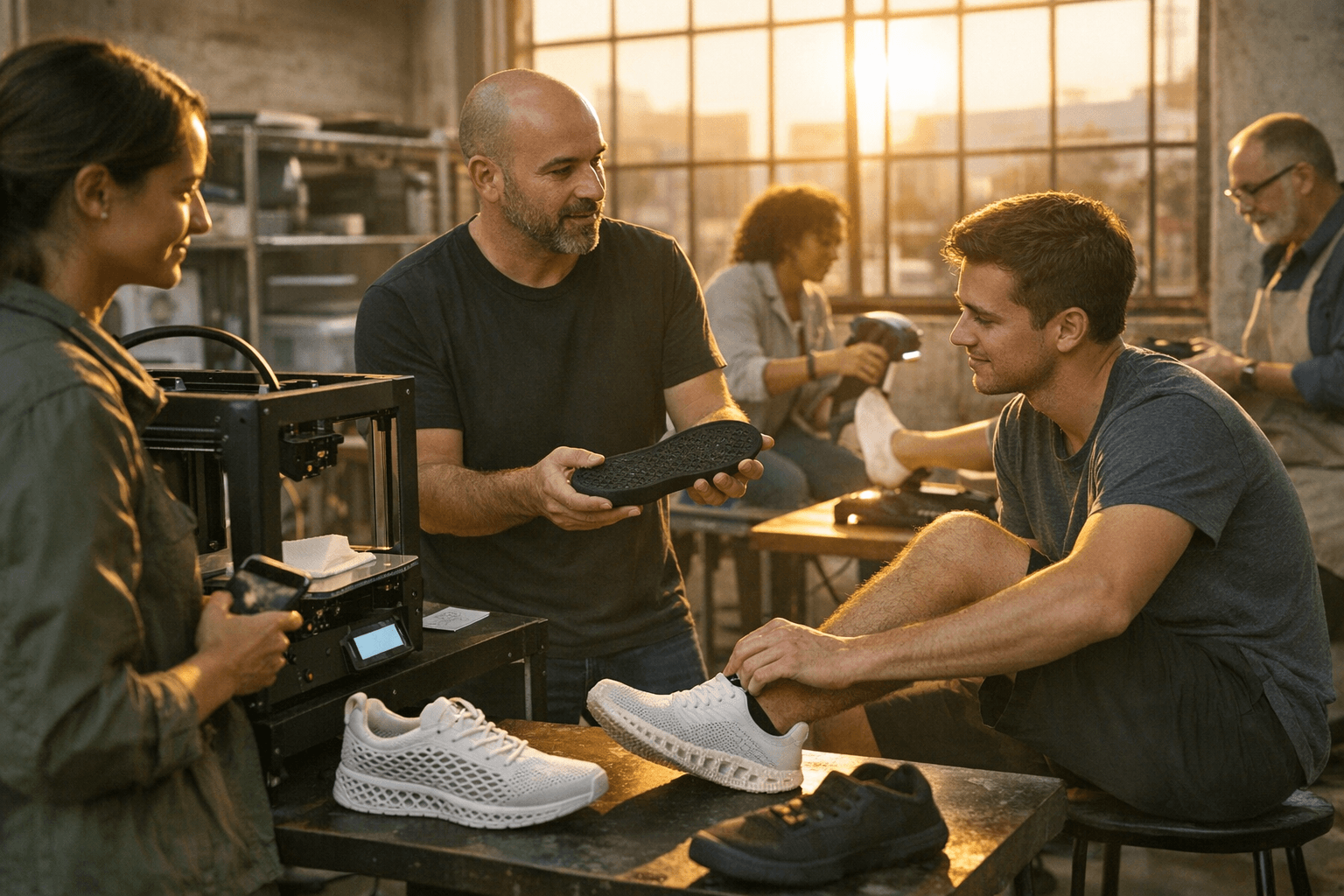
What makes this moment interesting for makers is that the story is no longer just about futuristic shapes. It is about whether a scan, a material choice, and a local printer can produce shoes that people will actually wear, repair, and reorder. The promise is not just a cooler-looking sneaker; it is less waste, faster prototyping, and production that can happen closer to the person who needs the shoe.
What the first wave already proves
The clearest sign that this is real is that the big brands are already shipping products and platforms. Nike’s Nike By You service currently lets customers customize shoes with colors and personalized text, and it still frames the experience as a co-creation moment with the line, “Your personal Nike co-creation starts here.” That is not the same as printing a shoe from scratch, but it shows how far mainstream footwear has already moved toward personal choice.
adidas has gone further on the printed side. It released the 3D-printed CLIMACOOL shoe on September 28, 2024, and described the design as a lattice structure meant to mold around the foot while providing 360° airflow. In 2025, adidas followed with CLIMACOOL LACED, extending the line beyond the first release. The important detail for hobbyists is not just that the shoes look different. It is that the brand is treating printed structure as part of fit and performance, not as a decorative gimmick.
Why fit is the real gatekeeper
Before home printers or neighborhood print services can become normal for footwear, four things have to line up: foot-scanning quality, printable elastomers, durability, and fit repeatability. A bad scan can ruin everything downstream. If the geometry is off by even a small amount, a shoe may look custom while still rubbing, slipping, or collapsing under load.
Printable materials are the second hurdle. Footwear lives in a rough world of repeated bending, heat, sweat, and abrasion, so the material has to hold its shape without feeling dead. That is why a printed lattice like CLIMACOOL’s matters so much: it suggests a path where structure can be tuned for airflow and support at the same time, but it also raises the question of whether the material can survive real daily wear.
Repeatability is the sleeper issue. A one-off prototype is impressive; a second pair that fits the same way is what turns the process into something usable. For hobbyists, that means the future of custom footwear will depend as much on scanning discipline and profile consistency as on printer resolution.
Insoles are the most practical entry point
If full printed shoes still feel out of reach, insoles are where the category looks most believable today. A study in Nature Scientific Reports described a fully customized smart insole that is fully 3D printed and can measure normal and shear forces during activity. That matters because it turns the insole into more than a comfort layer. It becomes a feedback device, one that can capture how pressure moves through the foot and adapt to the individual user.
That kind of result points to a realistic progression for makers and local print services. Insoles come first because they are smaller, easier to iterate, and easier to adapt after a failed fit. Midsoles are the next logical step, since they carry cushioning and energy return without having to solve every problem a full upper must solve. Truly wearable custom shoes at home will need all of those lessons at once, plus better material control than most desktop setups can offer today.
Local production makes the waste case stronger
HP has been pushing the argument that 3D printing can be quicker, use less energy, use less time, and create less waste than traditional manufacturing. That message fits footwear especially well, because the category is notorious for returning, discarding, and overproducing sizes that do not move. HP also says it has partnered with Brooks Running and adidas on 3D-printed footwear components and performance shoe development, which reinforces that the sustainability pitch is no longer just theoretical.
The local-production angle is where the hobby and industry stories start to overlap. If a shoe can be printed close to where it is sold, the process can cut shipping, shrink inventory risk, and make iterative changes faster. It also lines up with a broader shift in apparel and footwear away from dependence on China, where geopolitical pressure and costs are pushing brands to rethink supply chains. That does not mean factories disappear. It means the value of distributed manufacturing gets harder to ignore.
Why the path is still uneven
There is a reason the biggest brands have not flipped the switch all the way. Philippe Holthuizen of Fused Footwear has said major brands are not yet fully committed to long-term 3D-printed shoe production. That caution fits the history of this space. Smaller companies have often led the experimentation, while larger brands have been slower to abandon traditional production models that already work at scale.
For makers, that tension is actually useful. It keeps the focus on the parts of the problem that still need solving instead of on grand promises. The real milestone is not a headline about replacing sneaker factories overnight. It is a reliable workflow where a scan, a printable elastomer, and a local machine can produce a pair, or even just a better insole, that fits better and wastes less.
The future of custom footwear will be won incrementally, through better scans, tougher materials, and more repeatable fit. That is a much smaller story than a manufacturing revolution, but it is the one that can actually end up on your feet.
This article was produced by Prism’s automated news system from verified source data, official records, and press releases, then run through automated quality and moderation checks before publishing. The system is built and supervised by the people who set the standards it runs under. Read our full AI policy.
Did this article answer your question?