Dynamic Laser Writing Prints Ultra-Smooth 3D Optical Lenses Precisely
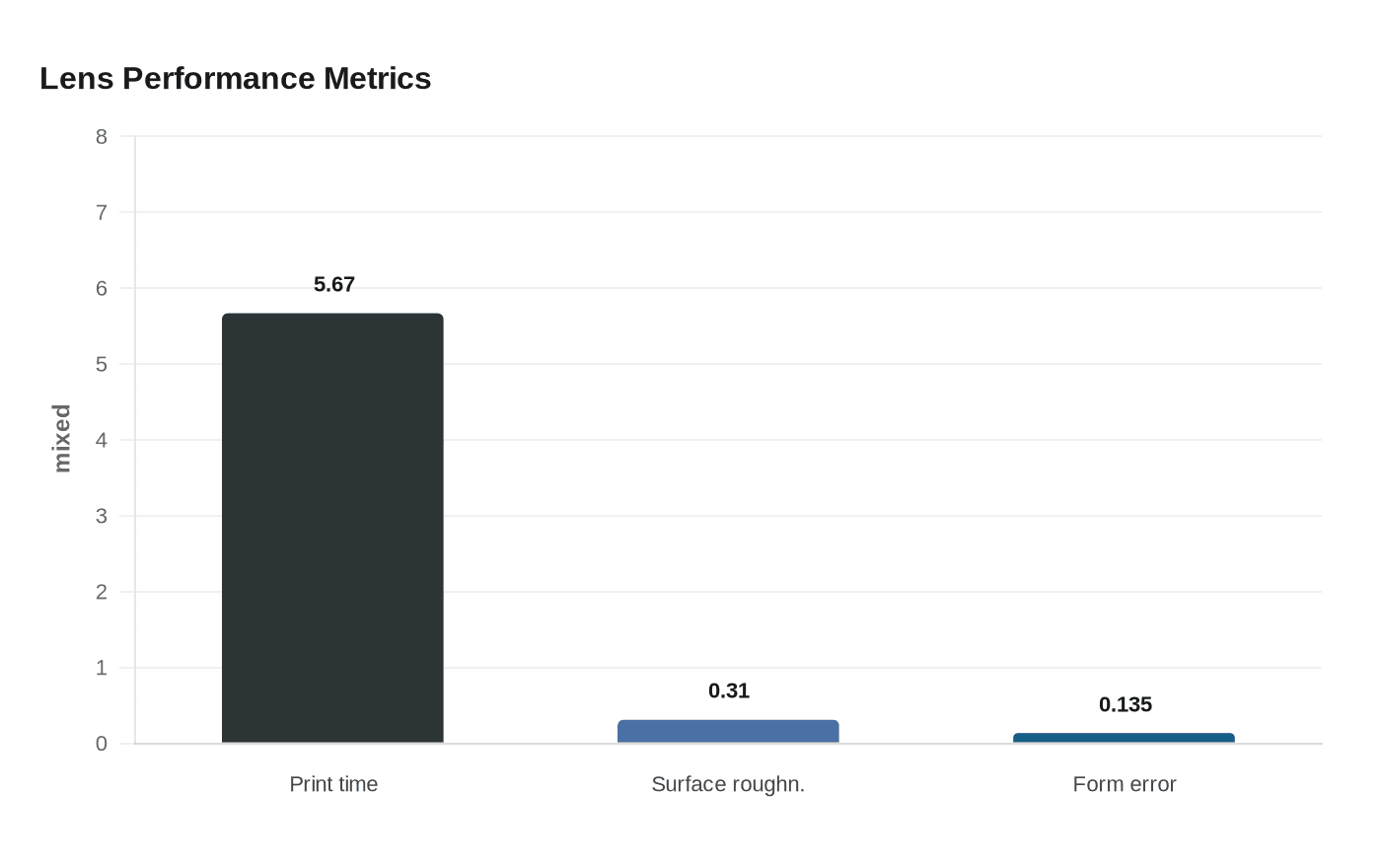
A new laser-writing method printed an optical lens in 5.67 minutes with 0.31 nm roughness, edging 3D-printed optics toward camera and microscope parts.

A new dynamic laser writing method printed a millimeter-scale spherical lens in 5.67 minutes and left it with 0.31 nm RMS surface roughness, a finish that puts 3D-printed optics a lot closer to real use in camera mods, microscopy, LED optics and photonics experiments. The same lens also hit 0.135 m RMS form error, a figure the authors say is about an order of magnitude better than state-of-the-art continuous layer-wise and volumetric printing methods.
The paper, titled Time-dependent volumetric printing of precision lenses through dynamic laser writing, appeared online on April 2, 2025 in the International Journal of Extreme Manufacturing as volume 7, article 045007, with DOI 10.1088/2631-7990/adbd0a. Chengxue Piao, Xiaotong Du, Ya Xu, Suet To, Limin Zhu and Zhiwei Zhu list affiliations with Nanjing University of Science and Technology, The Hong Kong Polytechnic University and Shanghai Jiao Tong University. Their method, time-dependent dynamic laser writing, tackles a familiar weakness in vat photopolymerization: the build depends on position, which makes dimensional accuracy hard to control across a part.
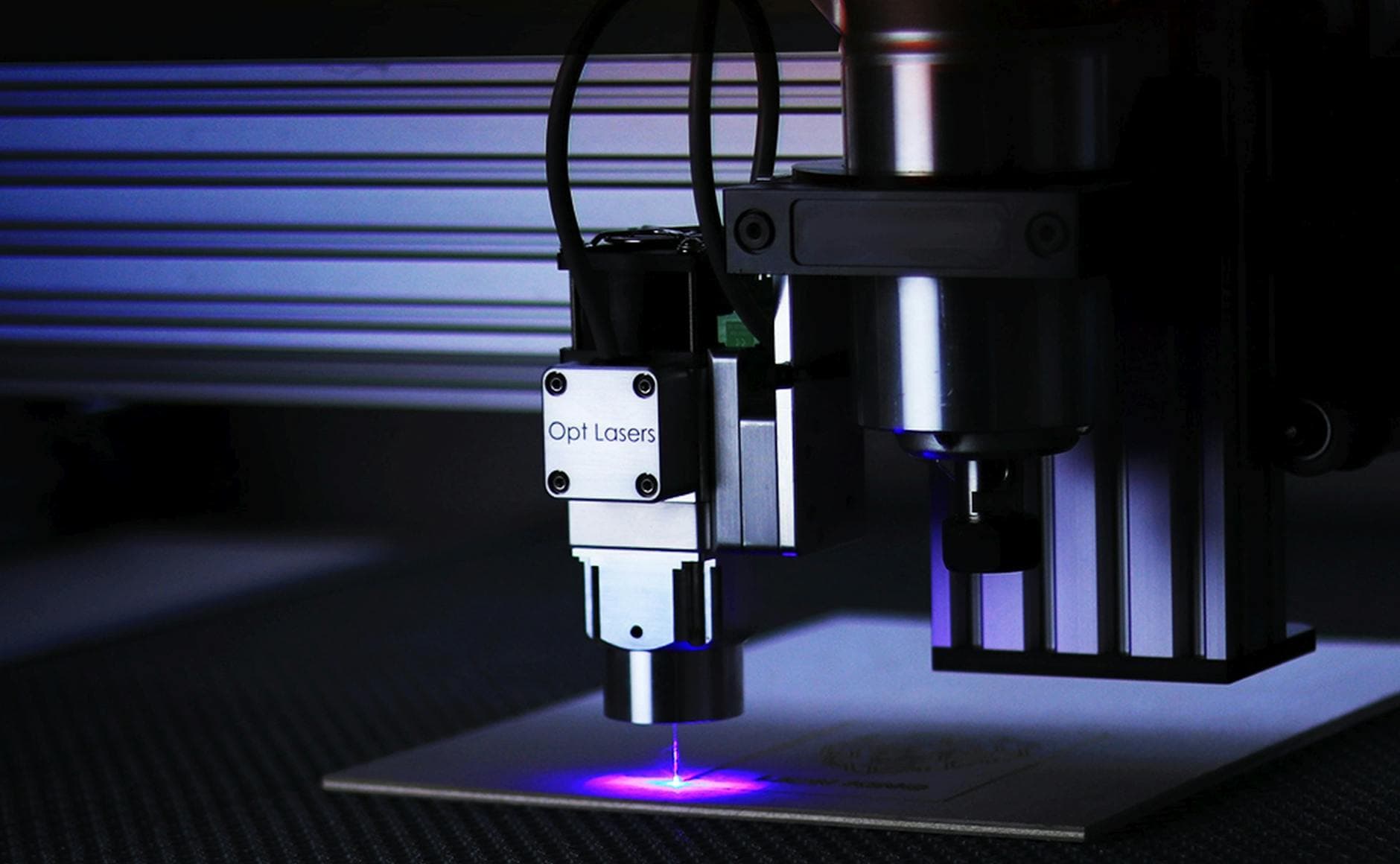
Instead of treating every scan point the same, the new approach uses controllable energy doses to shape material growth along the path of the laser. The authors say that continuous scanning naturally produces ultra-smooth surfaces and makes the process less sensitive to process errors than conventional vat photopolymerization. That matters for optics, where a lens can be structurally close to correct yet still fail if the surface scatters light or the curvature drifts off target by a tiny amount.
The jump is easiest to see against earlier 3D-printed optics work. A 2018 study reported as-printed surfaces rough by tens of microns, then relied on post-processing to push roughness down to a few nanometers. Earlier direct-laser-writing photonics work had already shown submicrometer-precision lenses and waveguides, plus a 2020 result with refractive-index tuning over more than 0.3 and the world’s smallest reported spherical Luneburg lens at 15 m diameter. That same line of research also produced achromatic doublets in one print and a coupled ring resonator with a measured quality factor of 4600 at 1550 nm.
The new lens result lands in the middle of a bigger shift in additive manufacturing toward volumetric methods, faster prints and context-aware builds around inserts. If time-dependent DLW scales beyond the lab, the practical payoff is clear: more maker-accessible optical parts that do not need heavy polishing before they can sit in a custom camera barrel, a bench-top microscope or a home photonics setup.
This article was produced by Prism’s automated news system from verified source data, official records, and press releases, then run through automated quality and moderation checks before publishing. The system is built and supervised by the people who set the standards it runs under. Read our full AI policy.
Did this article answer your question?