3DPrint.com Briefs: Artec3D LiDAR Scanner Debut & AmericaMakes Calls
Artec 3D debuted the Artec Jet SLAM-based LiDAR scanner at Manufacturing World Nagoya, while AmericaMakes opened two DoD project calls worth over $35M.
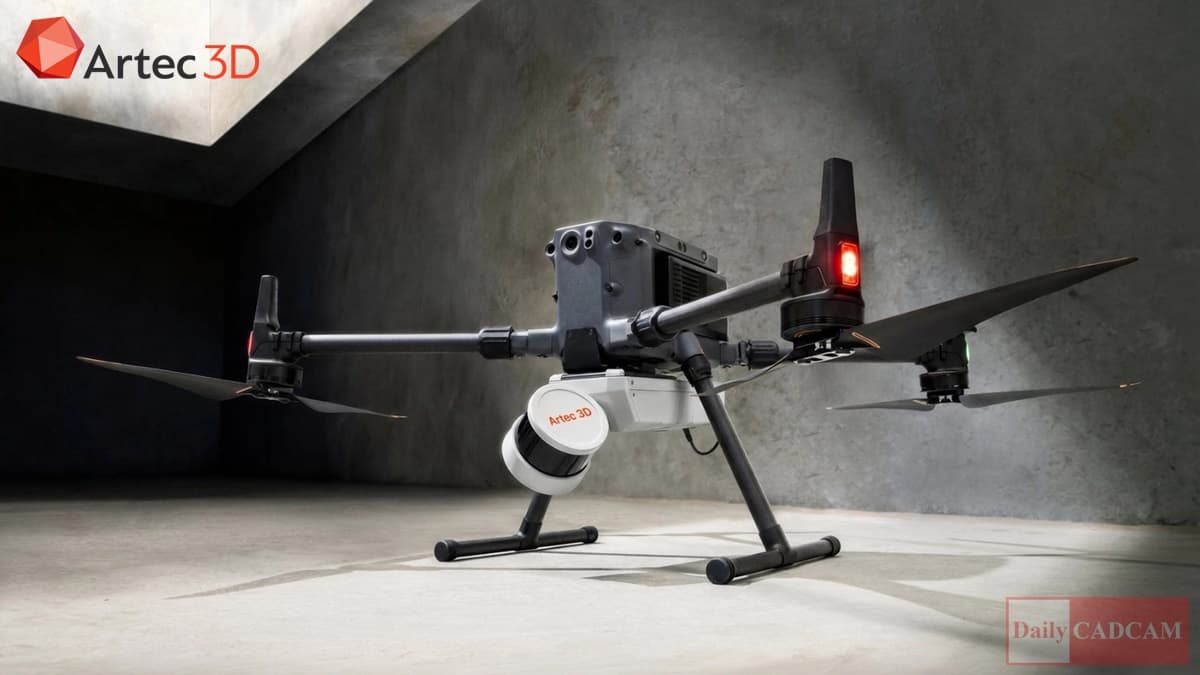
Artec 3D stepped well outside its handheld-scanner comfort zone when it unveiled the Artec Jet at Manufacturing World Nagoya on April 8. The Luxembourg-based company, whose Leo and Eva models are fixtures in reverse-engineering workflows, built the Jet as a survey-grade, SLAM-based mobile LiDAR system designed to capture entire buildings, tunnels, and construction sites in a single pass. It is a meaningful pivot for a brand the community largely associates with desktop-sized capture jobs.
The hardware specs explain the ambition. The Artec Jet pairs high-density LiDAR sensors with Simultaneous Localization and Mapping algorithms to hold ±10 mm accuracy indoors and underground, including in GPS-denied environments where conventional mapping rigs fall apart. At 1.57 kg, it carries a 360° x 290° field of view, an IP65 dust and water rating, and a companion app that pushes real-time feedback to the operator. Anyone who attended Manufacturing World Nagoya through April 10 could find it on the floor at Hall 1, Booth 15-103, via Artec's partner DataDesign.
On the funding side, America Makes and the National Center for Defense Manufacturing and Machining announced two project calls totaling more than $35 million, both backed by the Manufacturing Technology Office within the Office of the Under Secretary of Defense for Research and Engineering. The larger of the two, the 2026 DoD Organic Industrial Base Modernization Challenge, targets nine topic areas including AI robotic process planning, in-situ quality monitoring, mobile and large-surface automation, and pilot lines for emerging military products. Typical awards are expected to run $10 million to $15 million, with proposals up to $25 million on the table given sufficient justification. The second call, the Joint Additive Qualification for Sustainment Supplier Qualification covering Groups 2 and 3, carries $10.5 million in funding and focuses on getting non-traditional suppliers qualified within the Defense Industrial Base. Both calls were formally released March 5.

Rounding out the day's news was BambuTune, a new tool serving up AI-generated optimization reports for FDM printers. The service covers machines from entry-level Ender-3s through premium Bambu Lab X1Cs, drawing on what it describes as community-validated settings and expert knowledge. A single report costs $4.99; an Early Bird monthly subscription runs $14.99 for unlimited reports. It is the kind of tool that makes sense for anyone chasing dialed-in print profiles across multiple machines without wanting to spend hours in a forum thread, and the price point is low enough that a single avoided failed print pays for it.
Know something we missed? Have a correction or additional information?
Submit a Tip