Aeroptera unveils Lace, open-source 3D-printable foldable 800mm quadcopter for researchers
Aeroptera released Lace, an open-source, nearly entirely 3D-printable foldable 800 mm quadcopter aimed at environmental researchers and advanced builders.
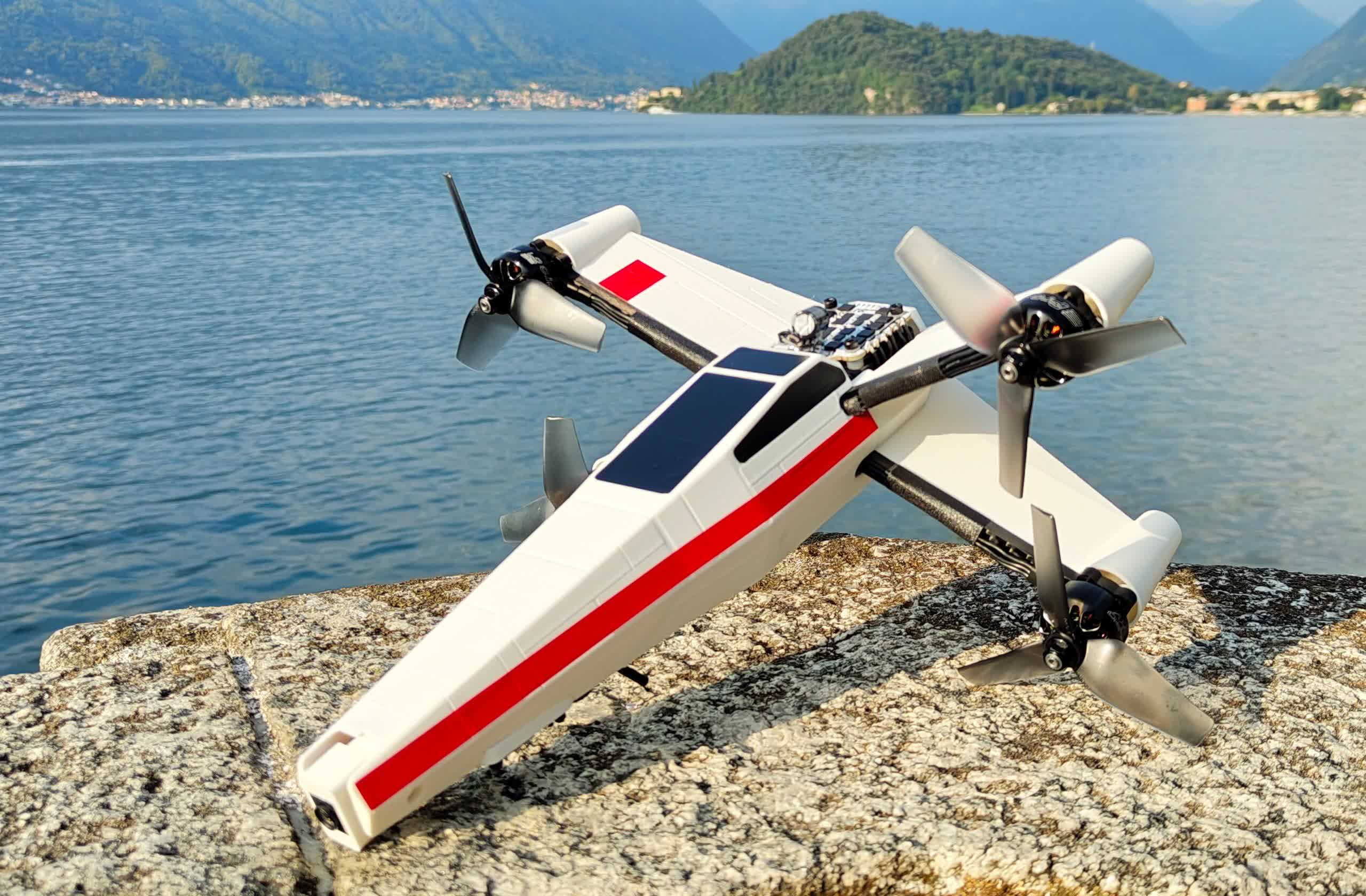
Aeroptera, a student-led nonprofit, unveiled Lace, a foldable, research-capable quadcopter frame that can be printed almost entirely on consumer 3D printers and folded to fit in a backpack. The design centers on accessibility: STL files are available at no cost and include detailed printing instructions and recommendations so researchers worldwide can build, customize, and repair platforms in the field.
Lace is a large-format Quad-X frame with an approximate motor-to-motor span of 800 mm. The airframe is printed using Polymaker Fiberon, a high-performance composite filament reinforced with carbon and glass fibers, while the arms are four 220 mm carbon fiber tubes. Aeroptera named Polymaker as the project’s lead sponsor, and the group worked with engineers at Autel Robotics in Shenzhen and researchers from the Chinese Academy of Sciences on aspects of the design. Jianjing Hou, founder and president of Aeroptera, described the project origin and mission: “The idea to start Aeroptera originated from a conversation with a professor of environmental science in Ann Arbor.” Hou also framed the project in equity terms: “I came to realize that for many environmental researchers around the world, drones are a necessary yet exclusive platform. I became committed to the notion that scientific drone platforms should not be a luxury for environmental researchers that are working to benefit the world.”
The reference electronics and power choices named by Aeroptera reflect research and field priorities rather than a single closed kit. The platform is designed around a Pixhawk 6C flight controller and a 4S 4500 mAh battery in its reference configuration. Typical build weight is about 3 kg depending on configuration, with maximum takeoff weight up to 5 kg and payload capacity up to 1.5 kg. The frame accepts a range of motors, electronic speed controllers, propellers, and telemetry systems; components are swappable to match sensor packages and mission needs, emphasizing modularity and field repair.
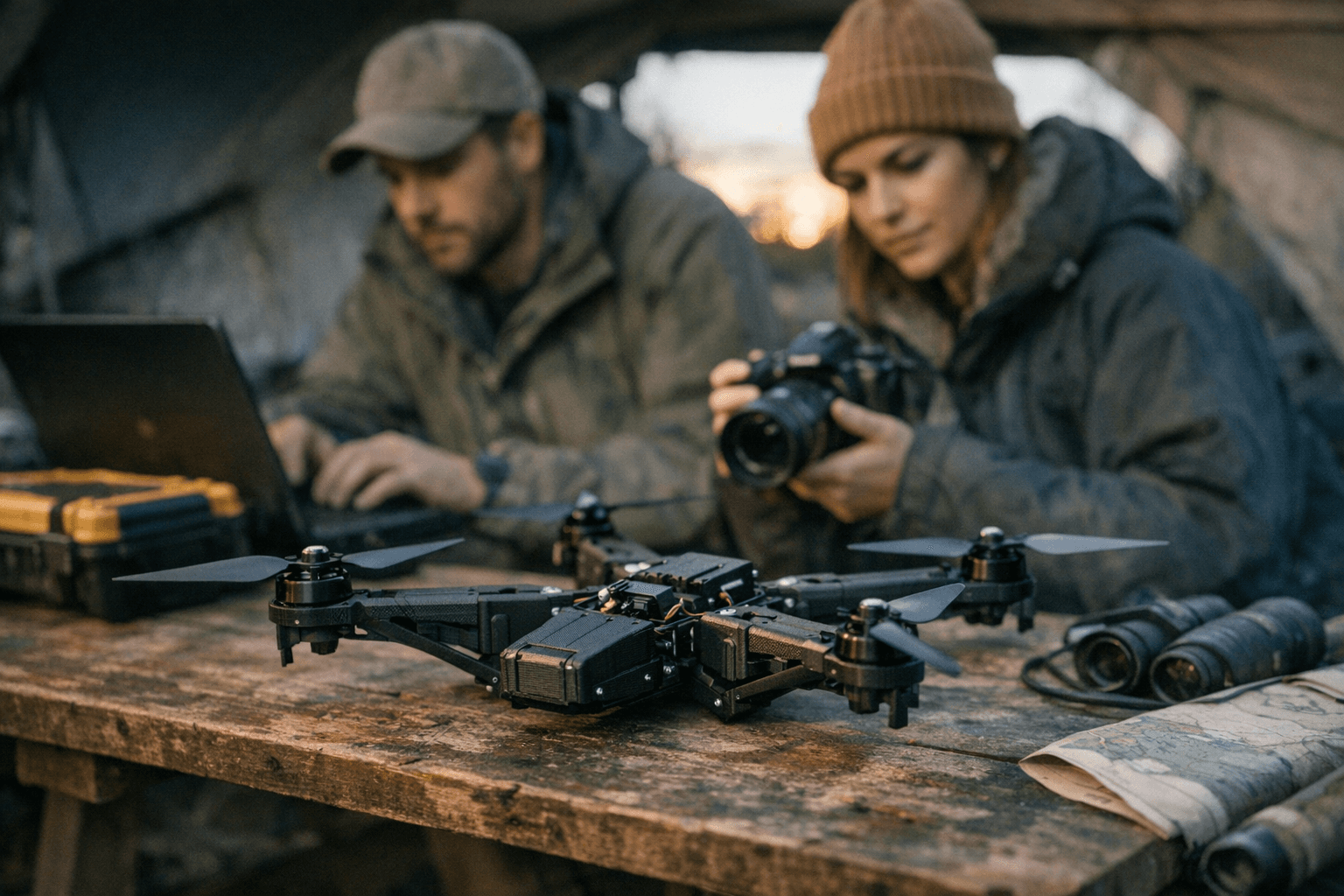
Aeroptera stresses that Lace is intended to match the portability of commercial foldable drones while remaining open, repairable, and customizable. “Lace is our first step into achieving the promises of an open and accessible platform that could empower researchers around the globe. To us, 3D printing is the key technology that would enable Lace to be manufactured almost anywhere, at a very acceptable cost,” Hou said. The group positions Lace alongside recent academic efforts to lower the cost of research and educational UAVs, such as a University of West Attica project that used modular Arduino-compatible electronics and printable parts for STEM research.
For builders and researchers, Lace offers practical value: printable structural parts, explicit use of a reinforced composite filament for strength, backpack portability, and a modular electronics stack that supports bespoke sensor payloads. Critical follow-ups include confirming the exact open-source license, recommended motor and prop lists for different payloads, and field test data such as flight times and endurance. Verify the STL license and recommended components before deploying Lace in fieldwork. The arrival of Lace signals a growing ecosystem where student-led groups, materials manufacturers, and industry engineers collaborate to make capable, repairable drone hardware more accessible to research labs and advanced builders.
This article was produced by Prism’s automated news system from verified source data, official records, and press releases, then run through automated quality and moderation checks before publishing. The system is built and supervised by the people who set the standards it runs under. Read our full AI policy.
Did this article answer your question?