AI-Generated Geometry Exposes Fundamental 3D Printing Manufacturability Gap
MeshyAI’s Meshy 6 Preview pushes AI models toward watertight, higher-resolution meshes, but gaps remain between generated geometry and reliable, verifiable printability.
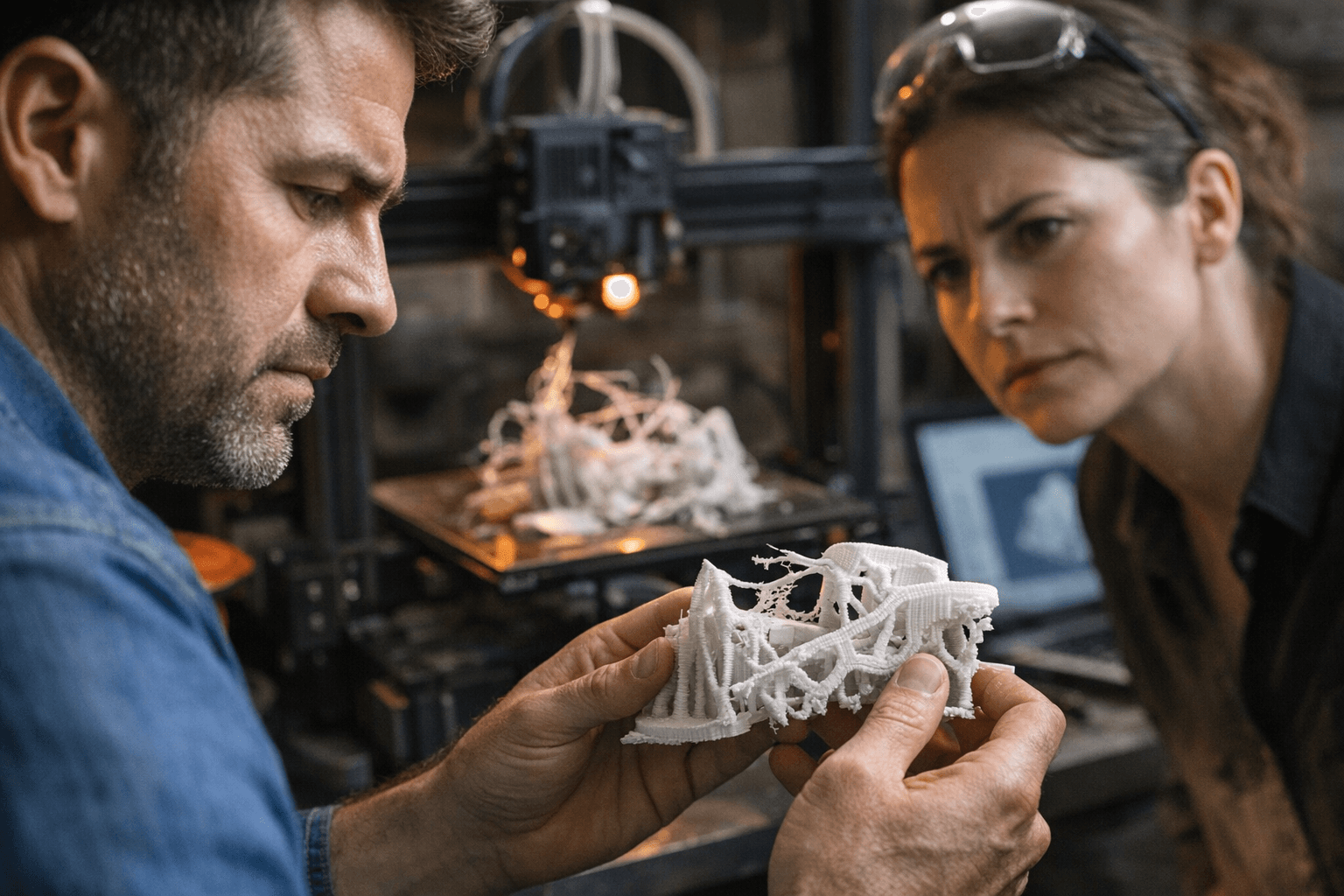
MeshyAI rolled out Meshy 6 Preview to close the yawning gap between AI-generated geometry and what hobbyists and small shops can actually print. The update introduces a new internal geometry representation intended to support higher-resolution and watertight meshes and to bring AI outputs closer to additive manufacturing workflows where topology and downstream reliability matter as much as visual plausibility.
Ethan Hu, CEO and Cofounder of MeshyAI, framed the work as an algorithmic push toward cleaner outputs. “At the algorithmic level, we aim to produce manifold geometry wherever possible,” Hu said. He also acknowledged limits: “In ambiguous cases involving large gaps or unclear structures, the system may avoid aggressive fixes to prevent distortion. Improving robustness in those scenarios remains an active focus.” Meshy positions the change as shifting the generator from purely visual plausibility toward manufacturable geometry that imports into slicers with fewer surprises.
Meshy also supplied a striking performance claim: “The proportion of Meshy-generated models recognized by consumer-grade printers increased from roughly 5 percent to over 90 percent within six months.” The company pairs that product work with clear licensing: “Paid subscribers receive full ownership of generated assets, with unrestricted rights to print, sell, and commercialize them. Free-tier users may print or sell assets under a Creative Commons BY 4.0 license with attribution.”
Those advances matter because many practitioners now view geometry - not machines - as the quiet bottleneck slowing iteration. Company representatives Ethan Hu and Johnny Li argued that AI-generated 3D assets can speed early-stage exploration by creating many geometric variations quickly, letting designers cull poor directions long before engineering time is spent on cleanup. Traditional CAD remains indispensable for deterministic control, but it is time-consuming and requires expertise that throttles iteration speed.
Still, important caveats remain. Meshy did not define what it means by “recognized” or “printable,” did not list which consumer-grade printers and slicers were used for the recognition test, and did not provide independent fabrication success rates or mechanical performance data. Recognition by a printer may not equal end-to-end successful fabrication without repair. Whether AI-generated models can consistently meet strength, tolerance, and process requirements remains an open question.
For operators and makers, the practical takeaway is mixed: expect faster geometry iteration and fewer obviously broken meshes, but don’t assume out-of-the-box production readiness. Independent print test suites, standardized definitions of “printable,” and transparent metrics from Meshy on sample sizes and methods will be necessary next steps before treating the 5 percent-to-90 percent claim as a production guarantee. The update pushes the field forward, but hands-on verification and engineering oversight remain essential.
This article was produced by Prism’s automated news system from verified source data, official records, and press releases, then run through automated quality and moderation checks before publishing. The system is built and supervised by the people who set the standards it runs under. Read our full AI policy.
Did this article answer your question?