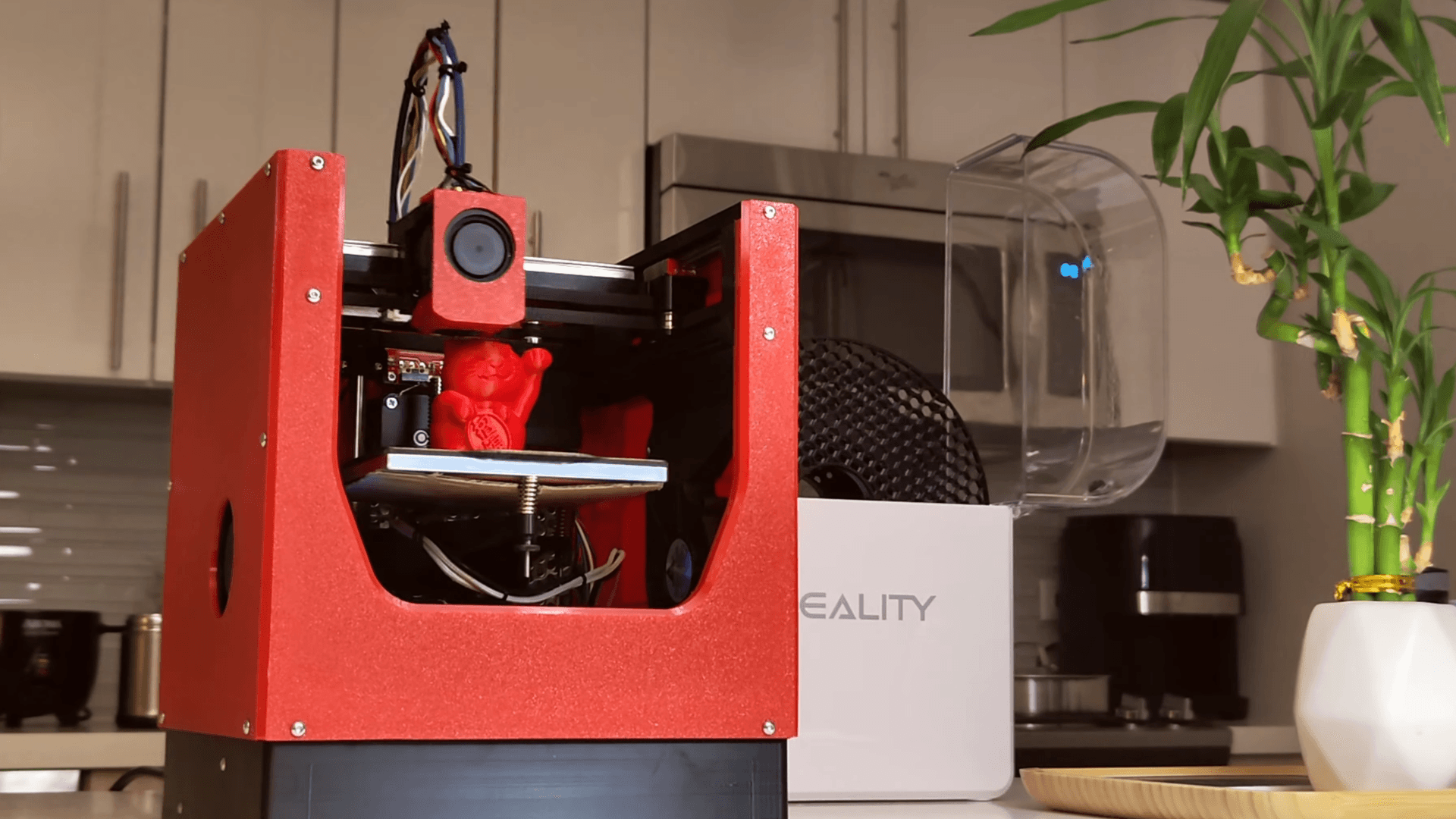
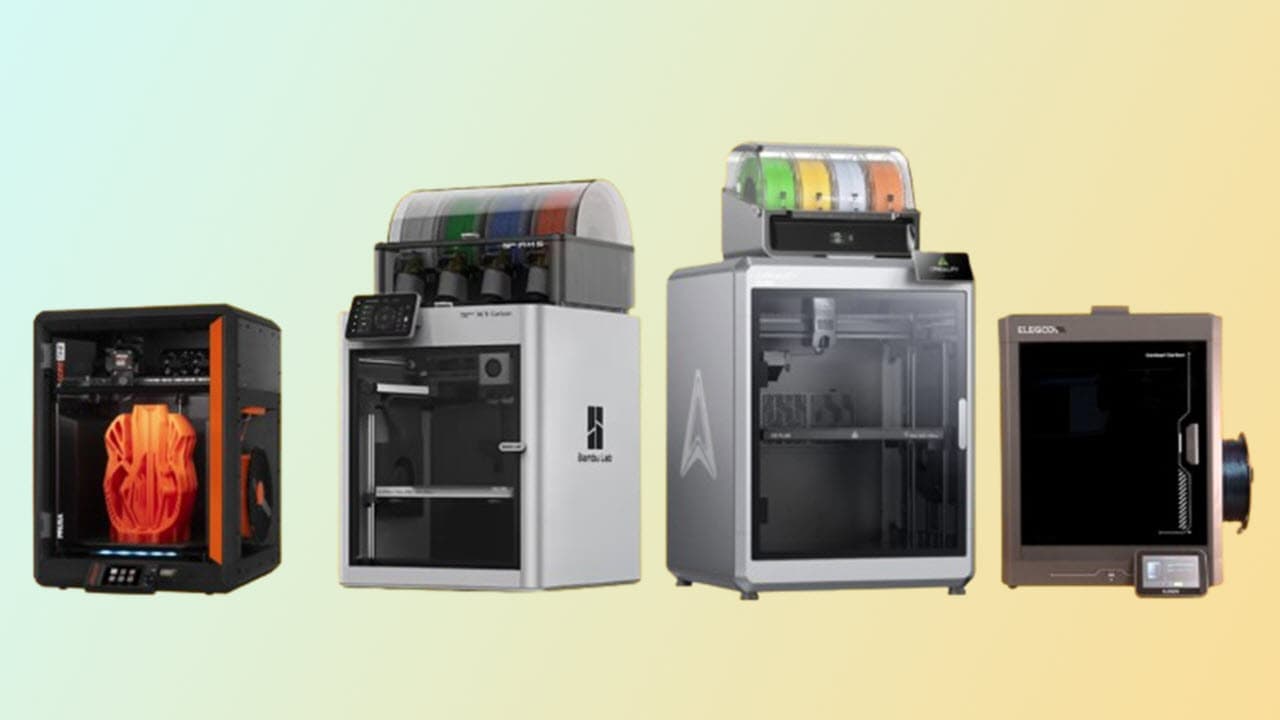
All3DP highlights free print-in-place desk toys with satisfying motion
Free print-in-place desk toys can do more than kill time, and the gear cube is the clearest proof, with clean motion, easy assembly, and low filament cost.
All3DP’s latest desk-toy roundup is built around a simple promise: print something free, print it once, and get motion that actually feels good in hand. The best picks are not novelty clutter. They are the models that reward a clean first layer, sensible tolerances, and a printer that can move smoothly enough to make gears, clicks, and geometric motion feel crisp instead of gritty.
Why these fidgets stand out
The appeal here is practical as much as playful. All3DP frames the selection around print-in-place gears and mesmerizing motion, which means the toys are doing double duty as both desk entertainment and a quick read on how dialed-in a printer really is. If the moving parts glide, the print has done more than succeed on the bed, it has shown that the machine can handle the small gaps and clean interfaces that make motion prints satisfying.
That is also why the roundup lands well for hobbyists looking for something worth the filament. These are free files you can drop into a slicer and send straight to the machine, which keeps the barrier low and the payoff immediate. A good fidget print should be small enough to finish without a huge material commitment, but interesting enough that you will keep picking it up long after the print bed cools.
The gear cube is the easy win
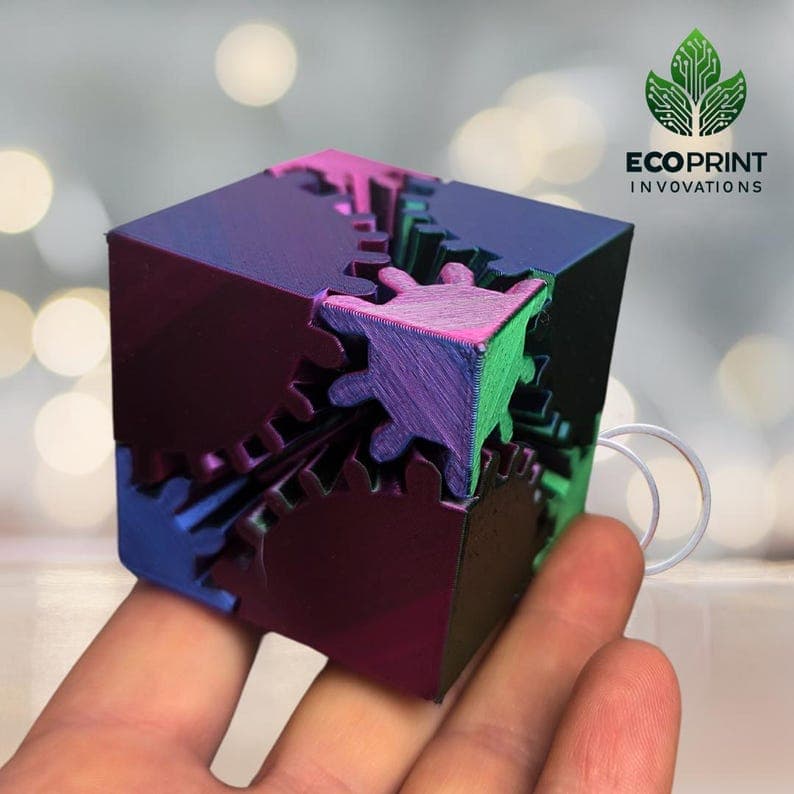
If you want the most straightforward place to start, the gear cube style of print-in-place toy is the cleanest entry point. MakerWorld’s Gear Cube Fidget, No Screws, describes itself as super fun, easy to print, and relaxing, and says it prints very easily and fast before clicking together in assembly. That combination matters: the model is not asking for screws, cleanup, or a long post-print ritual, just a good print and a little motion.
Printables lists a similar Gear Cube Fidget, No Screws, at about 3 hours 16 minutes and 67 grams of PLA on a Prusa MK4S. That gives the project a concrete footprint, and it is a useful reminder that these desk toys are not just concept pieces. They are real, modest prints, the kind you can slot into an evening session without committing a full spool.
The gear cube also sits in the sweet spot between easy and useful. It is forgiving enough to be a casual print, but sensitive enough that you can feel the difference between a model that was merely completed and one that came off the plate clean. A good gear cube should spin with that tight, reassuring feel that tells you the clearances were right the first time.
Why print-in-place keeps coming back
All3DP’s roundup is part of a broader push toward print-in-place models, a format the site has also spotlighted in a separate collection of 30 free projects. That makes sense, because print-in-place is one of the most satisfying tricks desktop 3D printing can pull off. A single build turns into a moving object, and that one-piece transformation is still one of the best demonstrations of what a printer can actually do.
For desk toys, the format solves a few problems at once. It cuts out assembly hardware, reduces the chance of lost parts, and keeps the whole experience centered on the print itself. It also keeps the post-processing light, which matters when the point is to get something tactile onto a desk quickly, not to spend an afternoon sanding and snapping together tiny components.
There is a reason this format keeps surfacing in hobby coverage. It gives you a compact object with visible engineering baked into it. You are not just making a trinket. You are making tolerances visible.
Motion is the whole point
The strongest print-in-place fidgets do not rely on gimmick alone. They work because motion becomes the product. Smooth spins, clean clicks, and repeated mechanical loops are what make the print feel satisfying instead of disposable, and that is why these designs keep showing up in the community.
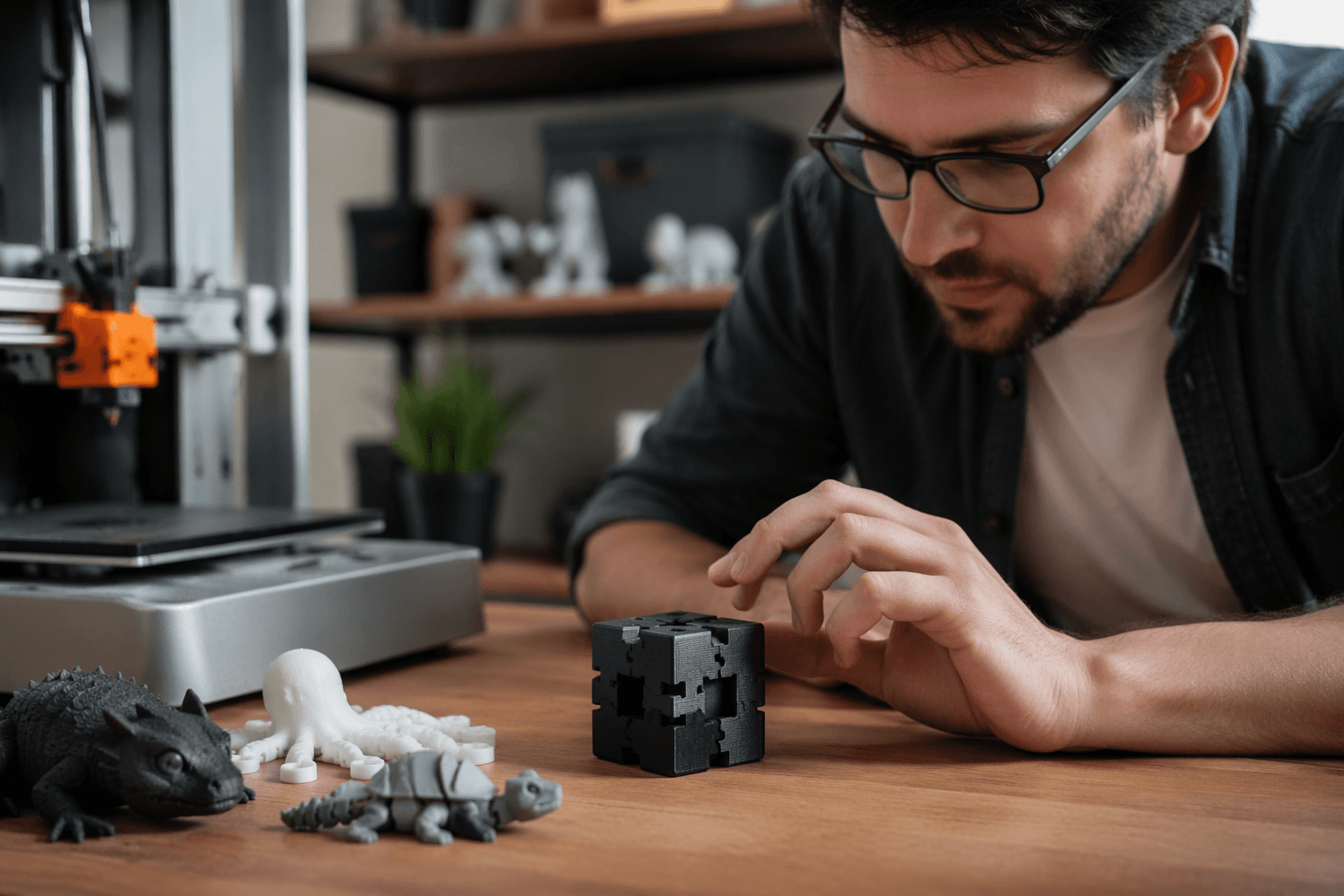
There is also a real behavioral backdrop behind the appeal. A 2018 study found that fidget spinner use appeared to have a favorable short-term effect on fine motor control, though the authors cautioned that the benefit may come from object manipulation more generally rather than from spinners alone. A 2023 fMRI study went further, finding that fidget-spinner use activated cortico-striatal circuits tied to planning and reward, and that participants with ADHD showed improved motor-task performance after use.
That research does not turn a desk toy into a medical tool, but it does explain why these objects can feel more compelling than a standard knickknack. Repetition, grip, and motion are built into the experience. In print terms, that means the model has to earn its place by working cleanly, not just by looking clever in a render.
A design with history behind it
The gear-cube idea itself has more mileage than a lot of people realize. One MakerWorld gear-cube model notes that versions of the concept existed before 2010, and that the earliest 3D-printable version the author found was by Emmett on Thingiverse. That little bit of lineage matters because it shows the design did not appear out of nowhere as a fresh trend. It has been iterated on, shared, and remixed across the community for years.
That history also helps explain why the shape keeps coming back. It is simple enough to print, recognizable enough to share, and mechanical enough to keep rewarding attention. In a hobby that sometimes gets swallowed by giant multi-part projects, a compact gear cube remains a very efficient proof of concept.
How to choose the right one for your printer
The best way to approach these desk toys is to match the model to what you want to learn from the print.
- Choose a gear cube if you want the clearest read on tolerances and the fastest route to a satisfying result.
- Choose a print-in-place gear or geometric motion piece if you want a more mesmerizing motion pattern and a stronger showcase print.
- Choose a no-screw model if you want the lowest-friction path from slicer to desk.
That is the real value of this roundup. It is not asking you to treat fidgets as throwaways. It is pointing you toward the small prints that tell you something useful about your machine while still being fun to pick up, spin, and keep within reach.
By the time the gears are moving cleanly, the point becomes obvious: the best desk toy prints are the ones that turn a few hours on the printer into a tiny mechanical habit you will actually want to keep.
This article was produced by Prism’s automated news system from verified source data, official records, and press releases, then run through automated quality and moderation checks before publishing. The system is built and supervised by the people who set the standards it runs under. Read our full AI policy.
Know something we missed? Have a correction or additional information?
Submit a Tip