Mostly printed Encore squeezes CoreXY performance into a tiny frame
Encore turns a mostly printed CoreXY into a compact lesson in motion systems, showing why small printers still teach big-machine habits.
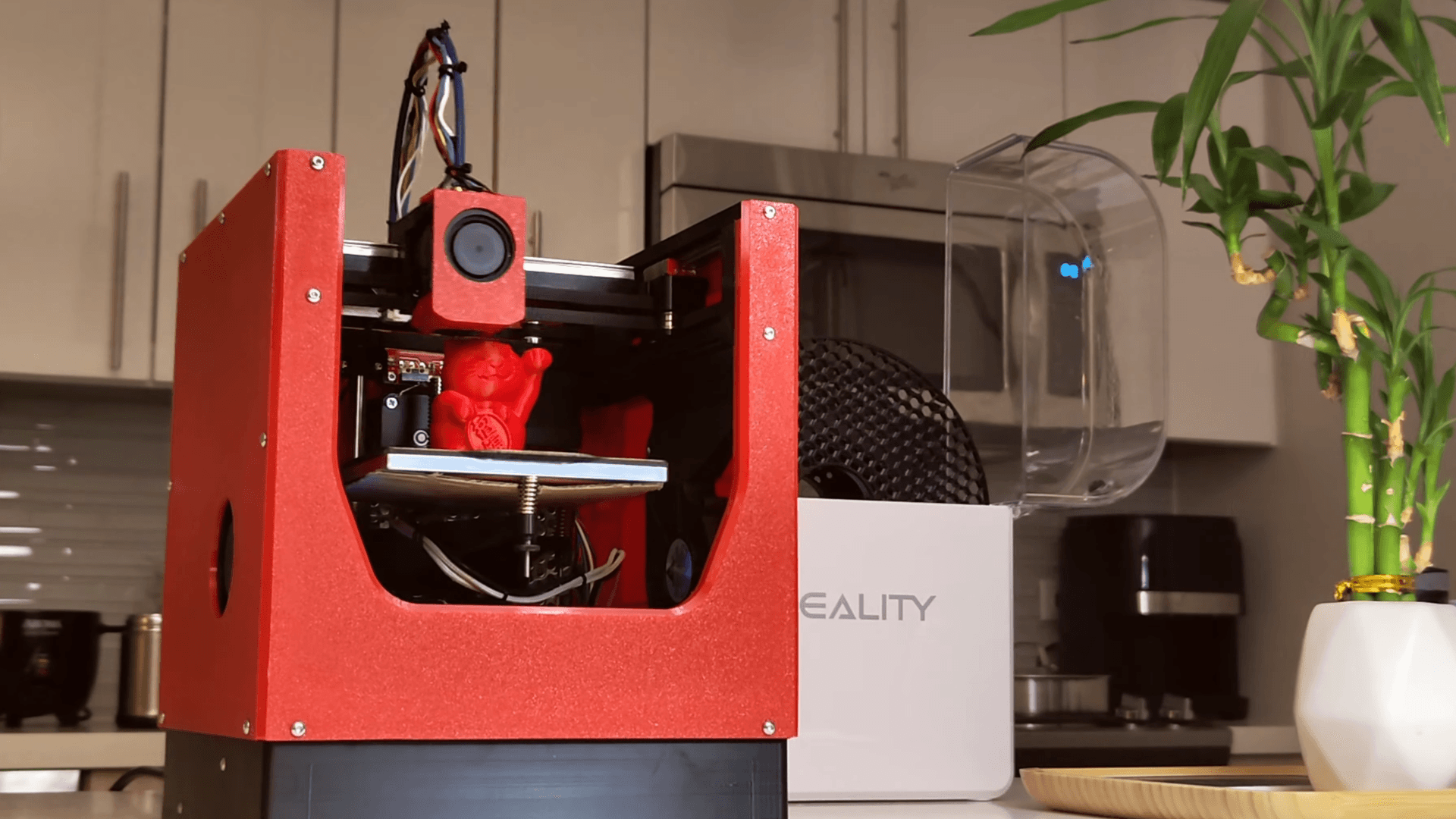
Encore lands in that sweet spot where the build itself explains the machine. Alex Yu’s mostly printed CoreXY compresses real printer engineering into a body measuring 219 x 221 x 262 mm, yet still aims for a build volume of about 120 x 120 x 120 mm. That size mismatch is the point: the project shows how much motion performance, rigidity, and tuning discipline you can pack into a tiny frame when every millimeter of structure has to earn its keep.
Why this tiny CoreXY matters
CoreXY builds have stayed popular for a reason. The layout keeps the moving mass low, which is part of why these machines feel fast and precise when they are tuned well, and Encore pushes that lesson into an especially tight package. Instead of treating compactness as a novelty, the design makes compactness the engineering problem, then answers it with a fully printed chassis, MGN9C linear rails for the X/Y gantry, and a Z axis built around an 8 mm linear rod and 8 mm leadscrew.
That makes Encore more than a cute desk-size printer. It is a proof-of-principles build for anyone trying to understand why modern printers behave the way they do when speed, stiffness, and motion planning all collide inside a small frame. You can see the tradeoffs immediately: less material, less weight, less footprint, but also less margin for sloppy alignment or weak cooling.
A build that fits the hobby as it actually exists
Encore also makes sense in the context of the hobby around it. RepRap, the open-hardware movement that helped define DIY printing in the 2000s, was built around making self-replicating machines freely available. That spirit still runs through this project, even if the days of fully printed printer kits dominating the scene have faded from their peak.
The difference now is that a project like Encore is no longer trying to prove that a printer can be printed at all. It is trying to prove something more useful: that a mostly printed machine can still be stiff, modular, and practical enough to teach real lessons about printer design. The repository’s README makes that philosophy plain by describing the chassis as entirely 3D printed, with no aluminum extrusions or custom CNC’d parts. The printed parts are meant to fit on a 225 mm bed, which means a common machine such as an Ender 3 or a Bambu A1 or P1 class printer can produce the parts without special equipment.
That matters because it lowers the barrier to entry in a very specific way. You are not just buying into a build. You are borrowing the logic of the build: print the frame on the machine you already have, assemble a small CoreXY, and learn what rigidity, belt geometry, and mass distribution actually do when the printer starts moving.
What the hardware choices teach
The component list reads like a compact-printer workshop in miniature. Encore uses a Bowden extruder, a lightweight Bambu-style hotend, and NEMA 17 stepper motors, which keeps the moving assembly lean while preserving familiar parts sourcing. The 120 mm bed target also gives the design a clear identity: this is not a tiny printer because the builder ran out of ambition, but because the footprint is part of the experiment.
The rails and printed side panels are especially instructive. Rather than relying on a conventional internal frame, the machine uses linear rails mounted on printed side panels, which keeps the design modular while still providing enough rigidity for the motion system. That arrangement turns the shell into part of the structure, which is exactly the kind of compromise that makes compact builds interesting. You can see where stiffness comes from, where it has to be borrowed from the printed parts, and where a small amount of flex will show up first.

- keep the moving mass low if you want the printer to stay composed at speed;
- make the frame geometry do more work than the part count suggests;
- do not assume a smaller printer is automatically easier to tune.
For a home printer builder, the lesson is straightforward:
Encore demonstrates all three at once.
The tuning is the whole story
Hackaday’s coverage made the right call in framing Encore as a project where building is only half the fun. The other half is getting it to print cleanly. Early issues included insufficient hotend cooling and some Z-axis stability trouble, and those problems were not brushed aside as footnotes. They were addressed with a stronger fan, a redesigned ventilation shroud, side-blowing fans, and adjustments to the Z structure.
That sequence is valuable because it mirrors the real debugging path of a larger printer project. When a small CoreXY starts misbehaving, the problem is rarely one thing. Cooling can expose hotend weakness, the hotend can add weight where you do not want it, and the Z structure can begin to reveal how much the printed chassis is really carrying. Encore is useful precisely because it collapses that sequence into a machine small enough to study closely.
The payoff is practical. If you learn on a printer like this, you come away with a better feel for nozzle-to-bed setup, motion stability, and the way cooling and structure interact under load. That knowledge transfers directly to bigger machines, where the same mistakes cost more time, more filament, and more frustration.
A small printer in a bigger current
Encore also sits in a current of small CoreXY interest that is very much alive. Voron Design’s V0 line has long sold the appeal of a tiny CoreXY that still feels serious, and Bambu Lab’s A1 and P1 series have shown how much the market now rewards compact motion systems that print fast and reliably. Against that backdrop, Yu’s build reads less like nostalgia and more like a reminder that compact engineering is still a live category.
The repository backs that up. The project is public, licensed under GPL-3.0, and has seen 87 stars and 13 commits, including a recent update titled “Add BOM, use M3x10 instead of M3x12 for bottom Z, STL name updates.” That is the kind of churn that tells you a printer is still being shaped in real time, not frozen as a finished artifact.
Encore is interesting because it keeps the old RepRap impulse alive without pretending the hobby has stayed still. It uses the language of modern compact CoreXY design, borrows from the consumer market’s obsession with speed and refinement, and still stays faithful to the do-it-yourself instinct that made printed printers matter in the first place. The machine is tiny, but the lesson is not: when the frame shrinks, the design decisions get louder.
This article was produced by Prism’s automated news system from verified source data, official records, and press releases, then run through automated quality and moderation checks before publishing. The system is built and supervised by the people who set the standards it runs under. Read our full AI policy.
Know something we missed? Have a correction or additional information?
Submit a Tip