AmeraLabs Releases 23-Point Resin Safety Analysis for Desktop 3D Printing
AmeraLabs warns that resin reactions can strike suddenly after multiple exposures with no prior symptoms, and the damage may be permanent.
Lithuanian resin manufacturer AmeraLabs published a 23-point safety analysis of photopolymer resin hazards, taking direct aim at the misconceptions that have spread alongside the boom in consumer desktop and vat-based 3D printing. The document, posted freely on the company's website, is one of the most substantive public-facing safety resources the resin printing community has seen.
Writing for Fabbaloo on March 13, Kerry Stevenson called it "easily the most comprehensive and easy-to-read reports on the toxicity issue available today." That's not faint praise in a space where safety guidance tends to be buried in SDS sheets or reduced to a single line in a printer manual.
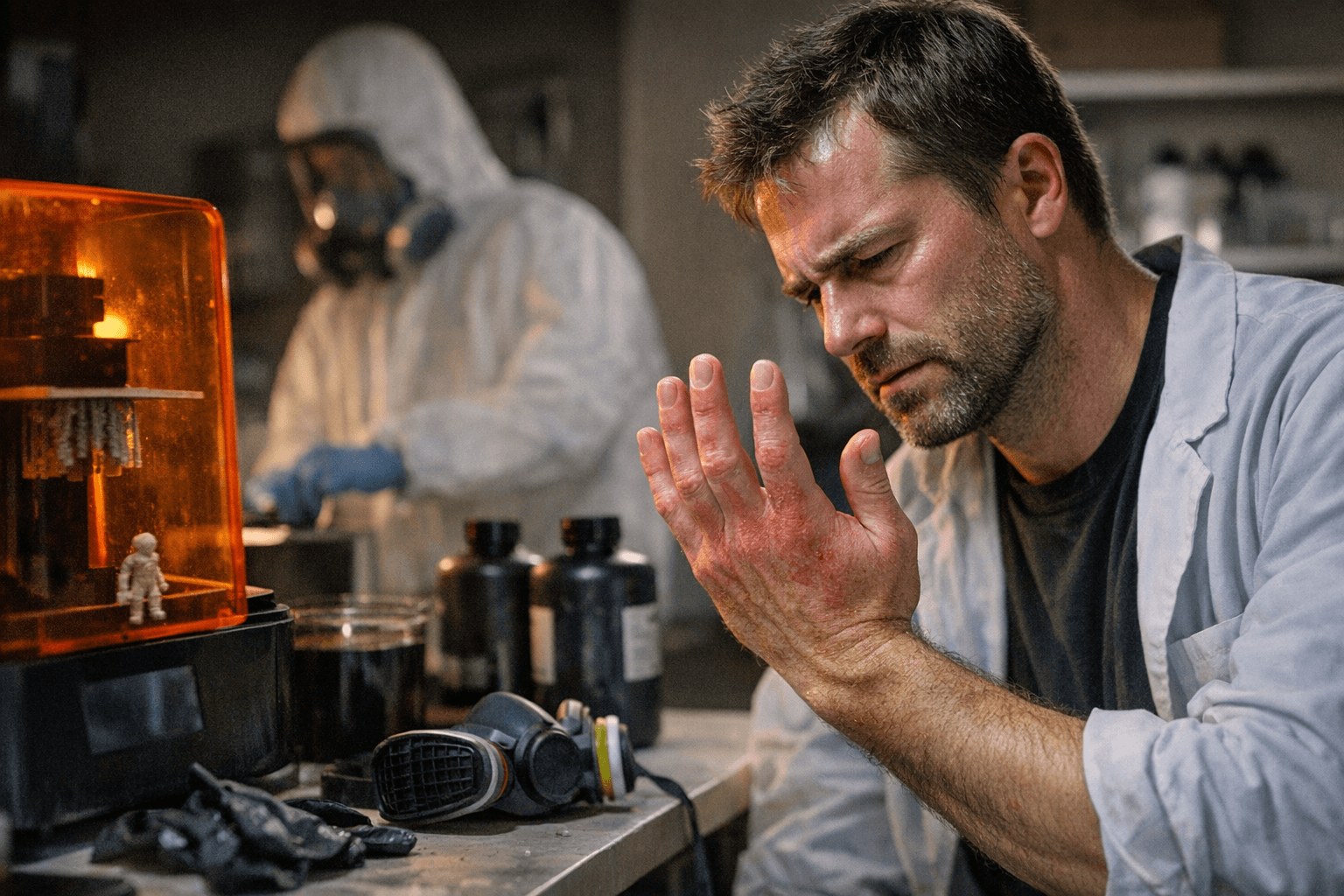
The core warning in the analysis cuts against a dangerous assumption many resin printers carry: that because they've handled uncured resin without incident, it must be safe. AmeraLabs and Stevenson's coverage both emphasize that this reasoning is exactly backwards. "The human body's reaction to exposure begins only after multiple exposures to the chemicals," Stevenson wrote. "In other words, someone could be working with resin improperly for a while before they very suddenly have serious symptoms — and these will never go away."
That delayed-onset sensitization is the document's central concern. Once the immune system is sensitized to the reactive monomers and photoinitiators common in photopolymer resins, even trace exposure can trigger a reaction. There is no desensitization. The window of apparent safety that many home printers experience is not evidence of low risk; it's a countdown.
AmeraLabs is well-positioned to make this argument. The company has been producing 3D printer resin for nearly a decade, giving its technical team direct, long-form experience with these materials across a wide range of formulations and use conditions. Stevenson noted that the company "deeply understand[s] the issue of resin toxicity, which unfortunately still has serious misconceptions in the broader 3D print world."
The concern is particularly pointed for hobbyists running machines at home. As low-cost MSLA and LCD printers have flooded the market, the user base has expanded well beyond the labs and studios where safety culture was already established. "Many home 3D printer operators do not" follow proper procedures, Stevenson wrote, "and they will be the first ones to suffer the consequences."
The Fabbaloo article's tags give a useful shorthand for what the 23-point analysis covers: PPE, respirators, and ventilation are all explicitly flagged. The full enumerated list of findings wasn't reproduced in the coverage, which means the actual document is required reading if you want the complete picture. It's available on the AmeraLabs website at no cost.
This article was produced by Prism’s automated news system from verified source data, official records, and press releases, then run through automated quality and moderation checks before publishing. The system is built and supervised by the people who set the standards it runs under. Read our full AI policy.
Did this article answer your question?