AmeraLabs Releases Free Guide Debunking 23 Resin 3D Printing Safety Myths
AmeraLabs' free 23-myth resin safety guide warns that sensitization symptoms "will never go away" — and that most home operators don't know the danger until it's too late.
AmeraLabs has been producing quality 3D printer resin for almost a decade, which makes its newly published safety guide carry a different kind of weight than the usual hobbyist blog post. The Lithuanian manufacturer released "23 Resin Safety Myths a Resin Manufacturer Wants You to Know," covering resin 3D printing safety myths using regulatory data, published research and manufacturer knowledge that most safety articles do not have. It is freely available on the AmeraLabs website.
The motivation behind the guide is blunt. AmeraLabs states plainly: "We formulate and manufacture 3D printing resin at AmeraLabs. We know what goes into photopolymer resin formulations, and we know Safety Data Sheets do not go deep enough to cover everything." That gap between what an SDS tells you and what you actually need to know is exactly what the 23-point guide is designed to close.
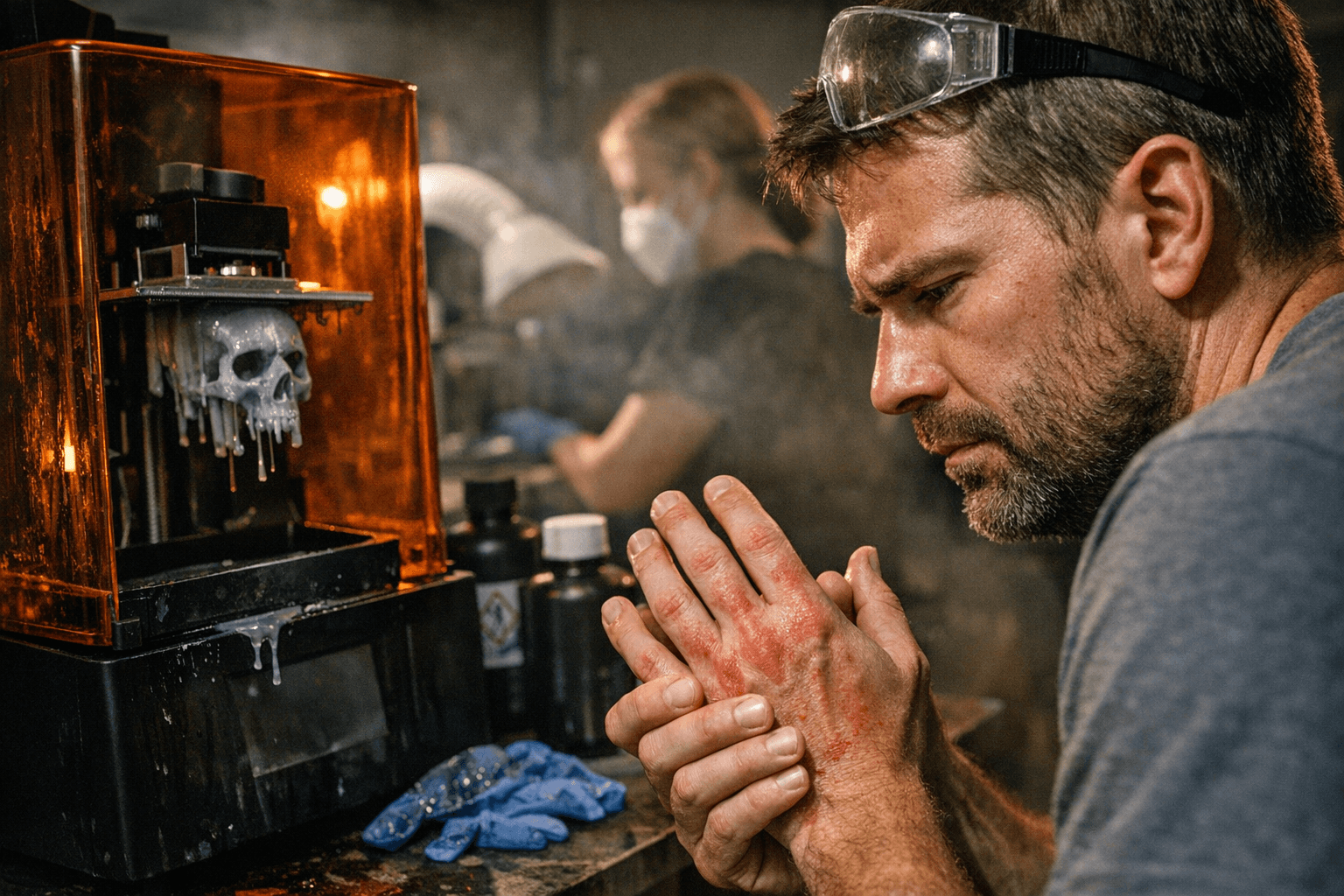
The core toxicity concern is one that catches a lot of operators off guard. Most 3D printer resins are indeed toxic, but carry a particularly dangerous property: the human body's reaction to exposure begins only after multiple exposures to the chemicals. Someone could be working with resin improperly for a while before very suddenly developing serious symptoms — and these will never go away. Because of this, some operators mistakenly believe resin "is safe" because they simply haven't yet experienced a reaction.
The guide also surfaces several specific findings that even experienced resin printers may not know. You should replace nitrile gloves at least every five minutes when handling resin. Water-washable resin is often much more toxic than IPA-style resin. Bio-based resins are not safer than non-bio-based resins. Washed but not yet cured prints are still dangerous to handle. Curing via sunlight is very unpredictable. And resin prints are never food safe.
Against all of that, AmeraLabs distills its guidance into four rules it describes as non-negotiable: always wear safety glasses or a face shield; always wear an organic vapor respirator when working with resin; always ventilate to outdoor air, not just filter and recirculate. The fourth is to always wear nitrile gloves when handling anything resin-related. The guide's framing on this is unambiguous: "Your lungs, skin and future options cannot be replaced. Gloves and respirators can."
Fabbaloo's Kerry Stevenson, writing on March 13, called it "easily the most comprehensive and easy-to-read reports on the toxicity issue available today." His assessment of the stakes is equally direct: "many home 3D printer operators do not" follow proper procedures, "and they will be the first ones to suffer the consequences."
Whether you are printing your first miniature on an MSLA printer or running a production shop with SLA and DLP machines, the guide's findings apply. The sensitization risk doesn't care how experienced you are — it only cares whether you've been skipping the basics.
This article was produced by Prism’s automated news system from verified source data, official records, and press releases, then run through automated quality and moderation checks before publishing. The system is built and supervised by the people who set the standards it runs under. Read our full AI policy.
Did this article answer your question?