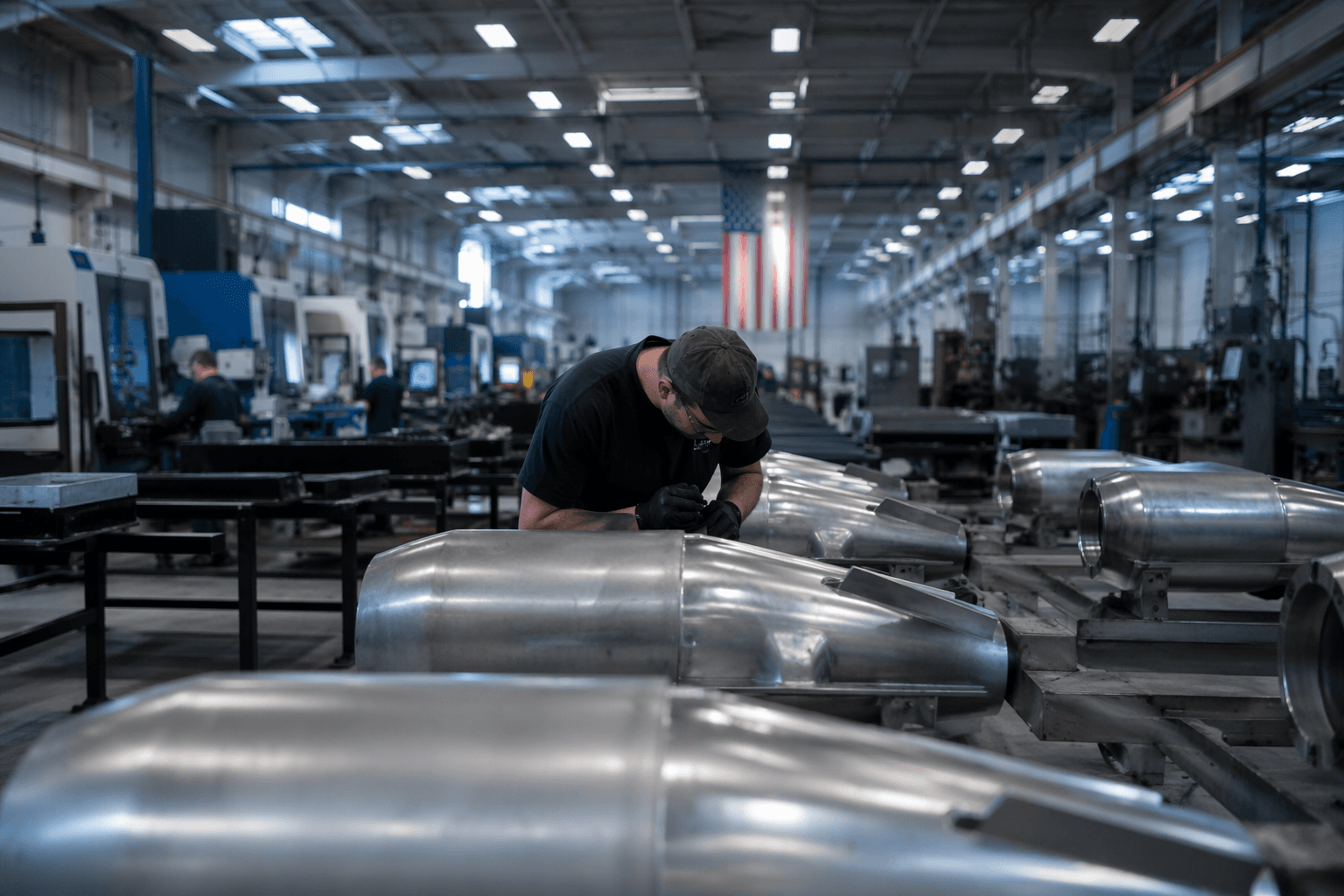
Applied Rapid Technologies (ART) named a JAMA prime contractor to supply 3D‑printed defense parts to DLA
ART lands JAMA prime contractor status to 3D-print flight-critical defense parts, part of a $3.3B federal AM push that's quietly rewriting shop-floor quality standards.
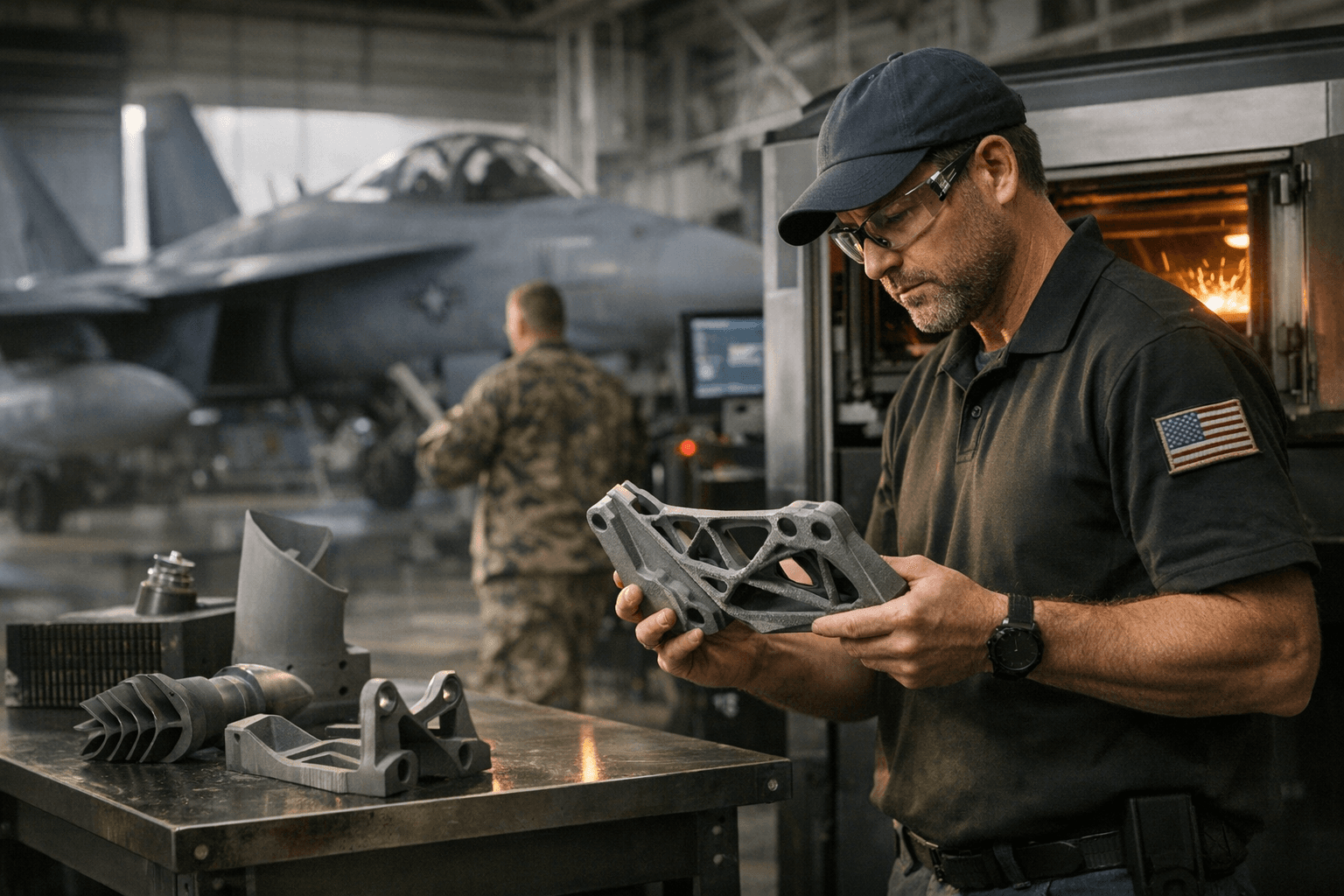
What would you do differently if the part coming off your build plate had to pass a flight-safety inspection before it ever touched a real machine? Applied Rapid Technologies (ART), a Virginia-based division of Obsidian Solutions Group, now has to answer that question every single day. The company was awarded prime contractor status under the Defense Logistics Agency's Joint Additive Manufacturing Acceptance (JAMA) Indefinite Delivery/Indefinite Quantity Pilot Parts Program on March 27, marking another formal step in the U.S. military's institutional embrace of additive manufacturing.
JAMA exists because the DoD has a parts availability problem that 3D printing is uniquely positioned to solve. The DLA created the program to modernize procurement by enabling rapid, trusted sourcing of additively manufactured components, cutting through the friction that has historically slowed on-demand replacement part supply chains. Rather than re-vetting suppliers each time a mission-critical bracket or housing needs replacing, JAMA pre-qualifies contractors, streamlining the entire pipeline. As a prime contractor on the vehicle, ART is now a cleared supplier authorized to produce and qualify AM parts for defense customers, support validation efforts, and scale production for on-demand replacement components.
The scale of federal commitment behind this move is striking. The FY2026 budget request allocates roughly $3.3 billion to AM-related projects, a substantial jump from the prior year. ART's selection is not an outlier; Velo3D and several other AM firms have also recently secured large DoD-adjacent contracts, pointing to a systematic effort to build domestic, validated additive manufacturing capacity. Jim Wiley, President and Co-Founder of Obsidian Solutions Group, framed the JAMA award as recognition of the company's dedication to "quality, innovation, and mission support," values baked into ART's more than 25-year track record in rapid prototyping and short-run production.
Here is the part that matters to anyone running a printer in a garage, workshop, or small shop: the quality infrastructure ART is required to maintain to hold that prime contractor status is a blueprint worth borrowing. Defense acceptance standards do not stay in classified vaults forever. The materials databases, qualification protocols, and process control frameworks that JAMA demands tend to migrate into commercial and industrial AM workflows over time, eventually filtering down into the tools and expectations of the broader ecosystem.
Stripped of the acronyms, the JAMA quality playbook comes down to three habits: material lot tracking, print logging, and acceptance testing. Material lot tracking means recording the specific batch and supplier of every filament spool or resin bottle used in a functional print, so any failure can be traced back to its source. A print log captures the machine, settings profile, ambient conditions, and timestamp for every job, creating a chain of evidence connecting a finished part to the exact conditions under which it was made. Acceptance testing means defining pass/fail criteria before starting a print, whether that is dimensional tolerances checked with calipers, a deflection test, or a layer-adhesion pull test, and then actually running those checks before the part goes into service.
None of this requires aerospace tooling. A shared spreadsheet and a set of calipers cover the basics for most workshop applications. The point is intentionality: defense-grade AM is defined not by exotic materials or expensive machines but by the discipline of documentation and verification. ART's JAMA designation marks another step in additive manufacturing's transition from experimental tool to institutional supply chain backbone, and the habits that earn that status are the same ones that separate a reliable functional print from one that fails under load.
This article was produced by Prism’s automated news system from verified source data, official records, and press releases, then run through automated quality and moderation checks before publishing. The system is built and supervised by the people who set the standards it runs under. Read our full AI policy.
Did this article answer your question?