Astrobase Installs India's Largest 3D Printer for Rocket Engine Production
Astrobase's new printer arrived on four trucks and can produce multiple 80-tonne thrust rocket engines per year, bumping Agnikul Cosmos from the title of India's largest 3D printer.

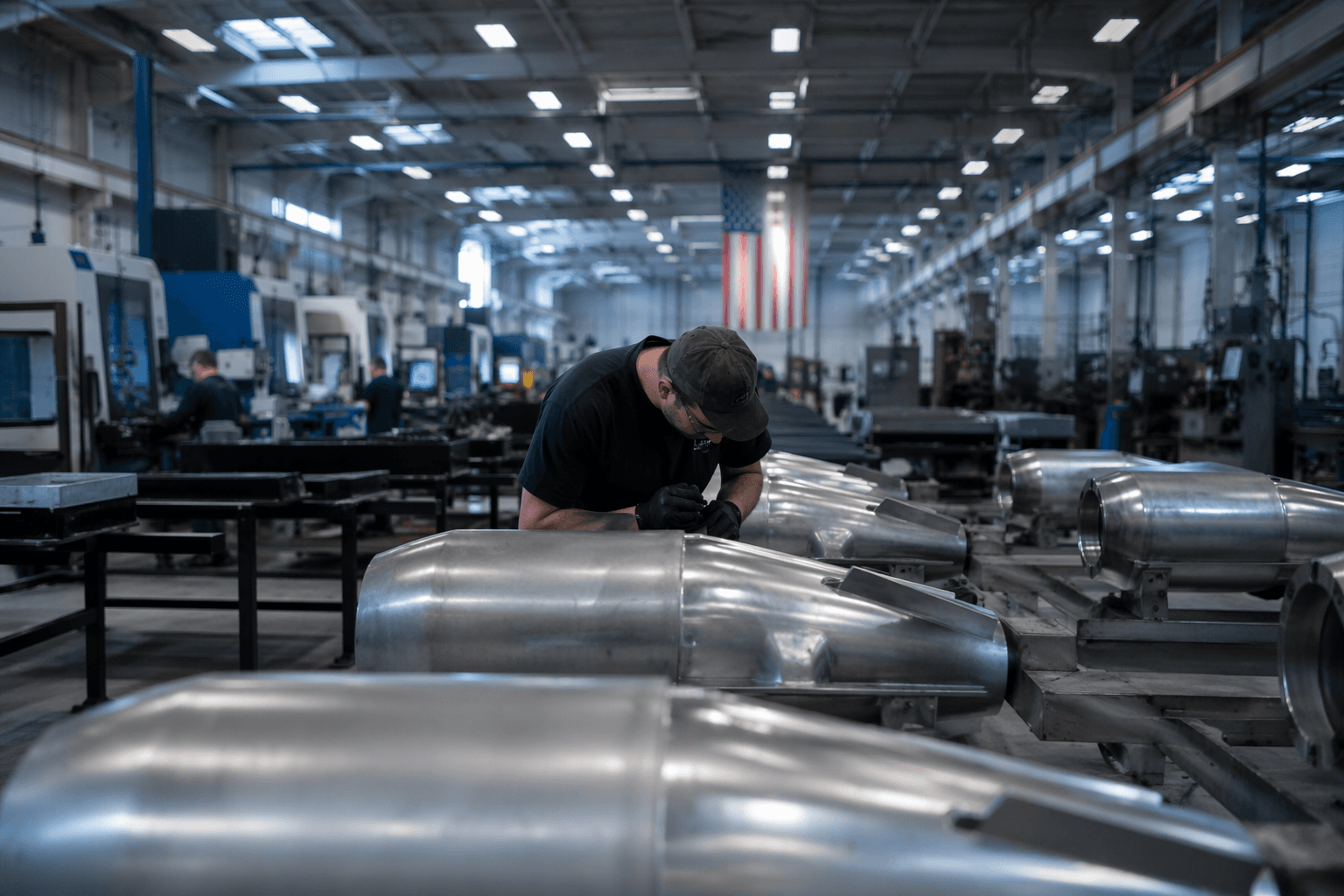
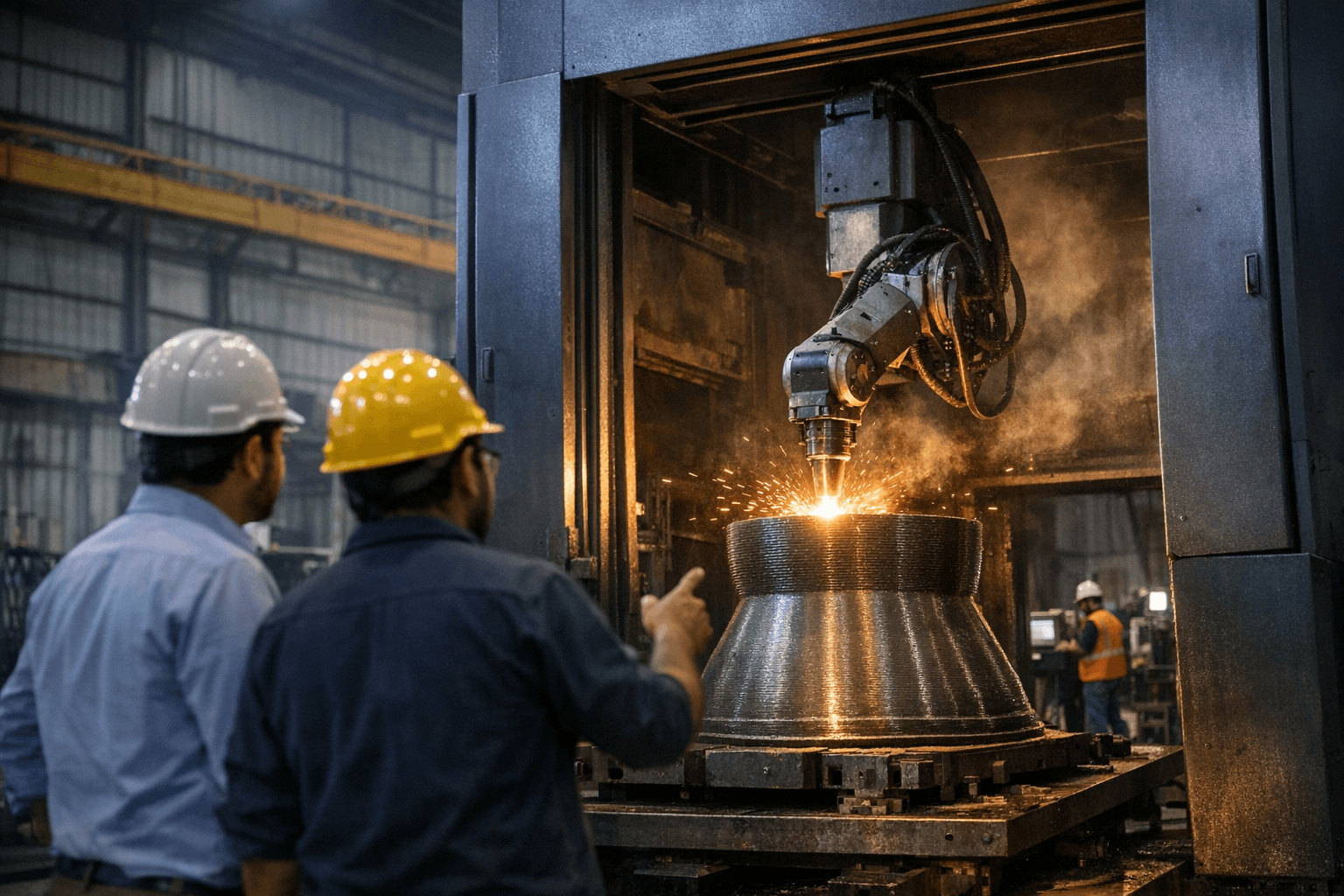
Getting India's largest 3D printer into Astrobase Space Technologies' facility required four trucks. That scale alone telegraphs what the Bangalore-based startup is building toward: a machine capable of producing multiple 80-tonne thrust full-flow staged combustion (FFSC) rocket engines per year from a single unit, printing combustion chambers, injectors, and internal cooling geometries that no conventional machining line could turn around economically.
Until this delivery, that title belonged to Agnikul Cosmos and its Chennai-based Large Format Additive Metal Manufacturing facility, which opened in September 2025 and prints components up to one metre in height, demonstrated by producing full-length Inconel engine chambers in seven days. Astrobase's new system is described as a step beyond it, sized for the larger components demanded by an 800 kN methalox FFSC engine.
Astrobase co-founder Devakumar Thammisetty spent more than 13 years on cryogenic propulsion at ISRO, contributing to both the GSLV and the Gaganyaan human spaceflight programme, before co-founding the company in 2024 alongside Neeraj Khandelwal, an IIT Bombay alumnus and CoinDCX co-founder. Astrobase successfully sub-scale hot-fired the FFSC engine in September 2025 and has full-scale tests scheduled for this year, a VTOL hop demonstration targeted for 2027, and a first orbital flight planned for 2029.
The new printer is housed in Astrobase's 46,000 sq. ft. assembly factory and is expected to shorten lead times by enabling monolithic parts rather than multi-piece assemblies requiring hundreds of fasteners and leak-prone joints. It also allows engineers to embed internal cooling channels and lattice structures that are physically impossible to machine after the fact.
The scale gap between this machine and a desktop printer is where the practical lessons sit. At aerospace build volumes, three problems dominate in ways that map directly onto large-format hobby prints.
Thermal management scales with part size, not printer brand. The temperature differential between a heated build surface and the surrounding atmosphere grows as parts get taller, and that gradient is exactly what produces the warping or cracking that kills long runs. Industrial metal printers handle this with tightly controlled chamber environments. For FDM users running anything beyond roughly 300 mm, a closed enclosure stops being optional and becomes the difference between a finished part and a failed one.
Segmentation beats monolithic ambition at the wrong scale. Astrobase has the infrastructure to control an end-to-end print of a combustion chamber; most hobbyist setups do not. Splitting a large geometry at structurally logical seams, orienting each segment for optimal layer adhesion, and joining post-print consistently outperforms a single run printed at an angle that compromises strength.
Tolerance planning has to be done at target scale, not test-coupon scale. A component sized for an 80-tonne-thrust engine accumulates dimensional error across its full length differently than a 50 mm calibration cube. The same shrink coefficient that reads as acceptable on a small part becomes an interference fit or a gap on something four times as long. Dialing in a material-specific correction factor before committing to a full run saves more time than iterating after the fact.
Astrobase's roadmap runs to orbital flight in 2029. How quickly it converts this printer's throughput into flight-ready hardware will be closely watched across India's private launch sector.
This article was produced by Prism’s automated news system from verified source data, official records, and press releases, then run through automated quality and moderation checks before publishing. The system is built and supervised by the people who set the standards it runs under. Read our full AI policy.
Did this article answer your question?