ASU develops micro-scale porous copper 3D printing for improved performance
ASU researchers developed microscale porous copper 3D printing using µCLIP, producing centimeter-scale parts with nanoscale pores for tunable reactivity and improved performance.
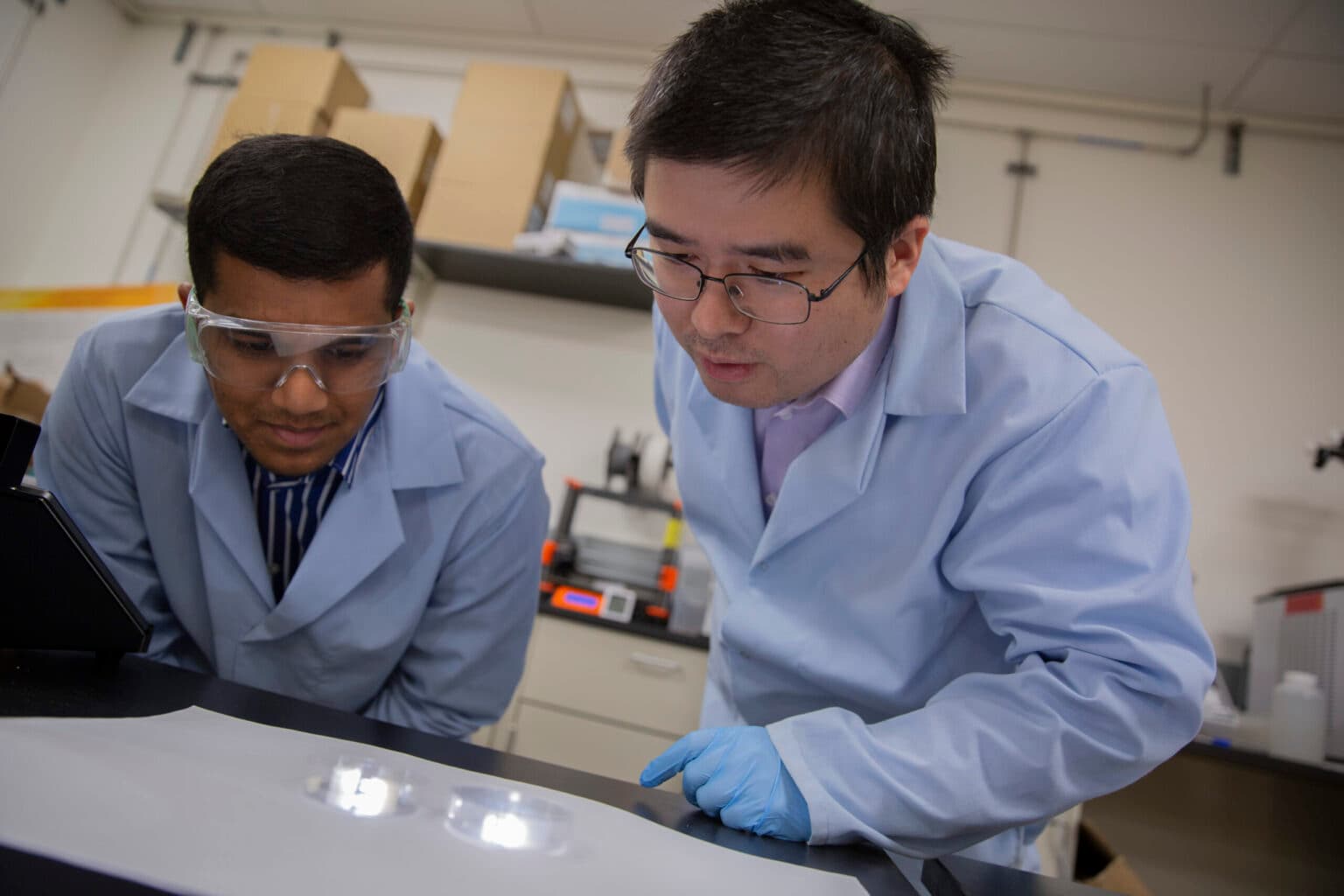
Arizona State University engineers have opened a new design space for metal additive manufacturing by 3D printing microscale porous copper with a fast, high-resolution process called micro continuous liquid interface production, or µCLIP. The team led by Assistant Professor Xiangfan Chen and Associate Professor Bruno Azeredo produced centimeter-scale metallic parts with microscale resolution and nanoscale pores described as thousands of times smaller than the width of a human hair.
The method marries µCLIP printing with post-sintering processing to realize intricate lattice-like architectures that govern material behavior, durability and performance. Chen said, “I saw this as an opportunity to leverage my expertise in high-resolution 3D printing to bring nanoporous metals into the microscale.” Chen added, “By combining precise architectural control with post-sintering processing, we were able to create metal structures that simply weren’t accessible before.” Azeredo described his prior work on low-temperature sintering of nanoporous powders and the gap the collaboration closed: “In my own research, I had previously learned how to sinter nanoporous powders at low temperatures, but had little clue how to 3D print them at microscales.” He said of the team-up, “That all changed when Chen came in and provided a definitive solution.”
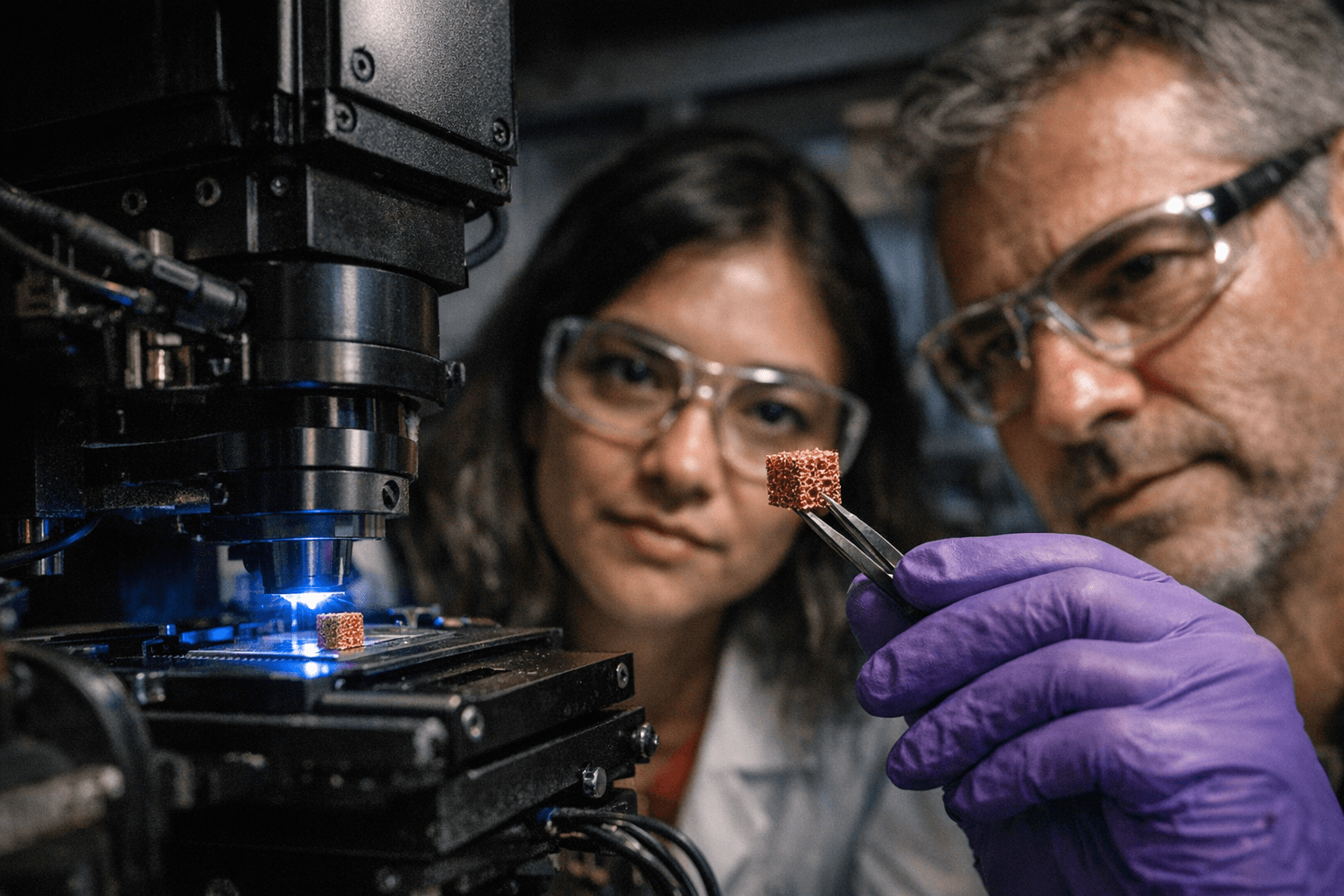
Technically, the project focused on printing copper components filled with nanoscale porosity and applying post-print sintering steps to bond the metal while preserving designed architecture. The researchers studied how metal powders with nanoscale pores interact with light to make powders heat and bond more efficiently, with the explicit goals of lowering sintering temperatures and speeding the metal printing process. The work achieved centimeter-scale metal parts while holding microscale feature control, a combination difficult to reach with conventional metal printing routes.
Practical value for the 3D printing community is clear: porosity becomes a programmable design knob. ASU social copy framed the implication bluntly: “What if metal could be programmed to react - or even destroy itself - by design? #ASUEngineering researchers Xiangfan Chen and Bruno Azeredo discovered that by 3D printing porous copper at low temperatures, they could precisely tune how metal behaves - from stable and conductive to highly reactive when exposed to air. Their findings unlocked new possibilities for information security, energy systems and adaptive materials.💡⚡” That phrase captures potential use cases raised by the team, including information security, energy efficiency and adaptive materials.
The work has attracted formal recognition; ASU reports the paper was accepted by the journal Nature Communications and the project received support from a second NSF Future Manufacturing grant. Social reactions on ASU channels emphasized the practical payoff, one commenter calling it “the era of ‘metal with instructions.’ Program the porosity, tune the chemistry, and let physics do the rest.”
For makers, lab shops and small-scale fabricators, programmable porosity points to new ways to tune conductivity, reactivity and thermal behavior without new alloys. The next steps are quantitative: pore sizes in nanometers, exact microscale resolution numbers, and sintering temperatures remain to be published with the manuscript. Expect follow-up data and lab releases that will tell whether µCLIP porous metals can move from ASU benches into community machine shops and production workflows.
This article was produced by Prism’s automated news system from verified source data, official records, and press releases, then run through automated quality and moderation checks before publishing. The system is built and supervised by the people who set the standards it runs under. Read our full AI policy.
Did this article answer your question?