At AIAA SciTech 2026, 3D Printing Moves From Novelty to Infrastructure
Additive manufacturing showed up across sessions at AIAA SciTech, shifting from novelty exhibits to assumed infrastructure in aerospace R&D and production.
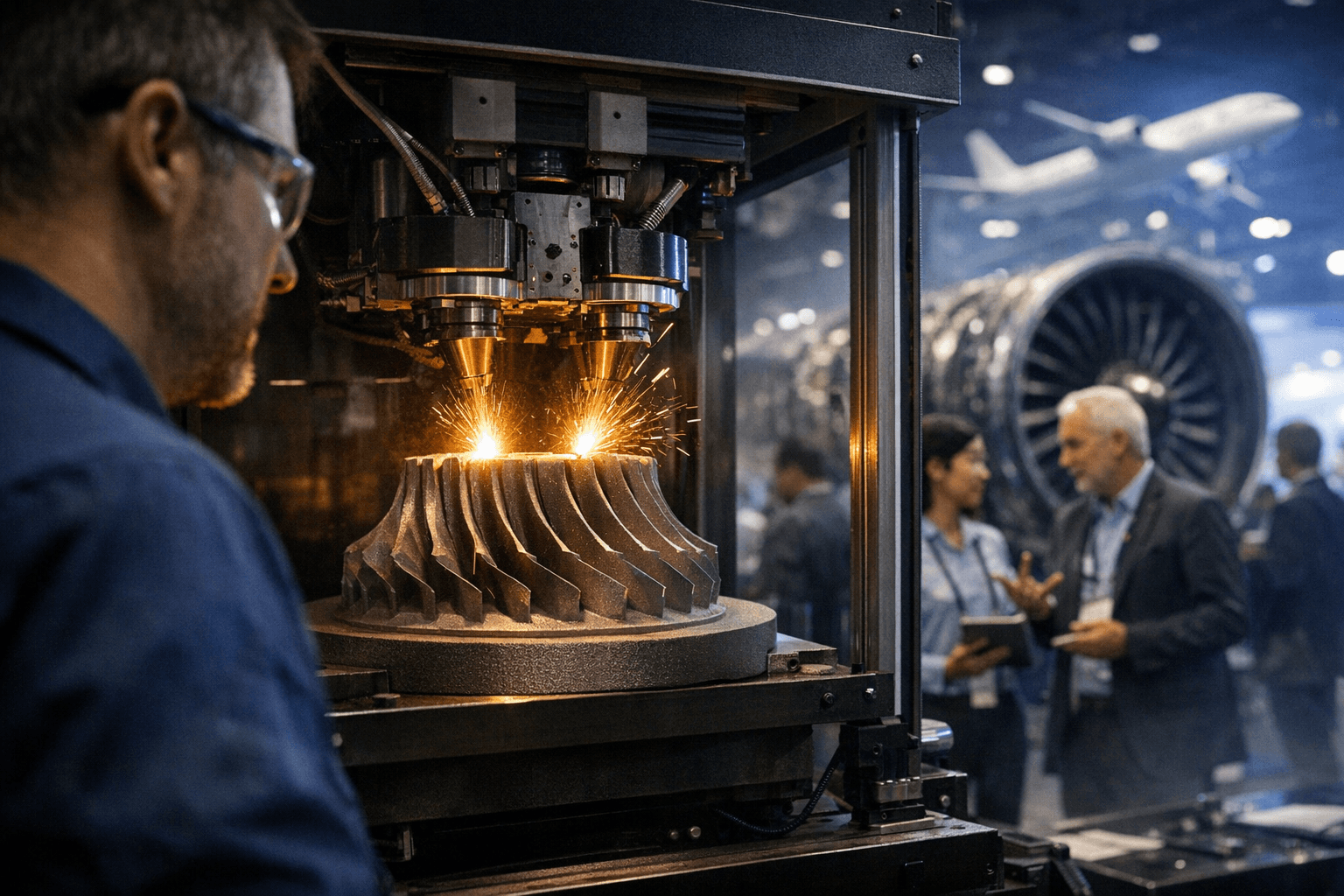
Additive manufacturing showed up everywhere at the AIAA SciTech Forum in Orlando, embedded across R&D and production workflows rather than confined to standalone booths. Thousands of attendees and nearly 3,000 technical papers made clear that AM is no longer an experimental add-on but a working part of inspection, metrology, materials performance, simulation-to-flight workflows, and workforce development.
Government labs brought program-level examples. The Air Force Research Laboratory (AFRL) surfaced research linking additive processes to qualification pathways and inspection strategies, signaling that defense programs expect integrated AM data streams and traceable metrology. Service providers such as Fathom appeared throughout the conference, positioned as partners that bridge prototyping and production with inspection and supply-chain services. Startups also demonstrated practical, deployable gear; Lab AM 24 showed a portable shielding solution for wire-based DED that points to field-capable directed energy deposition workflows rather than lab-only demonstrations.
Sessions on simulation-to-flight workflows emphasized verification and digital thread continuity from simulation models to build parameters and final part inspection. That emphasis matters for anyone who moves prints from desktop prototypes to flight hardware: without robust metrology and validated process data, simulation gains little traction. Presentations and exhibits treated materials performance not as speculative chemistry but as engineering inputs, material property data, fatigue testing, and inspector-ready metrics that feed into design decisions and certification plans.
Workforce development surfaced as a practical bottleneck and an opportunity. Discussions centered on training inspection technicians, process engineers, and simulation specialists so aerospace programs can field AM-enabled systems. For makers and small service bureaus, this means shifting attention from mere printer acquisition to skills in nondestructive evaluation, build-process control, and software workflows that link CAD, simulation, and post-process inspection.
For the community, the takeaway is clear: plan for additive manufacturing as infrastructure rather than an optional experiment. Verify process data, invest in metrology and inspection workflows, and evaluate partners on their simulation-to-flight practices. Monitor AFRL research and commercial offerings from companies like Fathom and Lab AM 24 for concrete examples of how organizations are operationalizing AM.
This is the first of a two-part series. Part two will examine specific demonstrations and vendor offerings in detail, and explain how to prioritize tools, training, and verification to move prints from the build plate onto certified programs.
Know something we missed? Have a correction or additional information?
Submit a Tip