Bambu A2L setup shows how packaging can simplify large-printer assembly
Bambu’s A2L shows how tight packaging, labeled parts, and heavy documentation can make a 330 mm-class printer feel far less intimidating.
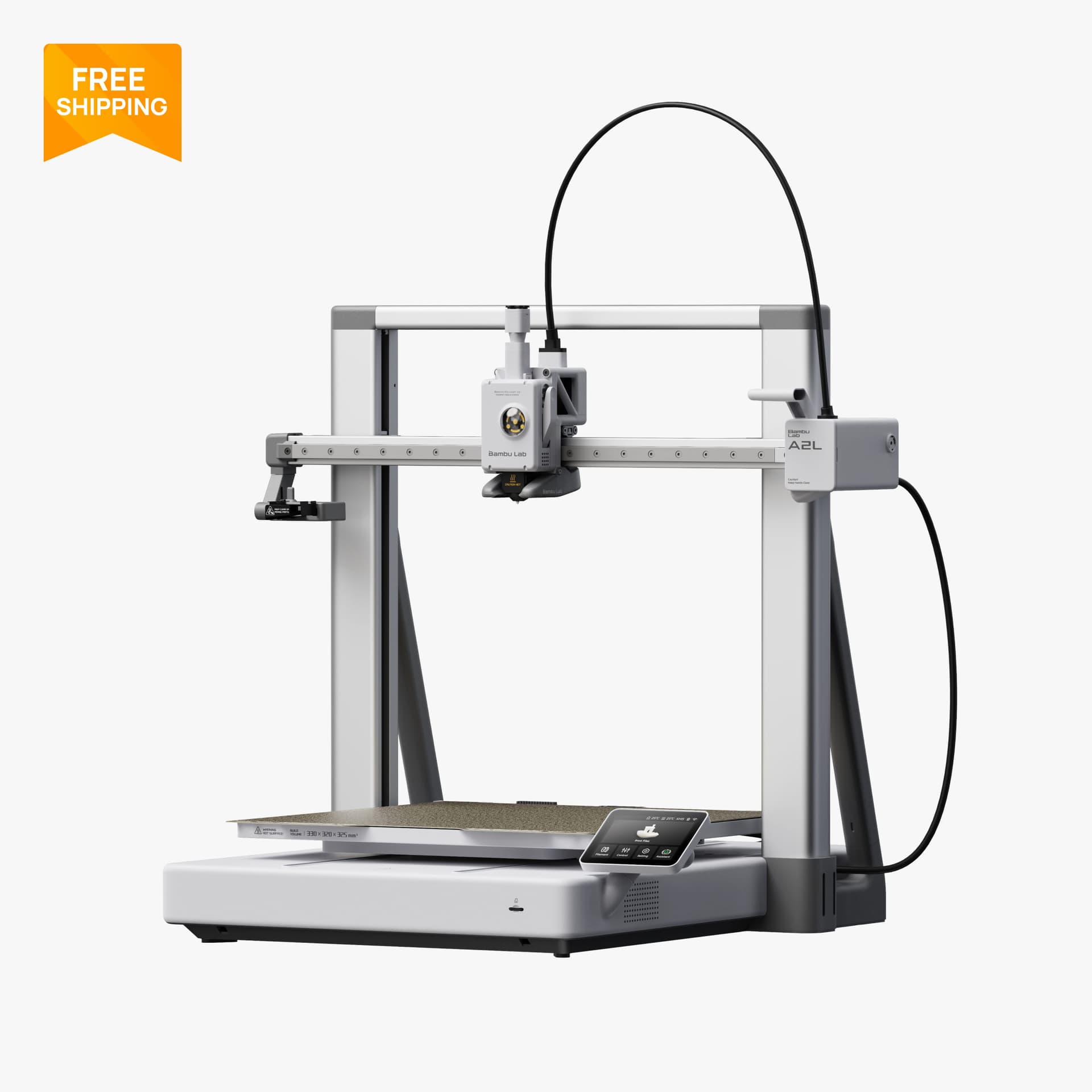
Bambu Lab’s A2L is making the biggest case for itself before the first print ever starts. In Kerry Stevenson’s June 25 look at the machine, the setup process reads less like a weekend build and more like an appliance unboxing, which is exactly the shift Bambu seems to want buyers to notice.
A large-format printer that is trying to feel ordinary
Bambu launched the A2L on June 1, 2026 as a beginner-friendly large-format printer, and the headline number is hard to miss: a 330 × 320 × 325 mm build volume, which the company says gives it 105% more space than the 256 mm class. In the U.S. store, the base A2L is priced at $469, while the A2L Combo sits at $569, a price band that keeps it in reach of serious hobby users rather than pushing it into industrial territory.
That positioning matters because the A2L is not being sold as a bare-bones machine. Bambu is framing it as part of a broader creative ecosystem with modular add-ons for blade cutting and pen plotting, plus full-auto calibration and adaptive vibration compensation. The launch materials also point directly at home decor enthusiasts, families, cosplayers, and print farms, which tells you exactly why setup has become a buying criterion instead of an afterthought.
Packaging does a lot of the first-day work
Stevenson’s unboxing notes make the strongest argument yet for Bambu’s approach. The shipping carton is larger than a typical desktop printer box, which is no surprise for a machine this size, but the internal layout is unusually disciplined. Parts are arranged in a cube-like packing structure that keeps everything secure in transit while still making the contents easy to identify the moment the box opens.
That attention to the first five minutes pays off in practical ways. Bambu includes a printed step-by-step guide and a set of videos that cover almost everything needed for assembly and setup, so the user is not left to improvise from loose bags and vague diagrams. Bags are labeled by function rather than generic part type, and the printer itself carries direct instructions, including green circles around bolt holes to show exactly where screws belong.
Those details sound small until you have a printer on the table and a pile of hardware in front of you. For a large machine, every point of clarity removes a chance to misroute a cable, misread a part, or waste an evening chasing a setup mistake.
What still asks for real user attention
The A2L is still a real machine, not a toy in a polished shell, and Stevenson flags one cable-connection challenge during assembly. That matters because it keeps the review grounded: Bambu has reduced the friction, but it has not erased the need for care. Large printers naturally bring more room for error, especially around cable routing, mechanical fit, and calibration, and the A2L still asks the owner to stay alert at those points.
Even so, the overall impression is that Bambu has learned from the A1 and A1 mini rollout. The setup language around the A2L feels more mature because the company has already built a reputation for low-friction onboarding with its smaller machines, and the larger printer appears to extend that same guided workflow into a bigger format. That is the real shift here: buying a large printer no longer has to mean buying into a hobby defined by trial-and-error.
The support ecosystem is part of the product
Bambu’s documentation push goes well beyond the box. The company has published an A2L wiki, unboxing guide, first-print guide, packing guide, belt tensioning guide, and toolhead cable replacement guide, along with a wide set of repair and troubleshooting videos on the Bambu Lab Support YouTube channel. Within weeks of launch, that channel listed multiple A2L setup and repair videos, including guides for the A2L Combo packing process and the first print.
That kind of support package is a direct answer to the way earlier consumer 3D-printer ownership often worked. New users used to lean heavily on community forums, third-party videos, and repeated trial runs to get a machine stable. Bambu is clearly trying to replace that experience with a manufacturer-led path from unboxing to first print, and the A2L is one of the clearest examples yet of that strategy.
Who gets the most out of this tradeoff
The A2L’s setup story is not just about convenience for its own sake. It is about making the jump to a larger printer feel rational for people who want more build volume without stepping into industrial installation, service contracts, or a steep tuning curve. Families, cosplayers, and home decor users benefit from that most directly because they are usually chasing a specific project outcome, not a long calibration journey.
That is why the packaging matters as much as the print volume. A printer this large still needs discipline to ship safely, but Bambu’s bag labels, printed instructions, green bolt-hole markers, and video support make the machine feel closer to a guided appliance than a bench-top experiment. If the A2L is the template, the new baseline for large-format desktop printing may be simple to say and harder to ignore: bigger no longer has to mean harder.
This article was produced by Prism’s automated news system from verified source data, official records, and press releases, then run through automated quality and moderation checks before publishing. The system is built and supervised by the people who set the standards it runs under. Read our full AI policy.
Know something we missed? Have a correction or additional information?
Submit a Tip