Bambu Lab and Meland Launch China's First Children's 3D Printing Creativity Center
Bambu Lab and meland opened China's first children's 3D printing center in Shenzhen, anchored by a miniature CyberBrick city built entirely from 3D-printed parts.
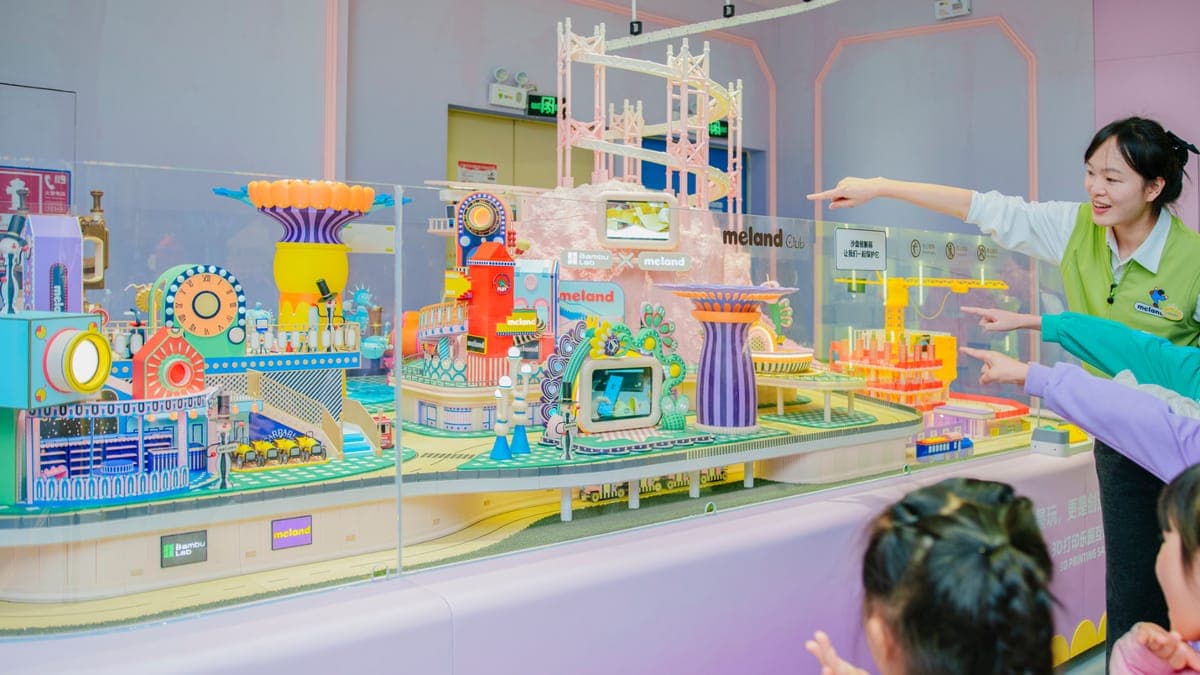
Walk into the new meland × Bambu Lab Creativity Center in Shenzhen and the first thing that stops you is a miniature city: streets, buildings, playground structures, all of it 3D printed, all of it lit up with advanced lighting and effects, all of it pulled directly from meland's most iconic theme park attractions rendered at a scale a child can lean over and explore. That installation, called CyberBrick, is the centerpiece of what the two companies are calling China's first 3D printing creativity center for children, a mixed retail and STEAM education space that opened this month as the first joint implementation of a formal strategic partnership between Bambu Lab and meland.
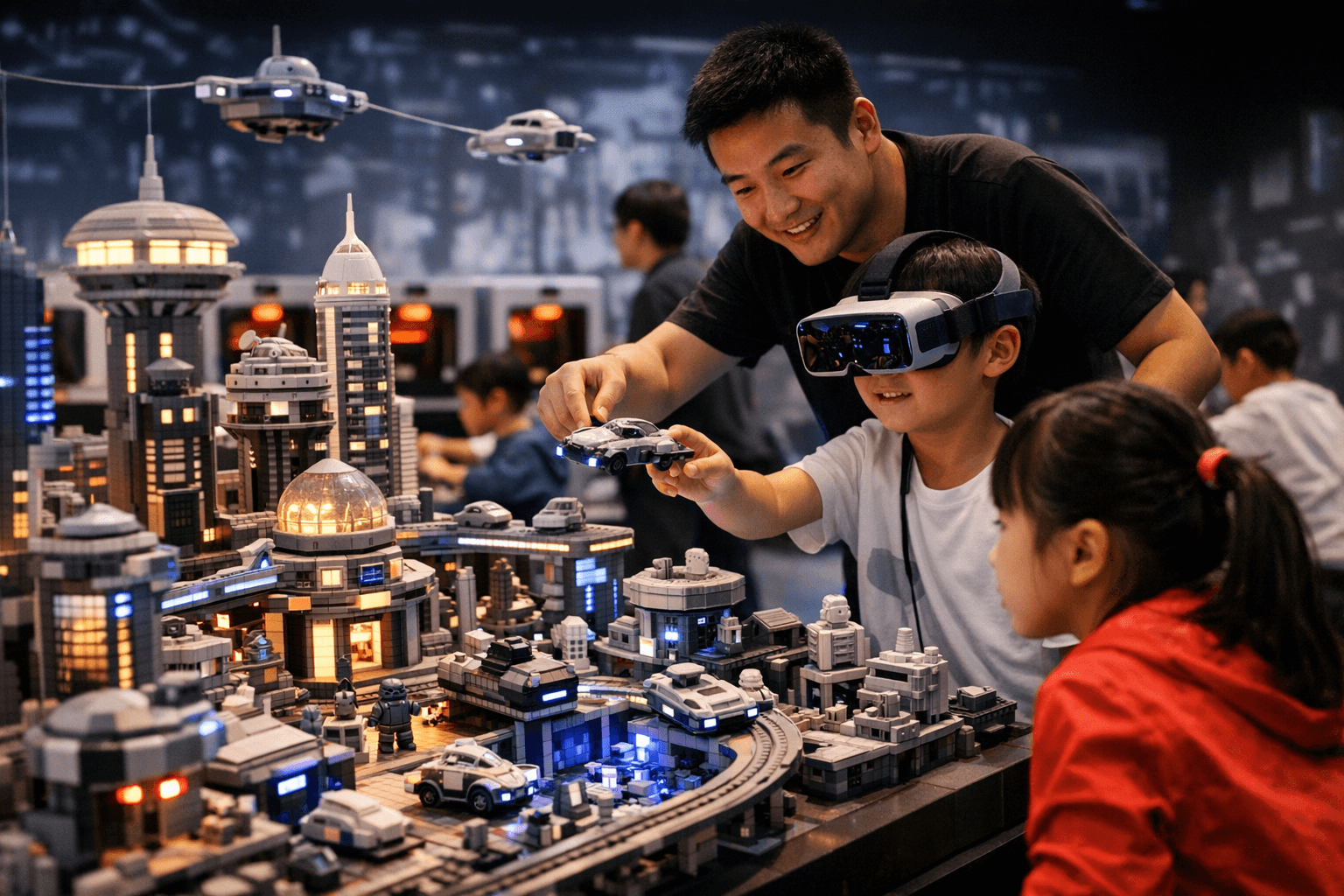
The CyberBrick city built for Shenzhen is, according to Bambu Lab's own blog, "not a copy - it is a complete reinterpretation." The design team rebuilt the concept from the ground up with a child encountering the installation for the first time as the organizing principle. Bambu Lab has form here: at Formnext 2025, the company produced a CyberBrick installation spanning four by two meters, covering roads, a library, a coffee shop, trees, and grass, manufactured in seven days using a fleet of 100 H2D printers. The Shenzhen version draws on that same technical DNA but reorients everything around meland's family audience.
The educational philosophy behind the center makes an explicit distinction between two kinds of 3D printing experience. "A child who receives a ready-made model to print learns how to operate a machine," the partners say. "A child who designs a model and watches it materialize in their hands learns something much deeper." In the center's experiment zone, children move through the full process: turning an idea into a simple 3D model, printing it during class, and taking the finished object home. The partners describe this as a "complete creative pathway — from idea to physical object," one that requires "independent thinking and decision-making, gradually developing both creativity and hands-on skills."
The experiment zone also includes a 3D printing presentation wall displaying Bambu Lab A1 printers, giving children and parents a direct look at the hardware behind the process.
The partnership logic is straightforward. "Bambu Lab brought technology and a global community. meland brought infrastructure and direct access to families. Each side had what the other lacked," Bambu Lab's blog states. Bambu Lab is a Shenzhen-based desktop 3D printer maker whose current lineup spans machines from the multi-function H2D, which doubles as a laser cutter, pen plotter, and engraver, to the enclosed H2S designed for engineering-grade materials, to the A1 series on the center's presentation wall. meland operates family entertainment and indoor amusement venues across China, giving the partnership immediate physical reach into the spaces where families already spend time.
Both companies have described the Shenzhen center as a starting point. Representatives from each side have said, plainly, that "this is only the beginning." What further locations or program expansions look like in practice, including pricing, class schedules, age ranges, and whether design files might eventually appear on Bambu Lab's MakerWorld platform, remains to be confirmed. What is already clear is that the Shenzhen center represents the most direct bet either company has made on 3D printing as a medium for children's education rather than simply a consumer product category.
This article was produced by Prism’s automated news system from verified source data, official records, and press releases, then run through automated quality and moderation checks before publishing. The system is built and supervised by the people who set the standards it runs under. Read our full AI policy.
Did this article answer your question?