Bambu Lab X2D targets home users with consumer-focused 3D printing features
Bambu’s X2D looks less like a routine refresh and more like a reset for home 3D printing. If it lands well, it could pull prosumer features into mainstream desktop pricing.
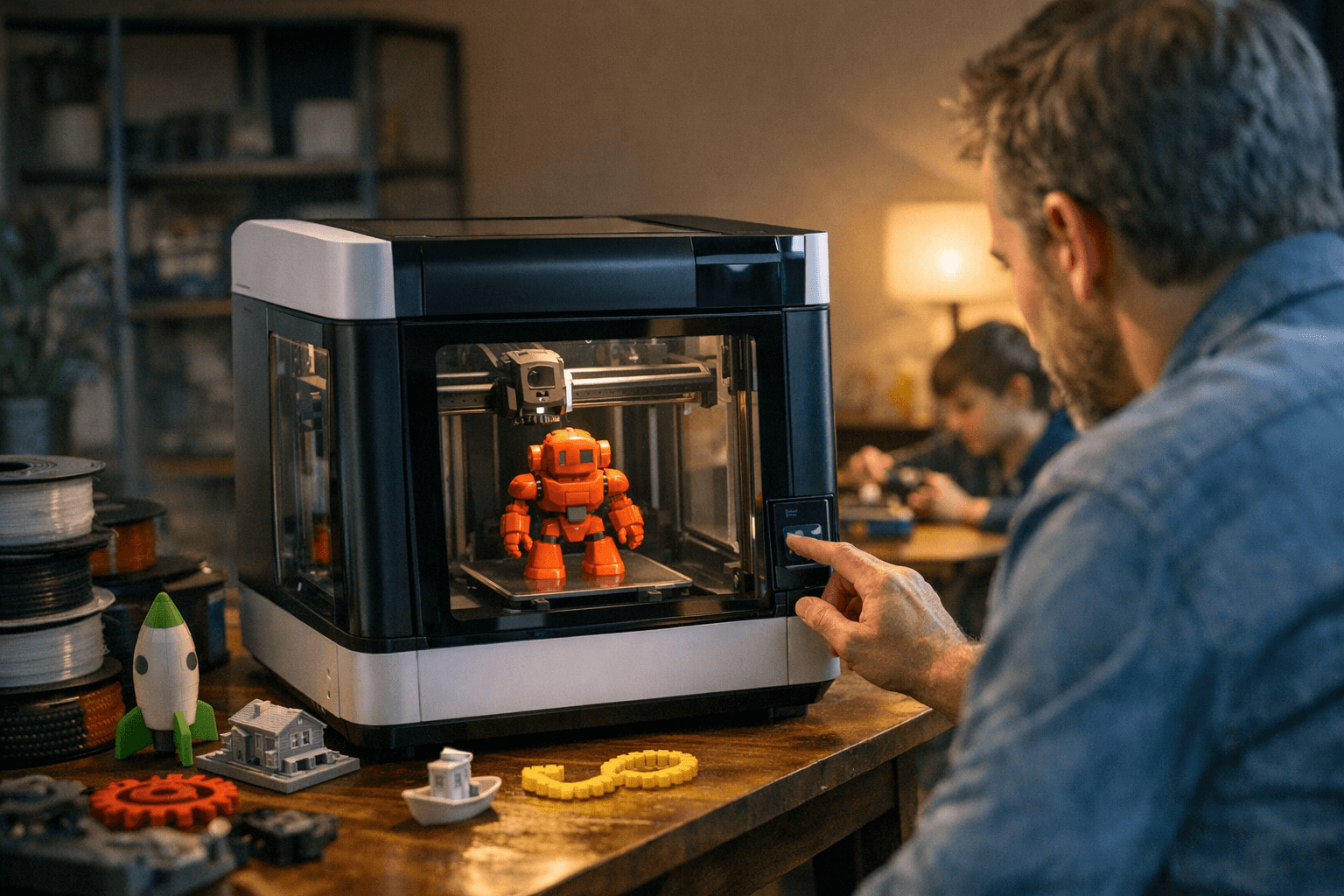
The real question with Bambu Lab’s X2D is not whether it adds another spec bump. It’s whether Bambu is trying to drag prosumer 3D printing down into the same easy, appliance-like lane that made its A1, P1, and X1 machines so popular in the first place.
A consumer printer dressed like a flagship
At first glance, the X2D can pass for a straight successor to the retired X1 line. That is exactly why the positioning matters. Bambu is not selling it like a workshop bruiser or a small-business workhorse. The company’s own language leans hard into home use, calling it the “best-value dual extruder 3D printer” and saying it is “designed for your home.”
That shift shows up in the details Bambu chose to highlight. The X2D gets a 3-stage filtration system, AI detection, active chamber heating, and a 256 × 256 × 260 mm build volume. The product imagery backs up the message, too. Instead of telling you to imagine jigs, brackets, and farmed-out production runs, Bambu leans toward game pieces, sculptures, and household objects. That is not a workshop printer trying to sneak into the den. That is a home appliance trying to win over the hobby room.
The US store price makes the point even sharper. The X2D starts at $649, while the X2D Combo is listed at $899. For a printer with dual-nozzle hardware, that is an aggressive move. It lands in the zone where a lot of buyers start comparing it not just against another machine, but against the idea of whether they need a more capable machine at all.
Why this feels bigger than another X-series update
A routine refresh changes a few specs and keeps the same audience. The X2D looks like Bambu is changing the audience first, then letting the specs support that decision. That matters because consumer 3D printing already failed once. Roughly a decade ago, the category got burned out by machines that were expensive, fragile, hard to use, and starved for useful printable content.
Bambu appears to have learned that lesson instead of repeating it. The company is not just pushing hardware. It is tying the machine to a database of ready-to-print models and framing the experience around quiet operation, filtering, accuracy, and simplicity. That is the exact set of pain points the market used to ignore. If you wanted a printer that could sit in a home without becoming a weekend project of its own, this is the kind of pitch you wished existed years ago.
That is why the X2D reads like a category bet, not a routine release. The company is trying to make the printer feel as understandable as a consumer gadget and as capable as a prosumer tool. If that works, it does not just add another model to the shelf. It changes what people expect a desktop printer to be.
The dual-nozzle setup is the real hobbyist hook
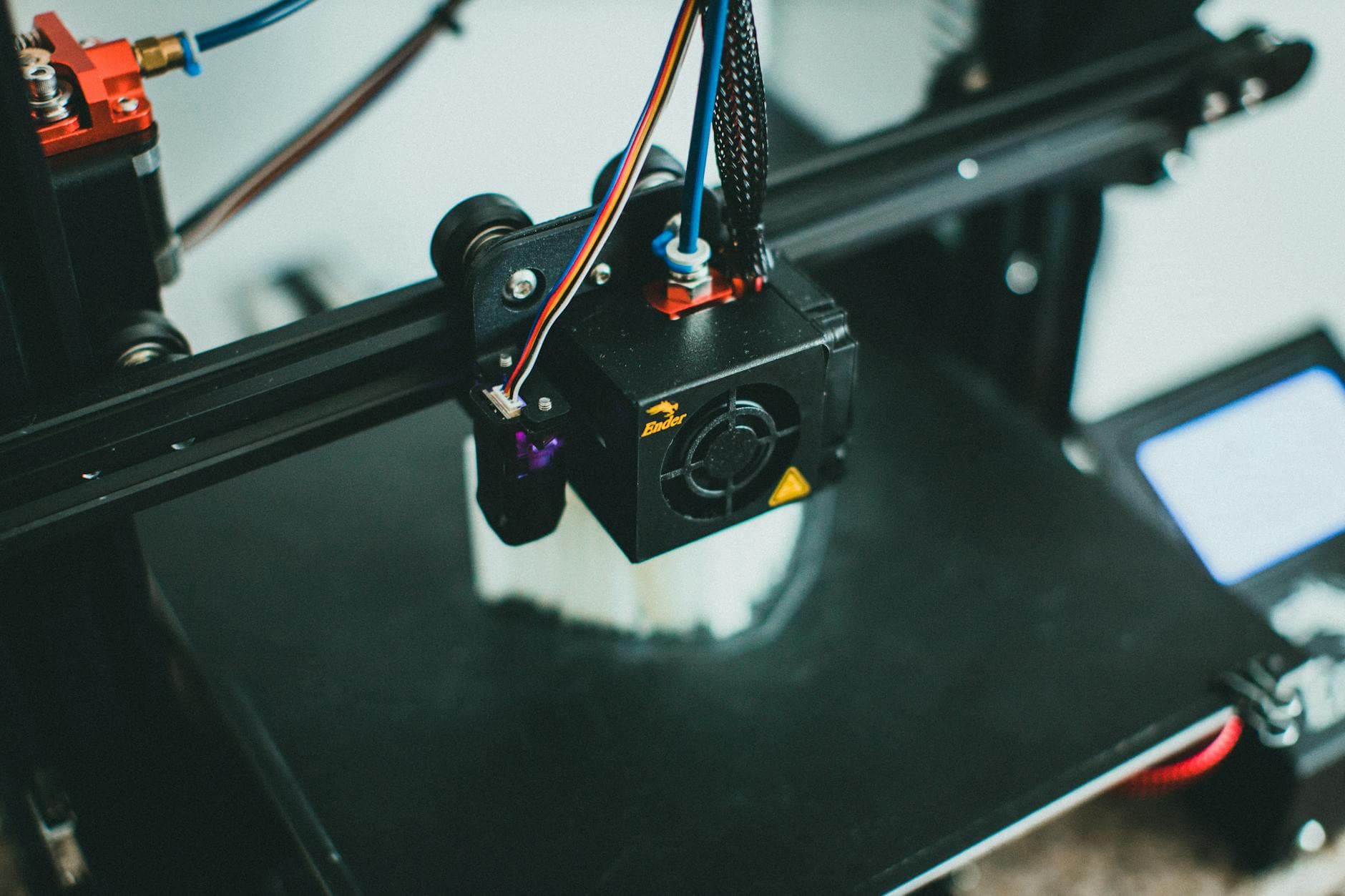
The headline feature for most makers is not the home-friendly branding. It is the dual-nozzle architecture. Bambu says the second nozzle is intended for easy-to-remove supports and efficient multi-color and multi-material printing, which is the kind of thing that makes a machine genuinely easier to live with, not just more impressive on a spec sheet.
That matters because support removal is where a lot of prints lose time and patience. A dual-nozzle setup that can dedicate one side to support material changes the workflow. You are not just printing more colors for the sake of it. You are using the second nozzle to reduce cleanup, improve interface quality, and make complex parts less annoying to finish. For people who print functional parts, cosplay pieces, display models, or anything with awkward overhangs, that is a practical upgrade, not a novelty.
Bambu also lists 300 °C nozzle capability and 65 °C active chamber heating. Pair that with the 256 × 256 × 260 mm build volume, and the X2D starts looking like a machine meant to handle real materials and real geometry, not just classroom demos or throwaway toys. The important detail here is not simply that it can reach the numbers. It is that those numbers are being presented inside a consumer-friendly package.
Where it fits against A1, P1, and X1-class choices
If you are shopping inside Bambu’s lineup today, the X2D changes the decision tree. The A1 remains the easy entry point for people who want a lower-friction machine without overthinking the process. The P1 family has long been the middle ground for buyers who want speed and capability without moving all the way into the flagship tier. The X1 line was the high-end reference point, but the X2D seems aimed at pulling some of that capability into a more home-oriented package.
That is the important distinction. If the X2D were just a cleaner X1 replacement, it would be easy to dismiss as a spec refresh. But Bambu is presenting it as a dual-extruder home printer with mainstream usability. That means buyers looking at A1 and P1 machines now have to ask whether the jump to X2D is worth it for support strategy, multicolor work, and a more polished all-in-one experience.
For a lot of hobbyists, this is the first time the question is not “Can I live with a more complex printer?” It is “Can I justify not buying the more capable one?” That is a different kind of market pressure, and it is the kind that usually signals a real shift.
Bambu’s company DNA makes the strategy easier to believe
Bambu Lab is not behaving like a traditional printer company. Its about page describes it as a consumer tech company focused on desktop 3D printers, with sites in Shenzhen, Shanghai, and Austin, Texas. That matters because the product philosophy has always felt closer to a gadget company than a legacy machine maker.
The company’s own history backs that up. A 2022 Bambu Lab post said five employees defined the X1 architecture during an intensive retreat, and that the company already had more than 150 people across Shenzhen, Shanghai, and Austin at the time. That kind of origin story explains why the company keeps leaning toward compact, high-impact product decisions instead of slow, industrial conservatism.
Founder Tao Ye also brings DJI roots into the picture, with reporting describing his work on motors and drone propellers before Bambu Lab. That background shows in the way the company packages technical capability. DJI learned how to make complicated hardware feel approachable to mainstream buyers. Bambu looks like it is applying the same playbook to desktop printing: hide the pain, surface the payoff, and make the advanced stuff feel normal.
Why the market backdrop makes this more than branding
The timing is not random. CONTEXT says entry-level 3D printer shipments have surged again, including one report showing a 65% rise in a recent quarter. In Q1 2025, entry-level shipments were up 22% year over year while industrial revenues fell 6%. At the same time, Q4 2024 was weak across the board, with sales down in every price class and entry-level machines down 10% after earlier explosive growth.
That backdrop is the strongest argument that Bambu’s consumer-first pitch is more than cosmetic. The low end is where the momentum is. If the entry-level segment is moving again, the winner is likely to be the company that makes a machine feel easy enough for newcomers while still powerful enough to keep experienced users interested.
That is why the X2D matters. It is not just another desktop printer with dual nozzles and a fresh badge. It is Bambu testing whether prosumer capability can be sold like a household product. If that bet holds, the X2D will not be remembered as a routine update. It will be the machine that helped turn advanced desktop printing into something regular buyers actually wanted on the desk at home.
This article was produced by Prism’s automated news system from verified source data, official records, and press releases, then run through automated quality and moderation checks before publishing. The system is built and supervised by the people who set the standards it runs under. Read our full AI policy.
Did this article answer your question?