Bambuddy lets Bambu Lab owners print without the cloud
Bambuddy gives Bambu Lab owners a local-first escape hatch from the vendor cloud, but it asks for some setup work up front.

Bambuddy is the first real stress test for a simple question Bambu owners keep running into: can you keep the slick remote workflow without handing the whole machine over to a vendor cloud? The project is an open-source, self-hosted, cloud-free central command that can replace Bambu’s official cloud tools, so you can slice, print, and monitor from your own network instead of depending on Bambu’s servers.
What Bambuddy changes
At its core, Bambuddy is about control. If you are uncomfortable sending every print job through a cloud service, it gives you a local-first path that keeps the printer on your bench and the management layer under your roof. That is a bigger deal than it sounds, because in consumer 3D printing the software stack now matters almost as much as the hardware itself.
The appeal is not only privacy. It is also resilience. A local control plane matters when you want to keep printing even if you do not want to rely on a remote service, and it matters just as much for the people who are simply tired of closed ecosystems deciding how their machines behave.
How it replaces the official workflow
Bambuddy is not framed as a partial fix or a thin add-on. The idea is to stand in for the cloud tools Bambu owners are used to, while keeping the workflow local. According to the project description, it can handle the basics that matter most in day-to-day use: slicing, sending prints, and monitoring machines.
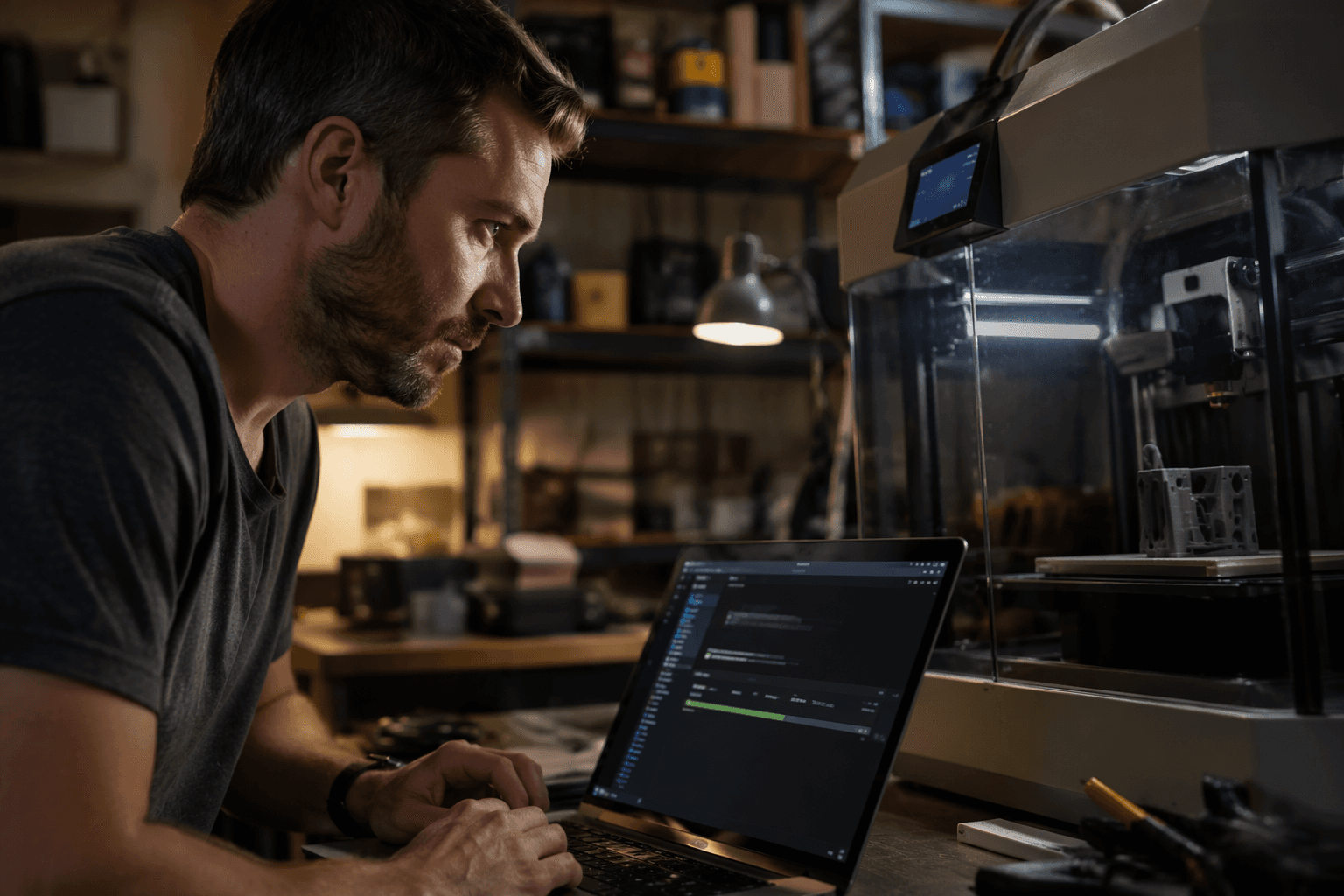
That matters because most users do not want a “headless hacker” experience just to preserve ownership. They want the convenience of a central dashboard, queue management, and remote visibility, but without the feeling that each print has to leave the house first. Bambuddy’s pitch is that you can have that convenience and still keep full local control.
The setup is the price of admission
The tradeoff is that Bambuddy is not plug-and-play in the way the stock cloud stack is. The printer has to be switched into LAN-only mode first, which disables cloud features such as remote access. After that, you have to enable Developer Mode so external software can talk to the machine API.
That extra work is the clearest sign this is aimed at serious users, not casual owners looking for one-click simplicity. You are making a deliberate choice to move away from the vendor’s ecosystem features in exchange for local authority, and that means accepting a little friction at setup. For a lot of us in the hobby, that is a reasonable trade if the payoff is not being locked into someone else’s servers.
Built for more than a single printer on a desk
Bambuddy is not limited to a lone printer in a spare room. The system can manage anywhere from one to forty printers, which puts it squarely in the territory of power users and print farms. It also runs on Linux, macOS, or Windows, with Raspberry Pi called out as a common deployment target.
That matters because it tells you what kind of project this really is. This is not just a privacy-minded workaround for a weekend maker. It is built like an alternative control plane for people who need to coordinate multiple machines and want a box they can leave running in the corner without babysitting it.
Why the community is leaning this way
The motivation behind Bambuddy is bigger than one company’s software choices. The push for it is tied to frustrations about server dependence, interoperability, and legal disputes that have made the Bambu ecosystem feel more restrictive to some users. In other words, the project lands in the middle of a much larger argument about whether modern printers should behave like appliances or like machines you can still shape and own.
That is why the story resonates with Bambu owners in particular. The hardware has won people over with its speed and convenience, but that convenience starts to look fragile once the management layer lives somewhere you do not control. Bambuddy is a reminder that the cloud is not automatically progress if it also becomes a gatekeeper.
The practical question serious buyers should ask
For hobbyists buying into Bambu now, the real question is no longer just build volume, nozzle size, or how fast the printer can lay down a benchy. It is whether the software architecture respects the way you actually want to use the machine. Bambuddy makes that question impossible to ignore because it shows a working alternative exists for owners who want local control without giving up the modern workflow entirely.
It also hints at where the market may be headed. If local-first management becomes a standard expectation, then self-hosting stops being a niche preference and starts looking like a must-have feature for serious printer buyers. Bambuddy is not only a workaround for the cloud, it is evidence that more users are willing to trade some setup friction for the right to run their machines on their own terms.
Bambu’s cloud workflow may be polished, but Bambuddy answers the part of the hobby that hates feeling rented out. For owners who want the remote convenience without the surrender, that is the exact line that separates a neat printer from a machine they can actually trust.
This article was produced by Prism’s automated news system from verified source data, official records, and press releases, then run through automated quality and moderation checks before publishing. The system is built and supervised by the people who set the standards it runs under. Read our full AI policy.
Did this article answer your question?