BMF Launches Compact S150 Series Micro-Precision 3D Printers at RAPID + TCT
BMF's new microArch S150 Ultra prints up to 9x faster than its sibling, with 25 µm resolution and a UV-C sterilization system built right in.
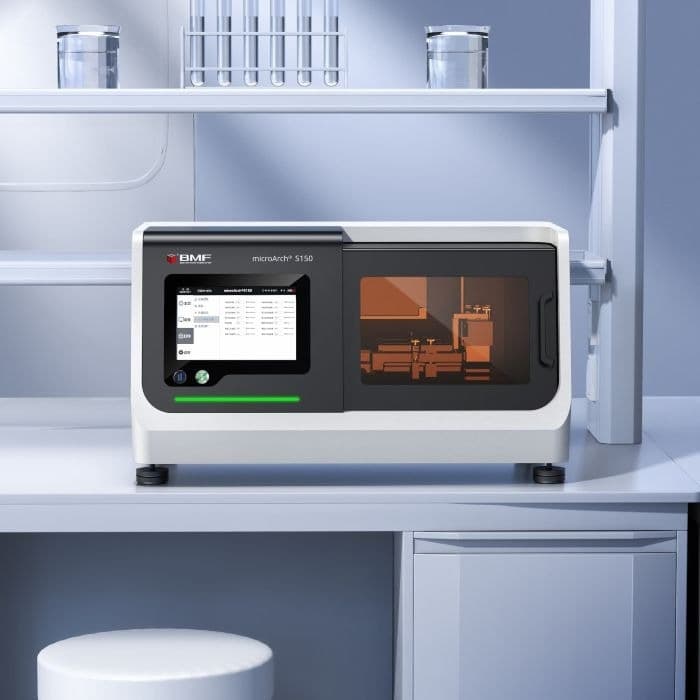
Boston Micro Fabrication brought two new benchtop PµSL systems to RAPID + TCT that the company says finally strip away the operational headaches that have kept micro-precision additive manufacturing locked inside specialist facilities. The microArch S150 and microArch S150 Ultra debuted at the event on March 17, 2026, framed around a simple proposition: industrial-grade micron-level resolution on a desktop footprint, without the manual calibration rituals that have long defined the category.
The technical specs position the series firmly in serious precision territory. Both machines run on BMF's proprietary Projection Micro Stereolithography (PµSL) process and deliver 25 µm optical resolution with ±3 µm positional accuracy. Layer thickness ranges from 10 to 100 µm, covering the spread from fine-feature surface detail to faster structural builds. The Ultra model is the headline performer: BMF claims it delivers up to 9x faster print speeds than the standard S150, making it the obvious choice for high-throughput production runs of parts like microneedles, channels, nozzles, and chips. The S150, meanwhile, lands in the role of flexible lab workhorse, better suited to iterative prototyping and development workflows where print speed matters less than accessibility and repeatability.
Both machines share a feature set clearly designed to lower the barrier to daily operation. One-touch operation and automated setup eliminate manual calibration entirely, according to BMF, and preloaded printing parameters mean users are not hunting through configuration menus before a run. An integrated touchscreen handles daily use, and the system supports high-viscosity material handling, which expands the formulation options available without requiring custom hardware.
The contamination-control build is one of the more distinctive engineering choices in the S150 Series. A built-in HEPA13 filtration system maintains the operating environment, while a UV-C sterilization system running at 253.7 nm sanitizes the build chamber between print runs. That combination makes the machines genuinely usable for contamination-sensitive applications in biomedical and microfluidics contexts, rather than requiring a separately controlled clean environment around the printer.
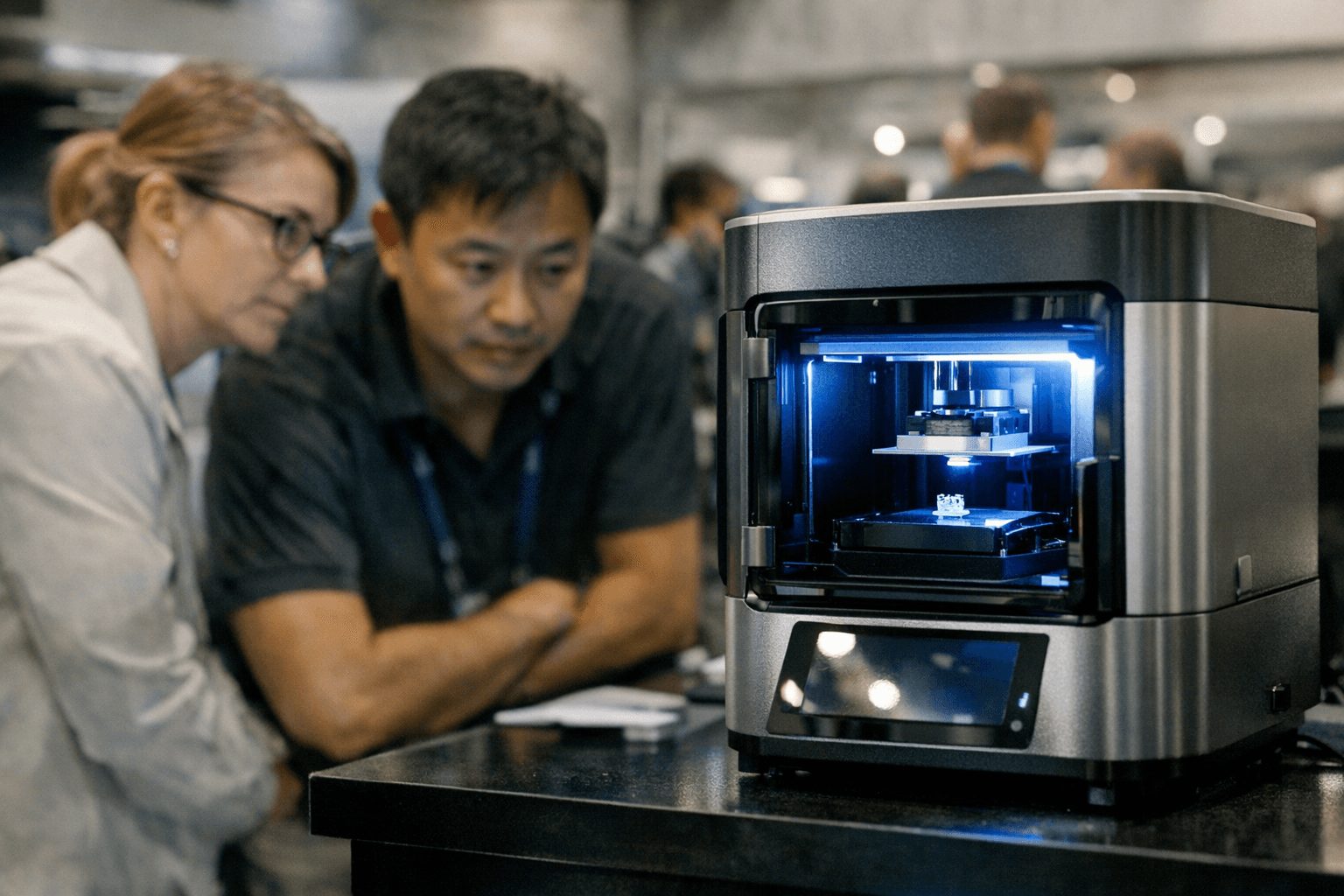
BMF is targeting the series at microfluidics, fiber optics, biomedical devices, electronics, and advanced research, covering a range of sectors where sub-100-micron feature fidelity is a functional requirement rather than a nice-to-have. The company's stated aim is to move micro-precision printing out of the hands of the few labs that could manage the infrastructure demands of earlier systems.
"Our mission is to make micro-precision 3D printing a more accessible technology for innovators across multiple industries, and the microArch S150 Series is a true game-changer in enabling us to achieve that," said John Kawola, CEO of BMF. "Designed to directly support customers seeking to accelerate their research and development without sacrificing quality, these systems remove long-standing barriers and make true micro-precision 3D printing genuinely accessible. By introducing this series, we are empowering users to easily and successfully create high-resolution parts with the speed and efficiency required for today's fast-paced development cycles."
BMF has not disclosed pricing or shipping timelines for either model. Independent benchmarking data for the 9x speed claim has not been published, and formal specifications covering physical dimensions, software compatibility, and resin support remain outstanding from the company.
This article was produced by Prism’s automated news system from verified source data, official records, and press releases, then run through automated quality and moderation checks before publishing. The system is built and supervised by the people who set the standards it runs under. Read our full AI policy.
Did this article answer your question?