California 3D-Printed ADU Uses Fire-Resistant Materials to Boost Safety
A fire-resistant 3D-printed ADU in Walnut showed how concrete walls, steel roof parts and hardened vents can cut wildfire fuel.
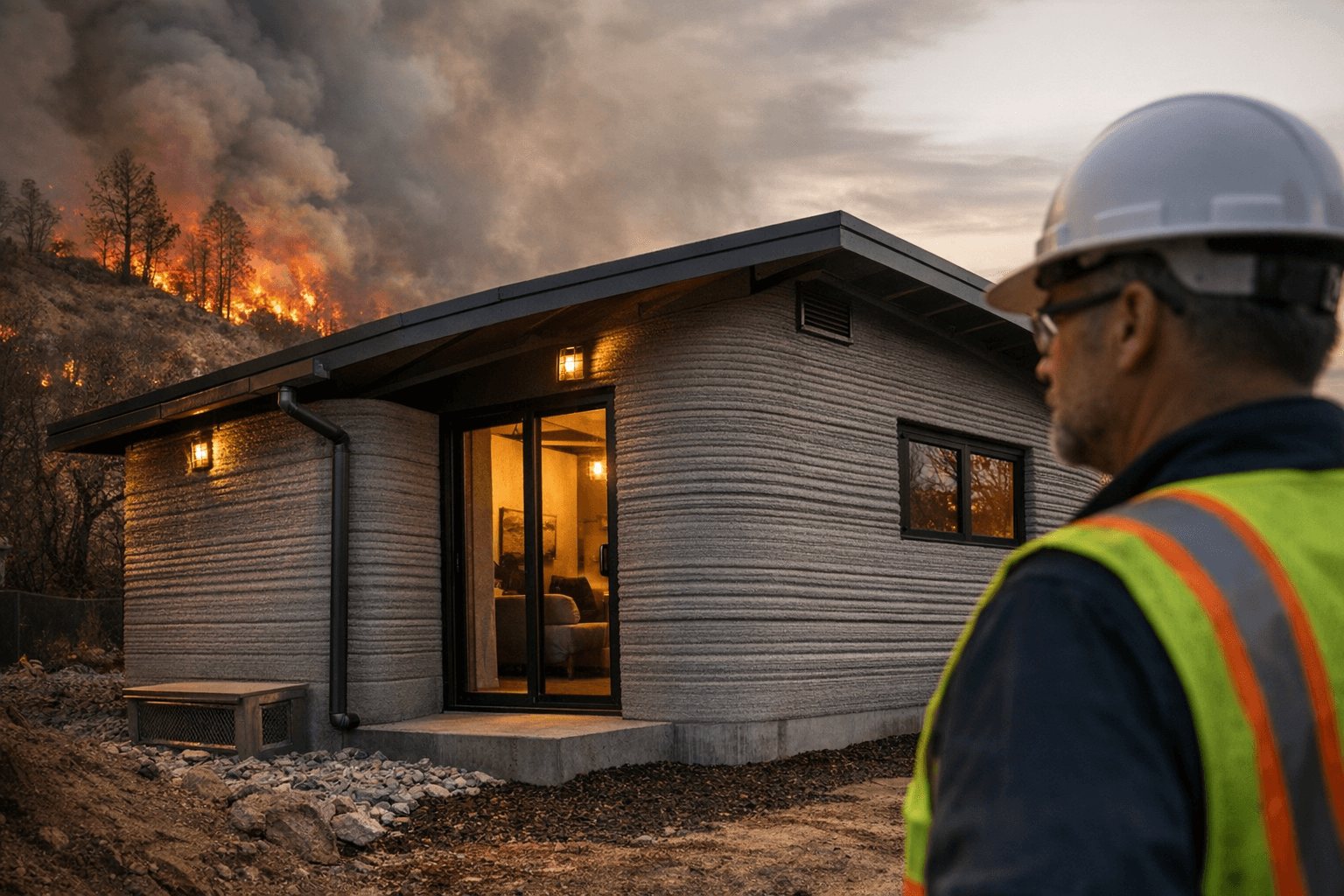
A 3D-printed accessory dwelling unit in Walnut turned wildfire hardening into a build strategy, with concrete and other fire-resistant materials used to push a home-sized print toward non-combustible construction. The prototype was built as a collaboration between the Walnut Fire Department, the Los Angeles Fire Department, Builtech Construction Group and RIC Technology, and it was designed around a simple goal: remove as much burnable material from the structure as possible.
The unit was described as 1,200 square feet with 2 bedrooms and 2.5 bathrooms, and builders said it could take about 20 days from the start of printing to completion after the foundation was laid. Instead of relying on a typical wooden roof structure, the project used steel and sure-board elements. Eave vents and windows were also strengthened, reflecting the same fire-safe thinking that has pushed California homeowners to rethink everything from siding to attic openings.
RIC founder Ziyou Xu said the project could lead to wider use of 3D-printed homes that are less susceptible to fires. Aaron Liu, Builtech’s chief executive, said the ADU would be built without wood or nails in the main structure, a detail that matters in a state where ember intrusion and flame spread have become central design concerns. For the 3D-printing world, the striking part is not just the form of the unit, but the material discipline behind it: fewer combustible parts, tighter envelope decisions and a shell built to resist heat rather than simply speed up construction.
That approach fits California’s broader pressure points. Wildfire risk has worsened, housing remains tight, and state-focused reporting in 2025 said draft Zone Zero rules were expected to ban grass and wood fencing within 5 feet of homes. The same logic is driving rebuilding choices in fire-damaged communities, where buyers and builders are weighing up-front cost against resilience, insurance pressure and long-term durability.
The Walnut prototype also sits inside a larger code fight. The International Code Council has been developing standards for 3D Automated Construction Technology and 3D concrete walls since October 2023, and it held a public hearing on the standards on Feb. 14, 2025. By Feb. 13, 2026, California’s first 3D-printed community was already rising in Linda, Yuba County, where the first 1,000-square-foot home was printed from the ground up in 24 days and a five-home project was expected to finish in June. Nan Lin of 4Dify said those homes underwent ballistic testing and were marketed with thick concrete walls, lower operating costs and lower insurance costs. Together, the projects show California moving from one-off demos to real-world tests of how far 3D printing can go when fire safety is part of the print plan from the start.
This article was produced by Prism’s automated news system from verified source data, official records, and press releases, then run through automated quality and moderation checks before publishing. The system is built and supervised by the people who set the standards it runs under. Read our full AI policy.
Did this article answer your question?