CES 2026 spotlights multi-material printers, UV texture and glow filaments
Major consumer and prosumer 3D printing debuts at CES 2026 showcased multi-nozzle color systems, a UV texture prototype, a tool changer moving to production, and a vivid quantum dot filament. These developments expand color, surface, and material options for makers.
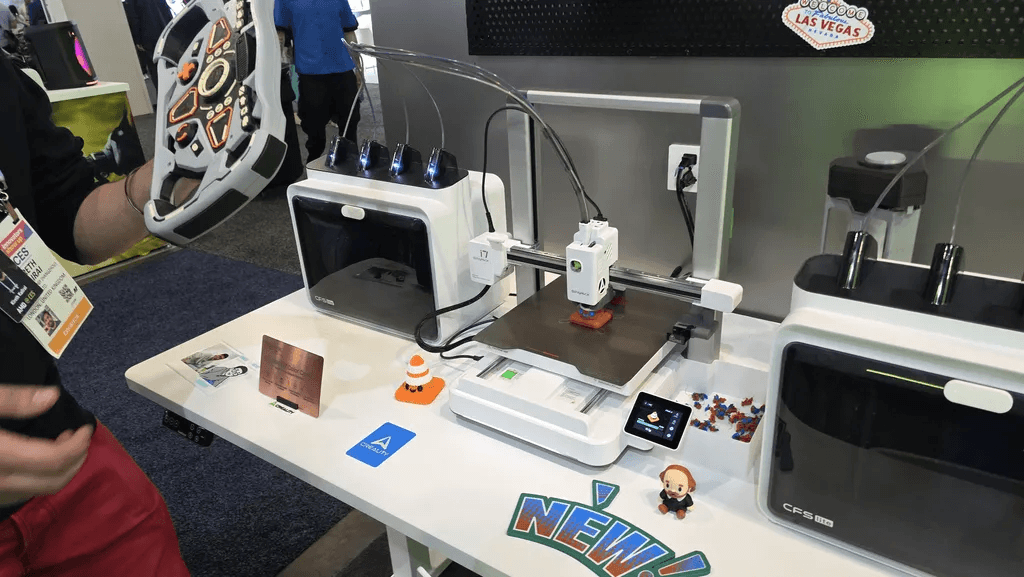
CES 2026 brought a clear theme for desktop 3D printing: more colors, more materials, and new ways to manipulate surface texture. Several booths focused on hardware and filament innovations that directly affect makers who want multi-material work, faster workflows, and eye-catching finishes.
At the MOVA/AtomForm booth the Palette 300 stole attention as a large Core-XY system equipped with a 12-nozzle multi-material head. AtomForm positioned the machine for high-speed, multi-color runs and said the design supports dozens of colors and materials. The form factor and nozzle count suggest ambition beyond typical two- or three-material setups, which matters if you mix color gradients, engineering plastics, or support materials in a single print without stopping for swaps.
xTool used CES to show a prototype UV texture printer alongside updates to its laser line. The UV texture concept targets those who want to add tactile or high-detail surface patterns without lengthy post-processing. The laser updates indicate continued refinement of hybrid workshop toolchains where engraving and cutting live alongside additive workflows.
Snapmaker’s U1, a four-color tool changer, moved from Kickstarter to production. That transition is significant: tool changers have long been a prosumer wish-list item but often lived in prototype-land. A four-color-ready production machine lowers the barrier to multi-color prints and could reduce reliance on post-painting or complex filament swaps.

Material makers were present too. Protopasta unveiled an experimental Quantum Dot filament that fluoresces vividly under blacklight. Quantum dot additives open aesthetic and functional doors for cosplay, prop work, signage, and models that react to UV light in ways traditional dyes cannot.
Across demos the common selling points were ease of use and software integration. Exhibitors emphasized streamlined workflows, pre-calibrated profiles, and user-friendly tool-change sequencing to help makers get to print faster. Availability varied: Snapmaker was explicit about moving into production, while other systems and the quantum dot filament looked toward limited early runs or pre-order windows.
For readers this lineup means a busy 2026 for GAS and practical upgrades alike. Multi-nozzle and tool-changing systems make true multi-color and multi-material prints more attainable. UV texture printing and quantum dot filaments expand the vocabulary of surface effects without adding heavy finishing work. Before committing to pre-orders, check slicer compatibility, filament handling, and the software path for tool changes and texture workflows. Expect more demos and deeper hands-on reviews as these products leave the show floor and hit user benches.
This article was produced by Prism’s automated news system from verified source data, official records, and press releases, then run through automated quality and moderation checks before publishing. The system is built and supervised by the people who set the standards it runs under. Read our full AI policy.
Did this article answer your question?