Claude brings text-to-CAD to Autodesk Fusion for makers
Claude now reaches Autodesk Fusion, aiming at the hardest part of 3D printing: turning an idea into a model that can actually be built.
The hardest part of a print job has never been the bed leveling or the slicer profile. It has been getting from a good idea to a clean model in CAD. Anthropic’s Claude for Creative Work launch pushed directly at that bottleneck, with Autodesk Fusion now available through Claude so natural-language prompts can turn into real design actions inside the workflow makers already use.
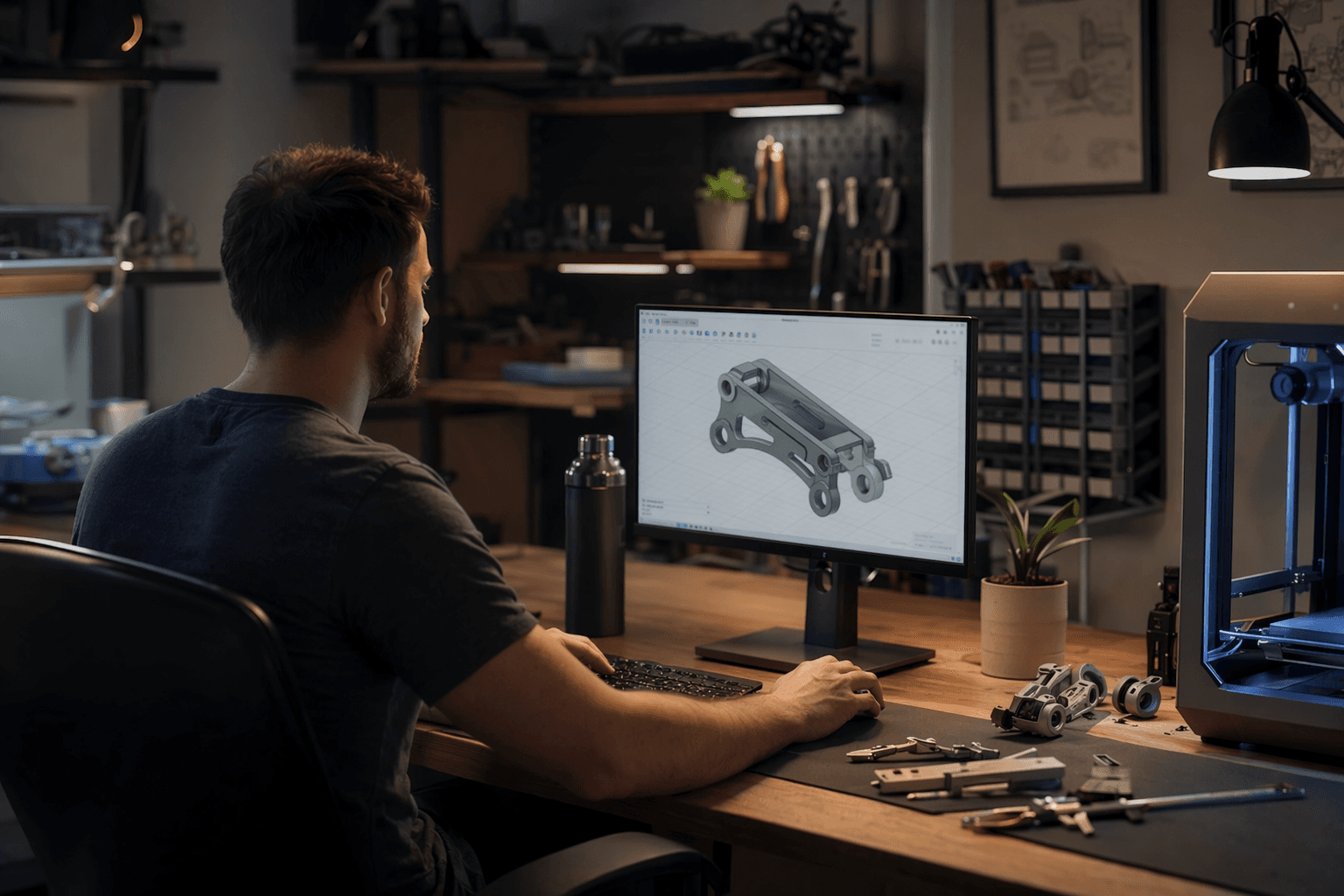
That matters because the desktop printing stack has gotten friendlier almost everywhere except the design stage. Printers are easier to run, slicers are less mysterious, and materials are better understood. Fusion still asks beginners to think like modelers, though, and that is where many projects stall. A simple bracket, a wall organizer, a replacement clip, or an enclosure for a small electronics fix can seem obvious in the mind and stubbornly abstract on screen. Claude’s pitch is to help translate the plain-English need into a first pass at the geometry.
The practical value is not that AI replaces CAD skill. It is that it may reduce the friction between intention and shape. A maker who knows a part needs chamfers, bosses, holes, or a few basic constraints, but does not yet know the muscle memory to draw them quickly, could get to a usable draft much faster. For 3D printing, that is the real unlock: not printing faster, but reaching printable in the first place.
The Fusion connection also sits inside a broader push from Claude toward creative software, with links to major design tools such as Blender and SketchUp. That wider ecosystem matters. It suggests this is not a one-off novelty prompt or a demo built to impress, but a move to place AI inside the programs people already open when they need to design something real. For makers, that is a more meaningful shift than another generative showcase.
If the workflow holds up in daily use, the result could be a smaller gap between an idea and a prototype, especially for the kind of parts that fill up hobby benches and print beds: simple mechanical supports, storage inserts, brackets, and household repairs. The promise is not a future with no CAD. It is a future where the first draft stops being the hardest draft.
This article was produced by Prism’s automated news system from verified source data, official records, and press releases, then run through automated quality and moderation checks before publishing. The system is built and supervised by the people who set the standards it runs under. Read our full AI policy.
Did this article answer your question?