Bambu Lab patents easier-open handle for material storage boxes
Bambu Lab’s new handle patent targets a tiny but constant annoyance: opening and re-locking material boxes without fighting the latch.
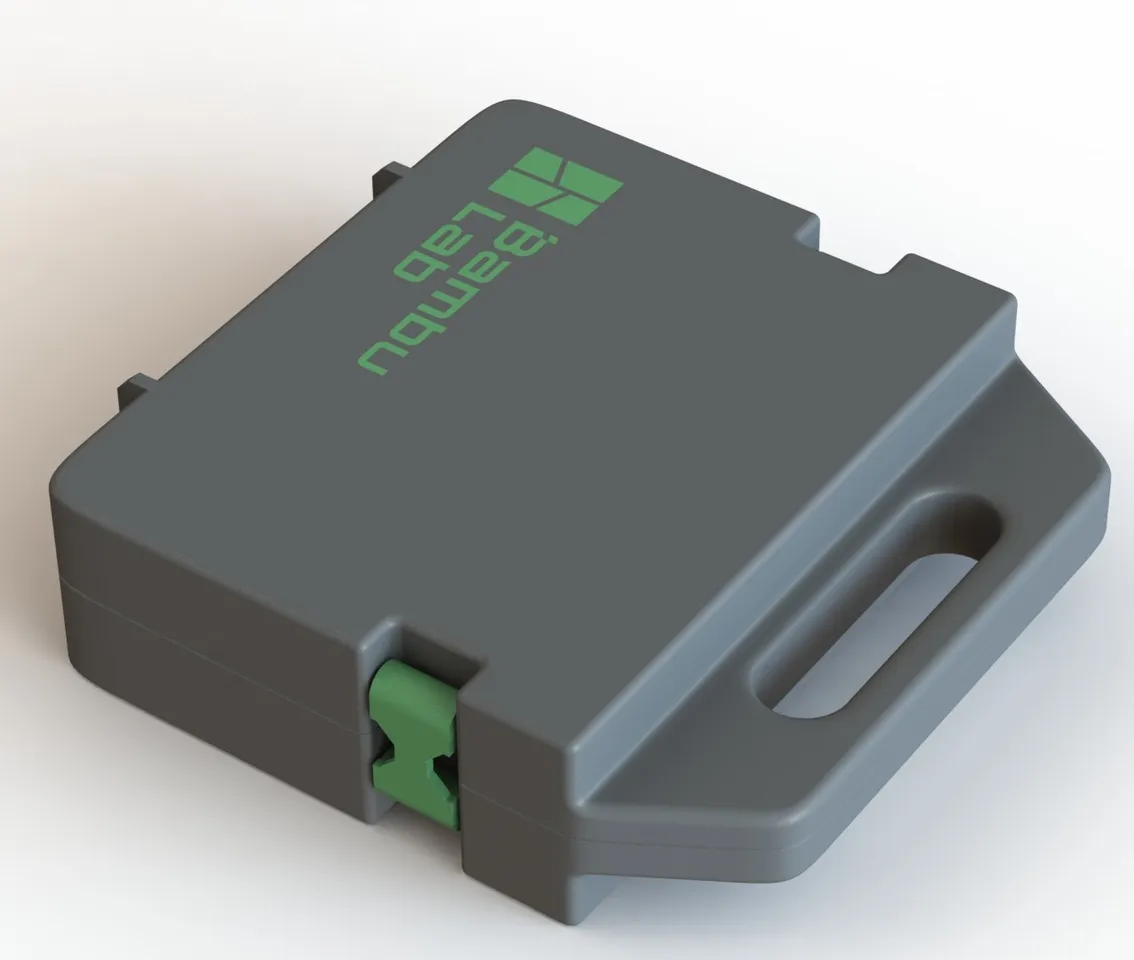
Bambu Lab is patenting the kind of small hardware change that can make a big difference in a printer room: a handle and locking arrangement for a material storage box that is meant to open more easily and lock more securely when closed.
The patent, CN224170491U, describes a handle, storage box, and latch system built around a simple idea. Pull the handle and a mounting base moves, opening the housing and unlocking the assembly. Push it back and a buckle engages again. That sounds minor on paper, but it goes straight at a real annoyance in desktop printing: boxes, dry boxes, and feed accessories get opened, latched, moved, and checked constantly. If the handle feels loose, confusing, or fussy, the whole machine feels less polished even when the printer itself is excellent.
That matters most around filament handling, where users are constantly loading spools, checking feed paths, clearing jams, removing broken filament, and keeping moisture under control with desiccant packs. Bambu Lab has spent years selling the opposite experience, built around automation and convenience. The company says it is a consumer tech company focused on desktop 3D printers, with sites in Shenzhen and Shanghai in China and Austin, Texas. Its first big breakout came with the X1 series, and its Kickstarter run for the X1 CoreXY Color 3D Printer with Lidar and AI ran from May 31 to June 30, 2022, ending with 5,575 backers and HK$54,970,803 pledged.
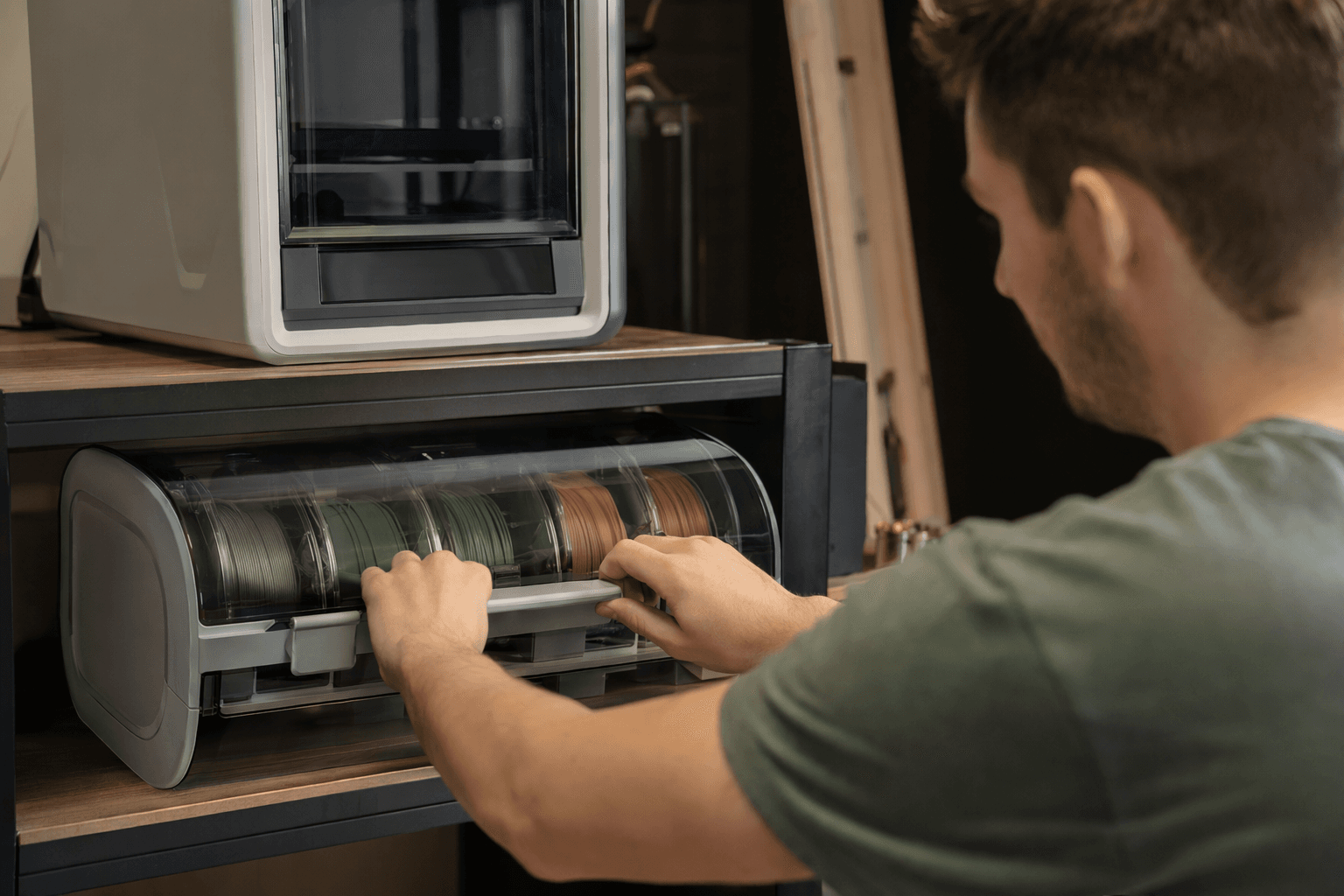
That same convenience-first pitch runs through the AMS ecosystem. Bambu Lab says its AMS can switch filament automatically during a print, detect filament tension, and use RFID to identify loaded filament and auto-configure settings. The company also highlights multi-color and multi-material printing, keep-filament-dry functionality, filament runout and winding detection, and AMS filament backup. Its wiki for the AMS 2 Pro and AMS HT says both units include a built-in drying module, which pushes the material workflow even further into appliance territory.
Seen in that context, a patented handle is not trivia. It is another sign that mature desktop printing is no longer just about motion systems and hotends. The real fight is over the daily friction around the printer, the box you open, the latch you trust, and the material path you handle over and over again. If this design reaches a shipping product, it could make loading, storing, and swapping filament feel more intuitive, more secure, and a lot less annoying.
This article was produced by Prism’s automated news system from verified source data, official records, and press releases, then run through automated quality and moderation checks before publishing. The system is built and supervised by the people who set the standards it runs under. Read our full AI policy.
Did this article answer your question?