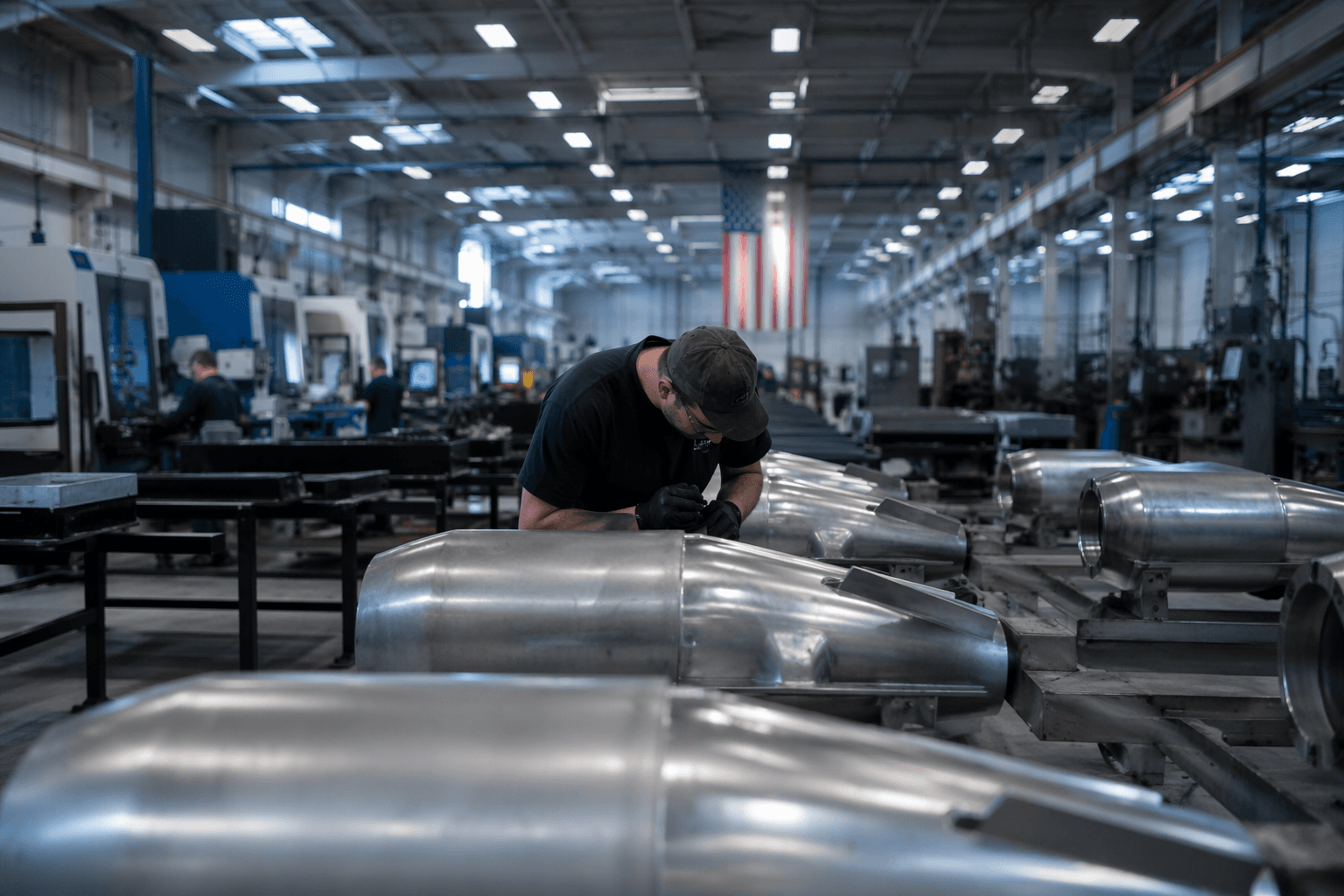
CNN spotlights Divergent’s 3D-printed cruise missiles, faster weapons production
Lukas Czinger turned a CNN segment into a signal: Divergent’s printers are already building cruise-missile airframes, and each machine can turn out hundreds a year.
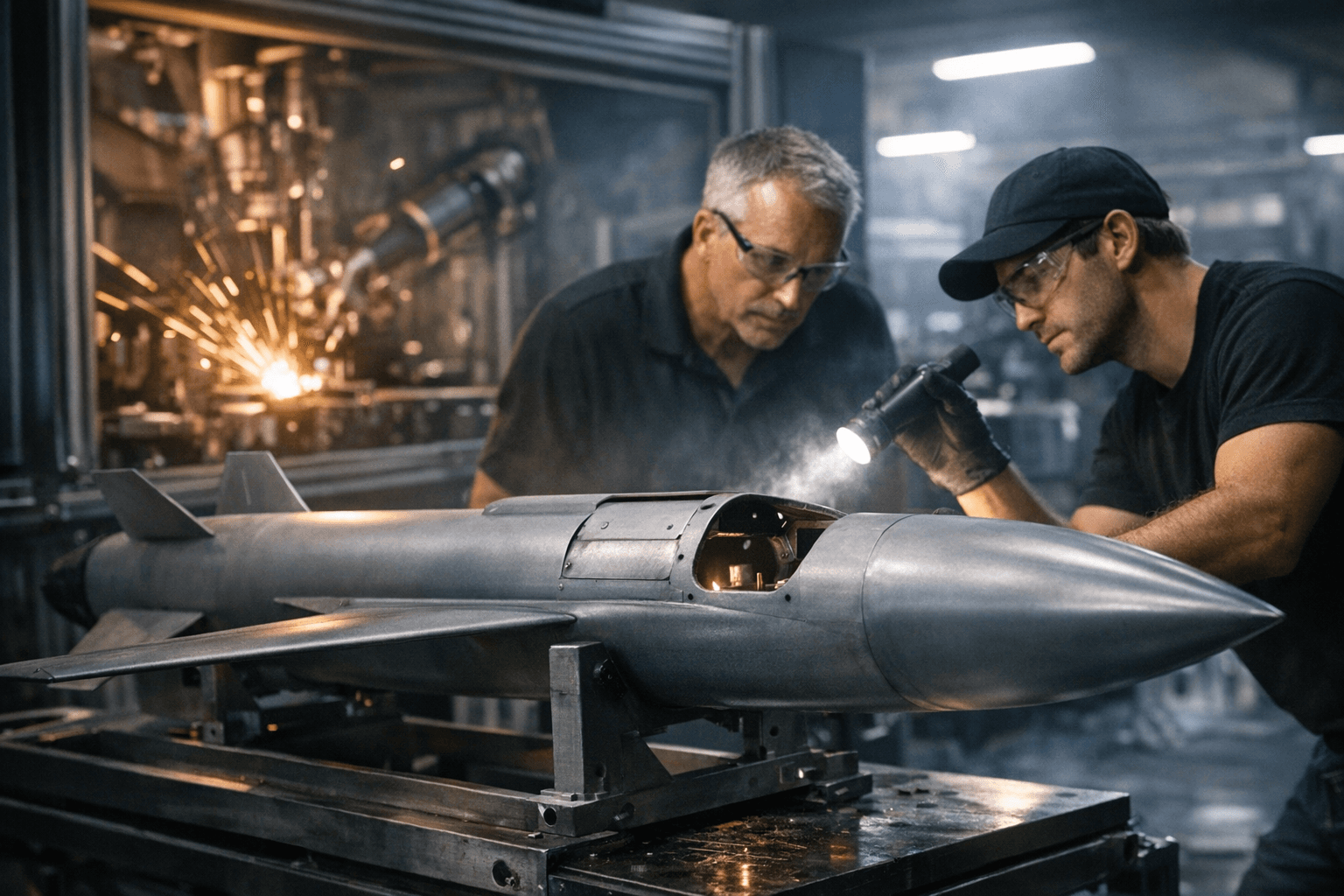
Divergent Technologies has pushed additive manufacturing into one of the hardest jobs on the board: turning out missile hardware quickly, repeatedly, and with less weight. On CNN, CEO Lukas Czinger said the company was building “the world’s first low-cost cruise missile,” a line that landed as the clearest proof yet that industrial 3D printing is no longer being judged only by car frames and aerospace brackets.
The CNN segment aired April 9, 2026, with follow-up broadcast coverage and transcript material on April 12 and April 13. It framed Divergent’s defense push as part of a larger shift in warfare, where digital design, automated fabrication, and robotic assembly are being pulled into the same workflow. That shift matters beyond defense. The same playbook that wins military contracts, rapid iteration, lightweight structures, and tightly integrated software and hardware, is exactly what has kept additive manufacturing moving from novelty to production tool.
The company’s DAPS system is built around that idea. Divergent describes it as an end-to-end platform combining AI-driven design, industrial-rate additive manufacturing, and robotic assembly to digitally engineer, optimize, manufacture, and automatically assemble complex structures for aerospace and defense. In March, Axios reported that a Divergent factory outside Los Angeles was already 3D-printing cruise-missile airframes, with each printer able to produce hundreds of those airframes per year. That kind of throughput is the kind of number the 3D-printing community watches closely because it points to where the technology is being proven under real production pressure, not just in demos.
The Pentagon has been leaning in for years. The U.S. Army said in April 2025 that it wanted to extend advanced manufacturing, including 3D printing, to operational units by 2026, while also modernizing its industrial base for wartime ammunition stockpiles by 2028. The Air Force’s own guidance says additive manufacturing is meant to reduce logistics footprints and improve readiness, a reminder that the military values the same things makers do when a print farm beats a parts shortage: speed, local production, and fewer moving pieces.
Divergent has been building this case for a while. In April 2024, the company said it delivered affordable, adaptable cruise-missile structures for CoAspire’s RAACM program, and CoAspire says RAACM is an additively manufactured cruise missile that has flown in tests from an A-4 Skyhawk jet fighter. In June 2025, Divergent said it was selected for the U.S. Air Force’s $46 billion EWAAC vehicle. A few months later, it announced a $290 million Series E round at a $2.3 billion valuation. The company also said in 2026 that its Venom program reached flight in 71 days, a timeline that captures why defense money so often accelerates manufacturing methods that later spill into civilian tools, software, and materials.
This article was produced by Prism’s automated news system from verified source data, official records, and press releases, then run through automated quality and moderation checks before publishing. The system is built and supervised by the people who set the standards it runs under. Read our full AI policy.
Did this article answer your question?