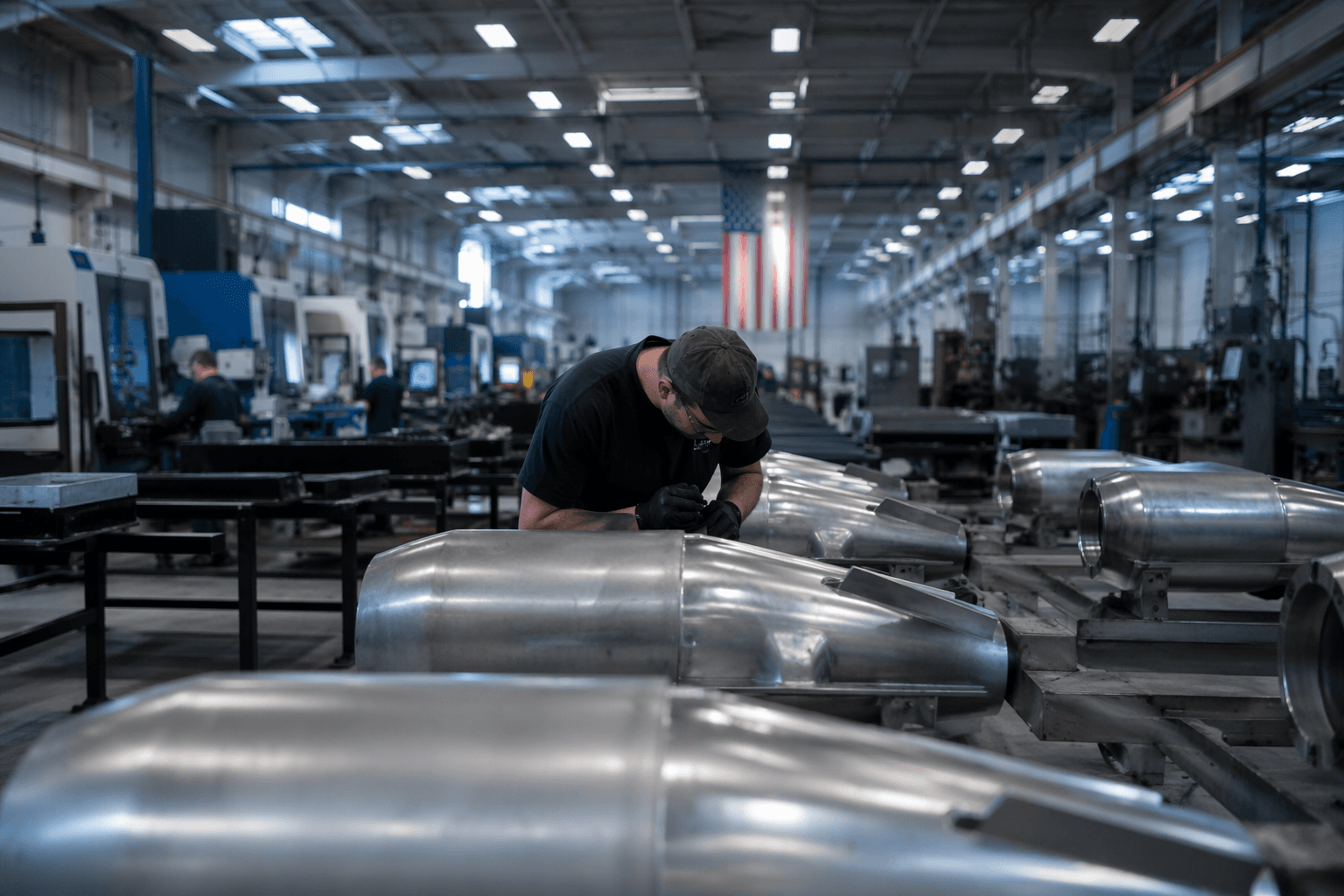
Danit Peleg Uses AI to Turn 2D Sewing Patterns Into 3D-Printable Designs
Danit Peleg's AI tool turned a PatternFast skirt pattern into a printable flexible mesh panel. The first experiment takes a build plate, TPU, and one evening.
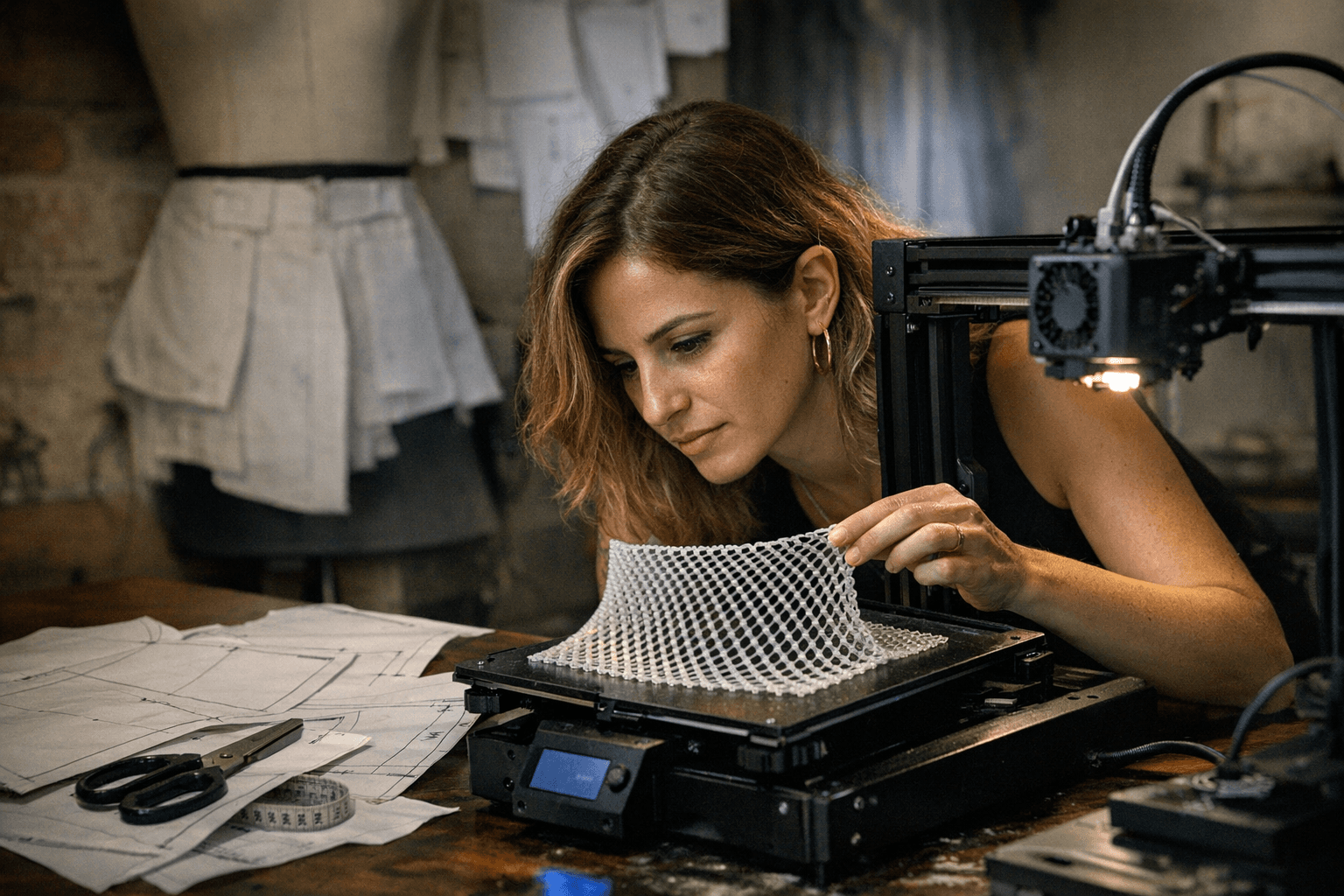
A flat mini skirt panel, peeled cleanly off a build platform after printing with off-the-shelf flexible filament, is Danit Peleg's proof of concept for something the maker community has been waiting for: an AI pipeline that converts a standard 2D sewing pattern directly into a 3D-printable model.
Peleg, the Israeli designer who produced the world's first fashion collection printed entirely on desktop 3D printers, built a tool that takes patterns drafted in PatternFast, a software program that automates pattern making, and interprets their seam lines, darts, and negative space to generate flat geometry with a flexible mesh texture. The output is sized and shaped to print as-is, shifting the cutting and tracing work that sewing requires from scissors and paper over to the printer itself.
The workflow is experimental, not commercial. Peleg has acknowledged that materials remain the primary limiting factor, and has hinted at upcoming news tied to new wearable bio-based materials. That announcement may connect to her demonstration at Denim Première Vision in late 2025, where she presented composite 3D printing pellets made from denim offcuts combined with recycled TPU, producing flexible printable material directly from textile waste.
For makers who want to replicate the core concept this weekend, the entry point is a single flat panel, not a full garment. Start with a simple rectangular skirt or bodice panel with no curved seams, drafted in any pattern software and exported as an image. The AI conversion step maps 2D shape outlines to flat mesh geometry, so the more geometric the pattern piece, the more reliably it translates. Peleg's own demo used a mini skirt panel precisely because its geometry is forgiving.
On materials, Filaflex 60A or standard TPU at 95A shore hardness are the practical starting points. Filaflex 60A is odorless and rated safe for skin contact, which matters for any wearable prototype. For slicer settings, print speed is the most critical variable: keep it between 20 and 25mm/s to prevent the filament from buckling ahead of the drive gear. Enable z-hop at 0.4mm to stop the nozzle from dragging across mesh cells during travel moves, which tears surface texture and kills drape. A gyroid or honeycomb infill pattern at 15 to 20 percent keeps panels flexible across their full surface.
The failure modes are predictable. Edge warping will curl flat panels off the bed if adhesion is inconsistent. A brim of four to six lines and a heated bed at 40 degrees Celsius resolves most cases with TPU. Seam roughness is the second problem: AI-generated mesh edges feel abrasive against skin until sanded or heat-smoothed with a heat gun on a low setting. A 100x100mm test swatch prints in under an hour at these speeds, making it practical to run two or three material experiments in a single session before committing to a full panel. Full skirt panels will exceed most consumer build volumes and need splitting, which is a step Peleg's workflow already accounts for when exporting individual pattern pieces.
Assembly remains manual throughout. Joining printed panels still requires hand finishing, meaning the same sewing knowledge that produced the original pattern stays relevant even in a fully digital workflow. That continuity is part of the point: this is not a replacement for pattern-making skill, it is a bridge that lets pattern-making skill feed into a print queue.
Peleg's track record makes the long-term promise credible. In 2016, she printed a full dress for Paralympic medalist and dancer Amy Purdy, establishing that desktop FDM and wearable fashion are not mutually exclusive. The PatternFast-to-3D pipeline extends that decade of work toward a broader audience: designers who already think in pattern pieces now have a possible direct path to a print queue, without rebuilding garment geometry from scratch in CAD. Tutorial releases and workshop materials from Peleg's studio are the next milestone to watch as the toolchain develops.
This article was produced by Prism’s automated news system from verified source data, official records, and press releases, then run through automated quality and moderation checks before publishing. The system is built and supervised by the people who set the standards it runs under. Read our full AI policy.
Did this article answer your question?