Dresden's Additive Drives Raises €25M to Scale 3D-Printed Magnet-Free Motors
Additive Drives raised about €25 million from Nordic Alpha Partners and AM Ventures to scale 3D-printed, magnet-free motors that the company says hit up to 98% efficiency.
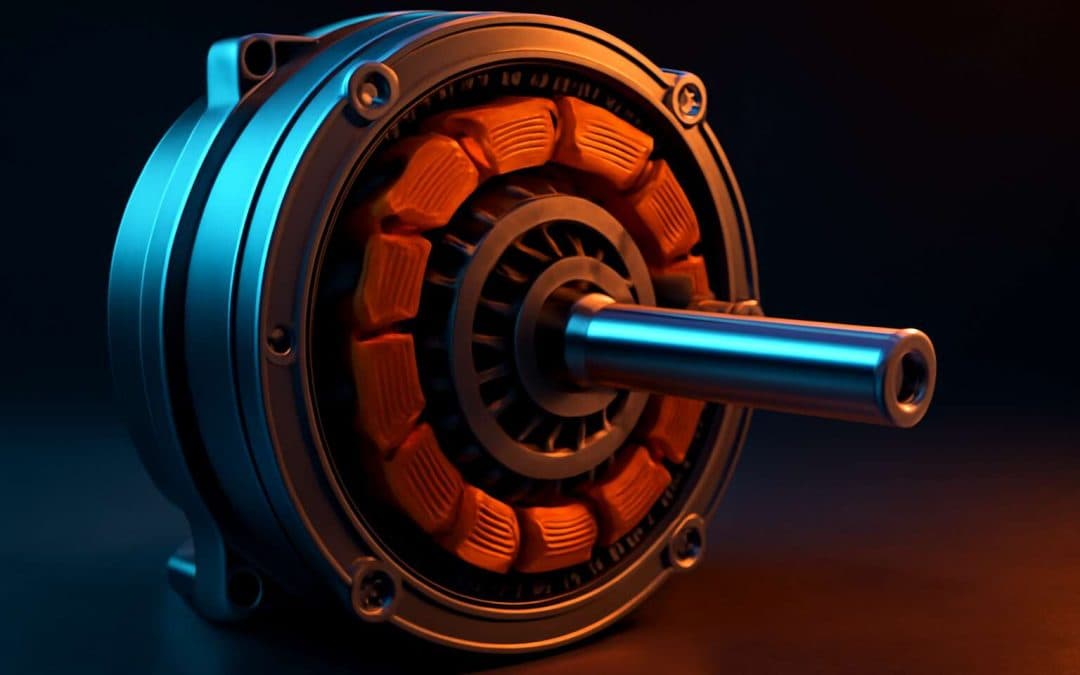
Additive Drives, the Dresden-based maker of 3D-printed magnet-free electric motors, has secured roughly €25 million in new funding to accelerate production and global expansion. The round brings a new institutional backer in Nordic Alpha Partners, which took a significant minority stake, alongside follow-on capital from existing investor AM Ventures.
Nordic Alpha Partners described its commitment as a mid-double-digit million euro investment aimed at industrial scaling. Philipp Arnold, Additive Drives’ chief financial officer, said, “We wanted to work with Nordic Alpha Partners because they have a unique toolkit for industrial scaling and navigating industrial transformations. We have been cash-positive from early on and we were looking for an operational partner that could really enable us to tap into hypergrowth and expand globally even faster.” Nikolaj Magne Larsen, partner at Nordic Alpha Partners, added praise for the founding team: “It is truly rare to see a founder team build something so pioneering and at the same time have such a strong financial performance less than five years after inception. It requires them to make great decisions consistently, and that’s what they’ve done.” Laurits Bach Sørensen of Nordic Alpha Partners framed the technology as proof that Europe can lead on advanced industrial electrification: “Additive Drives is a great example of the fact that Europe is still leading the game when it comes to highly advanced industrial technologies. They are already accelerating global electrification, and I’m sure we will see entirely new product categories emerge as a result.”
Additive Drives was founded in 2020 and lists founders Philipp Arnold, Axel Helm, and Dr. Jakob Jung. The company employs more than 70 people in Dresden and says it combines additive manufacturing with conventional processes to print high-purity copper windings and deliver lighter, magnet-free motors that avoid rare-earth materials. The company says its motors can reach up to 98 percent efficiency and reduce energy losses by as much as 70 percent, performance it and its backers compare favorably to current IEC IE5 benchmarks and describe as effectively reaching an IE7 level. Additive Drives also says it can produce working prototypes in about 21 days, shortening development cycles for customers.
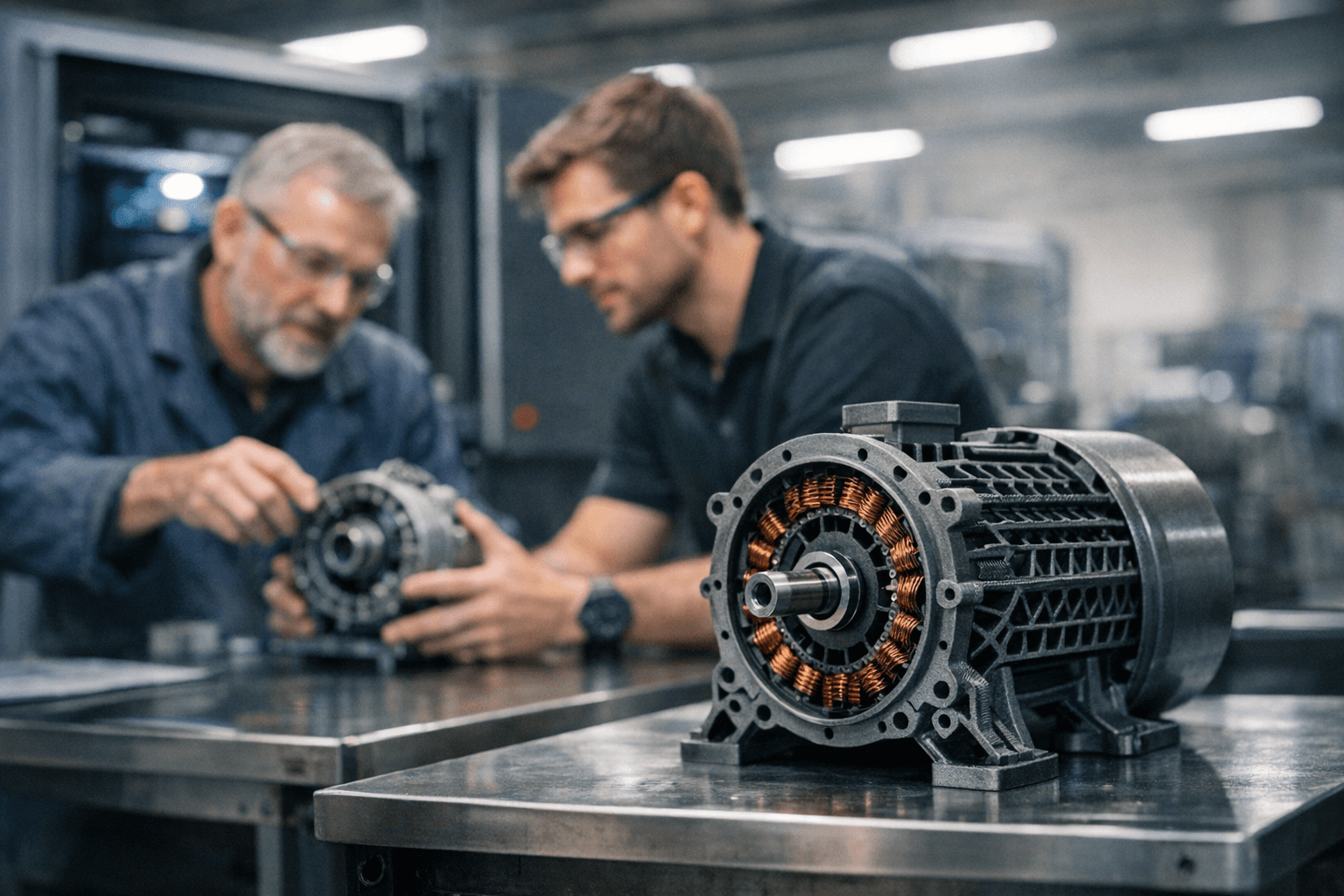
Additive Drives already counts Airbus, Audi, BMW, Schaeffler, and Amazon among early customers and plans to target data centers, e-mobility, aerospace, robotics, and advanced manufacturing as it scales. The magnet-free design and additive approach promise fewer supply-chain risks tied to rare-earth elements and lower cooling needs because of reduced heat dissipation, practical wins for shops wrestling with thermal management and sourcing fragility.
What this means for the 3D printing and electrification communities is concrete: printed copper windings and novel geometries are moving from lab demos toward industrial rollouts, and a significant institutional check signals investor confidence in additive-first motor design. Expect Additive Drives to expand pilot programs, push prototype cycles into customer testbeds, and publish more performance data as production capacity ramps. If the company delivers on the efficiency and lead-time claims, fabricators and OEMs will get access to lighter, higher-efficiency motors that change how systems are cooled, sourced, and engineered.
This article was produced by Prism’s automated news system from verified source data, official records, and press releases, then run through automated quality and moderation checks before publishing. The system is built and supervised by the people who set the standards it runs under. Read our full AI policy.
Did this article answer your question?