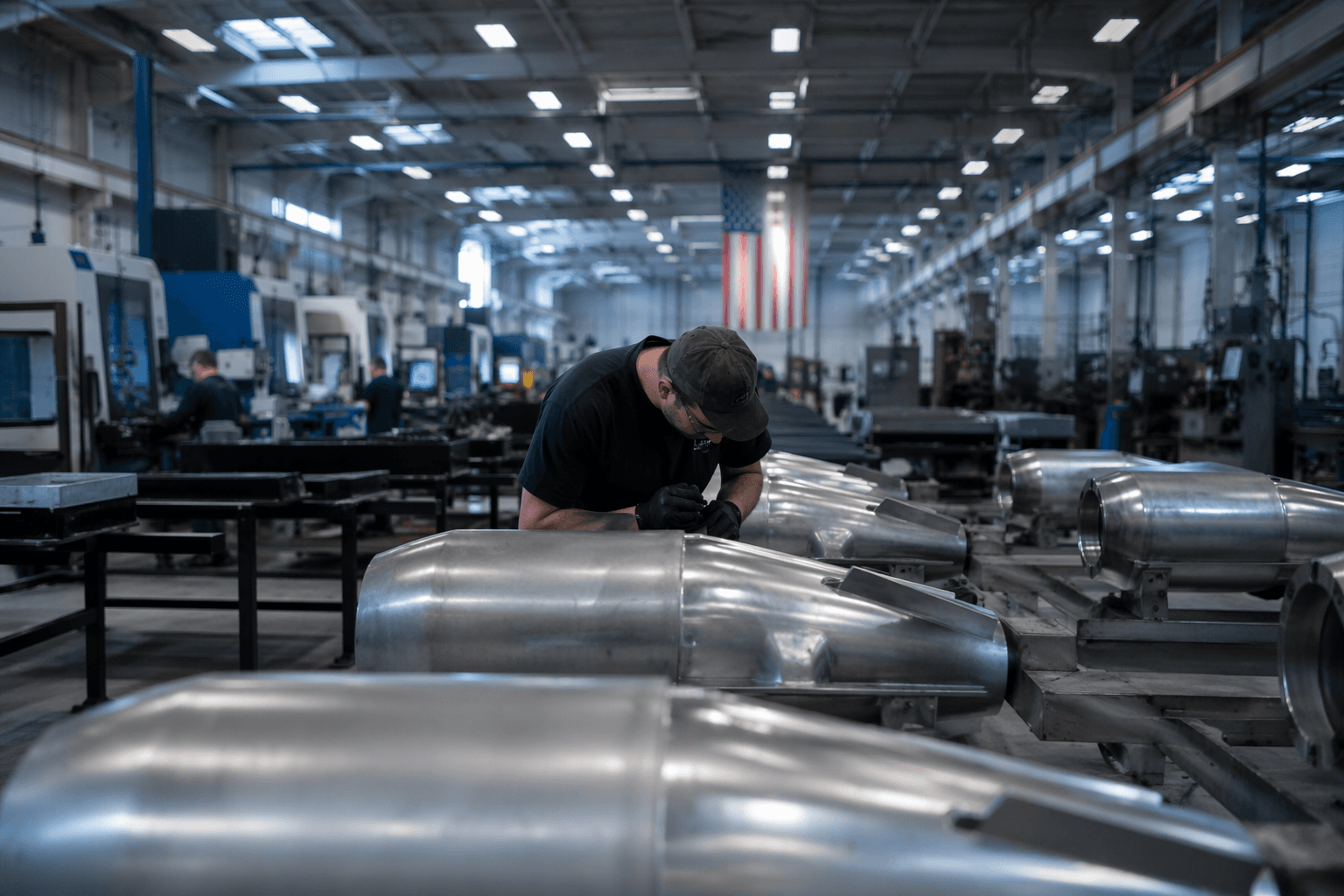
Eplus3D launches ultra-large metal printer for parts over 3 meters
Eplus3D’s EP-M3050 pushes metal powder-bed fusion past three meters, making one-piece printing a real option for parts that used to be split and bolted together.
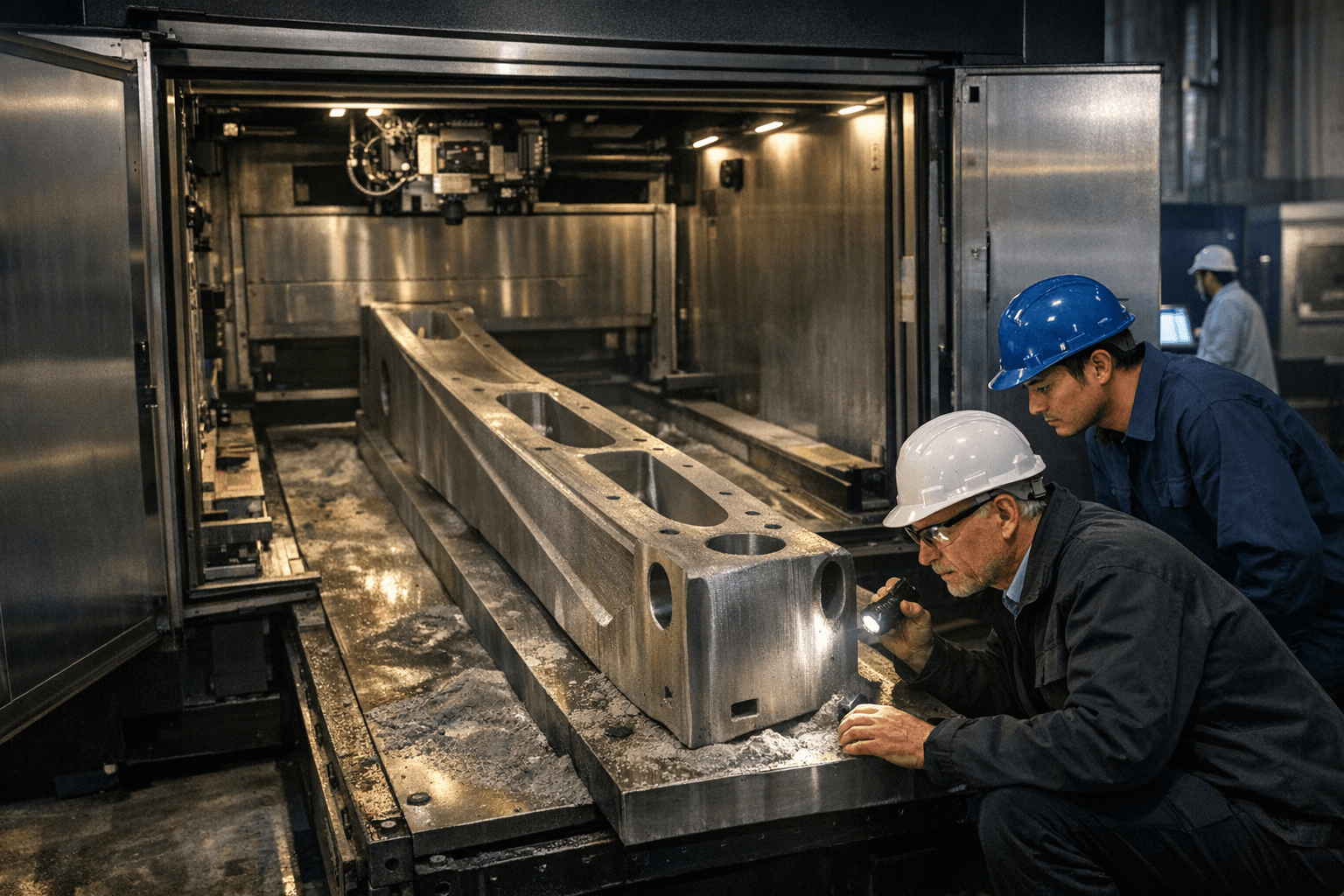
Eplus3D has put a new hard number on the ceiling of large-format metal printing: more than three meters. With the EP-M3050, announced on April 17, 2026, the company is moving powder-bed fusion from the realm of oversized industrial jobs into territory where a single printed part can replace a modular assembly that once had to be sectioned, welded, and reworked.
The EP-M3050’s standard build envelope measures 3,050 mm by 3,050 mm by 1,200 mm, and its Z-axis can be customized up to 5,000 mm. Eplus3D says the machine scales from 100 lasers to 256 lasers, with theoretical print speed reaching 3,500 cm³/h. That matters less as a headline number than as a signal of where the process is headed: the company is no longer talking about making a large bracket or a chunky prototype, but about printing parts whose span now starts to overlap with the size limits of traditional fabrication choices.
For the 3D printing crowd, the real shift is how this changes the design conversation. Desktop machines force users to think in terms of part splitting, alignment pins, glue joints, and post-processing. The EP-M3050 pushes that same question into industrial metal work, where every seam adds labor, risk, and cycle time. Eplus3D pointed to a 2.8-meter casing printed integrally on the system as a proof point, a part size that would have sat awkwardly at the edge of older machines and pushed engineers toward segmented builds.
The company is leaning on a track record to argue that this is not a one-off stunt. Eplus3D said it has sold more than 100 one-meter-class systems and more than 200 systems with at least one axis above one meter. Its earlier EP-M1550, introduced in 2023, offered a 1,550 mm by 1,550 mm by 1,000 mm build volume with 16 lasers, while the EP-M2050, shown publicly in 2024, went up to 64 lasers. At TCT Asia, that earlier machine was tied to a two-meter metal part, a visible step on the path to the new three-meter class.
Eplus3D is aiming the EP-M3050 at aerospace, aviation, energy, oil and gas, machinery, and advanced industrial manufacturing, where one-piece production can cut assembly work and shorten lead times. The broader signal is clear: the gap between desktop additive manufacturing and industrial metal production is not just widening in scale, it is changing in what engineers can now choose to print as a single object.
This article was produced by Prism’s automated news system from verified source data, official records, and press releases, then run through automated quality and moderation checks before publishing. The system is built and supervised by the people who set the standards it runs under. Read our full AI policy.
Did this article answer your question?