Florida's New Coastal Law Opens Door for 3D-Printed Seawalls
KIND Designs' 18-inch wall just got a legislative fix: Florida's SB 302 explicitly names 3D printing as a tool for living shorelines and ties it to $200M in coastal grants.
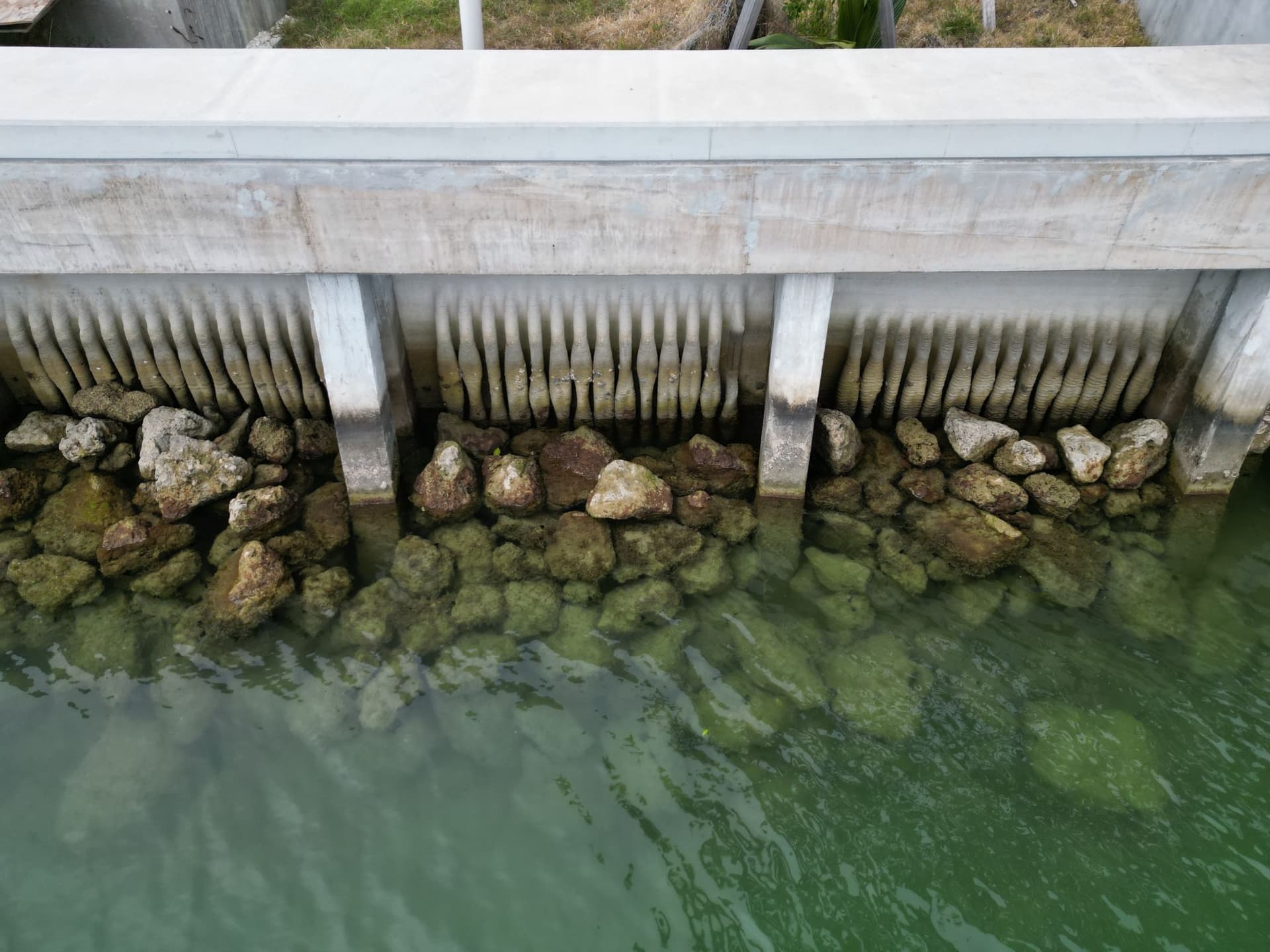
KIND Designs has been running into a literal wall for years: a state regulation capping seawall thickness at 18 inches, a rule that blocks the deeper grooves their concrete panels need to mimic mangrove root structures and deflect waves. Florida's Senate Bill 302, signed March 19 by Governor Ron DeSantis, takes direct aim at that regulatory friction, and it names 3D printing explicitly as a technology the state wants to incentivize for living shorelines.
The law, effective July 1, 2026, directs the Florida Department of Environmental Protection to build a faster permitting track for living shorelines, develop guidelines and standards for nature-based coastal methods, and create "permitting incentives and approval processes for the use of new strategies and technologies, such as 3D printing." That statutory language matters: it is not a loose technology-friendly policy gesture; it is a directive DEP must fulfill through formal rulemaking.
Anya Freeman, founder of Miami-based KIND Designs, sees the legislation as a genuine step forward, even if still incomplete in its specifics. Her company prints large-format concrete living seawalls now installed across Miami Beach and Miami, using what Freeman has described as the world's fastest concrete 3D printer, capable of producing a 10-by-10-foot panel in approximately an hour. The panels are engineered to give coral and algae surfaces to attach to while creating habitat for fish and crabs. "The bill provides a directive but not a specific direction on how it should be implemented," Freeman said. "The real impact will depend on how DEP moves forward from here."
The urgency behind SB 302 has a clear recent anchor. After Hurricane Milton, a 2024 Category 4 storm, DEP issued an emergency order in Tampa Bay for immediate repairs to seawalls that crumbled during the storm. Conventional concrete failed at scale. "These measures will not only lead to better environmental outcomes but also protect coastal communities from erosion and mitigate the effects of storm surges," DeSantis said after signing the first bills of the legislative session.

The law also ties nature-based solutions to the state's Resilient Florida initiative, which has more than $200 million available for coastal protection projects. One complication it addresses: permits for nature-based solutions have historically required both county and state review, creating a jurisdictional tangle that has slowed timelines. The law aims to establish a clear chain of approval authority, a change that should reduce the dual-track delay contractors have long encountered.
The pathway into this space runs through local government. Resilient Florida grants flow to counties, municipalities, and special districts; the most direct entry point for a small print shop or independent fabricator is approaching a coastal municipality already planning a living shoreline project and offering to supply printed components as a subcontractor. The bill also directs DEP to develop workforce training incentives, which could open state-backed credentialing down the road.
On the technical side, the full-scale seawall panels KIND Designs installs require industrial-grade concrete extrusion, well beyond desktop FDM. But smaller habitat tiles, reef attachment modules, and prototype components sit within reach of larger-format printers using marine-safe materials. Any piece destined for submerged deployment will need to meet DEP's forthcoming design standards, which are required under the new law and will emerge through rulemaking. Reaching out to DEP's resilience team directly at Resilience@FloridaDEP.gov is the concrete starting point before committing to any geometry or material specification.
This article was produced by Prism’s automated news system from verified source data, official records, and press releases, then run through automated quality and moderation checks before publishing. The system is built and supervised by the people who set the standards it runs under. Read our full AI policy.
Did this article answer your question?