Fluxo, NTU Secure NAMIC Backing to Commercialize SLS 3D-Printed Robot Joints
NAMIC is funding a Fluxo–NTU collaboration to develop carbon fibre + PPS composites for SLS production of humanoid robot joints and transmission systems.
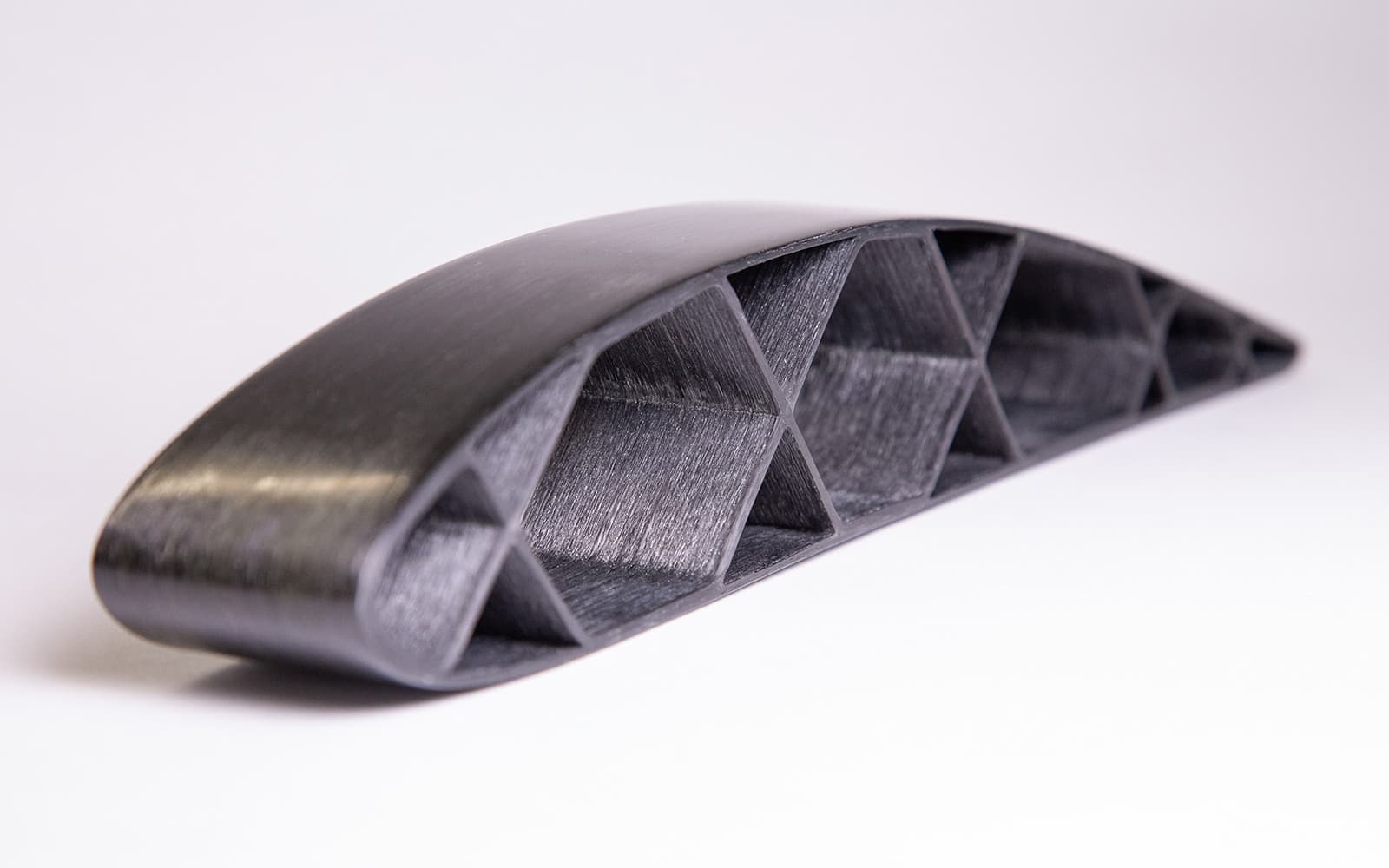
Fluxo Technologies and Nanyang Technological University have secured funding from Singapore’s National Additive Manufacturing Innovation Cluster (NAMIC) to develop carbon fibre + polyphenylene sulfide (PPS) composite materials tailored for selective laser sintering (SLS) production of humanoid robot joints and transmission systems. The project, announced February 15, 2026, names Professor Zhou Kun’s research group at NTU as the collaborative lead and identifies Fluxo as the industry partner.
Fluxo Technologies is described in the announcement as a Singapore‑based 3D printing and advanced manufacturing company; the Wisfarmer release tags Yuanbin Bai as Founder & CEO. NTU’s contribution will come from Professor Zhou Kun’s group based at the HP‑NTU Digital Manufacturing Joint Laboratory and the Singapore 3D Printing Centre, locations the release cites as hubs for research and industrialisation of advanced manufacturing technologies.
The materials specification in the announcement is explicit: a “carbon fibre + polyphenylene sulfide (PPS)” system engineered for compatibility with SLS additive manufacturing. The NTU research group’s remit, as stated in the release, includes the development and engineering applications of high‑performance polymers and metallic materials, and advanced structural design alongside multiscale modeling and simulation analysis, guided by the core philosophy of “integrated innovation in materials‑structures‑processes.” The release notes the group explores solutions for aerospace, automotive, medical, and smart manufacturing sectors, with part of that sentence truncated in the source text.
NAMIC’s role is described in the project notice as national‑level support led by the Agency for Science, Technology and Research (A*STAR), with a mission “to drive innovation, application, and commercialization of additive manufacturing technologies.” The announcement frames NAMIC as a convenor that unites industry, academia, and research institutions and provides support from technology development and feasibility validation through to scaled production, though the release does not disclose the monetary value of the NAMIC award for this specific project.

The Fluxo–NTU collaboration sits inside a broader NTU commercialization push. NTU has opened an Innovation Port situated at the Arc and Gaia learning hubs to serve as a collaborative space for the NTU community, innovators, and industry partners; the launch was witnessed by Minister of State Alvin Tan. NTU’s Innovation and Entrepreneurship initiative, which the university says launched in March last year, has guided over 130 researchers and 25 deep tech teams toward commercialisation. Earlier ecosystem moves include the Activate Global Fellows – Singapore programme, announced October 29, 2025, which carries a S$12 million commitment to support up to 20 science fellows and 20 co‑fellows over three years. On that programme, NTU Vice President Louis Phee said, “This new fellowship and partnership with Activate underscores NTU and Singapore’s drive for turning scientific research into real‑world impact. By nurturing early‑stage science and technology entrepreneurs, we are giving locally funded research a greater chance of commercial success. With more successful start‑ups, we can strengthen Singapore’s innovation ecosystem, generate economic value, and contribute to the global development of deep tech.” EnterpriseSG Managing Director Cindy Khoo added, “Growing deep tech startups requires a collective, ecosystem effort. We are committed to attracting and anchoring the right partners that can support our science and technology entrepreneurs, and are excited to be partnering with Activate, NTU and NRF on this new programme. Through this, our founders will have access to research excellence, industry mentorship and venture building support, and be more equipped to commercialise their solutions and scale from Singapore.”
Background financing for NTU spinouts has also moved forward: the Nanyang Frontier Fund was reported with a S$50 million target and S$5 million initial commitments from Lip‑Bu Tan of Walden International alongside a S$5 million co‑investment by NTU.
The announcement leaves several practical questions unanswered for makers and integrators: the NAMIC funding amount for the Fluxo–NTU project is not disclosed, there is no published project timeline or milestones, and the release does not specify IP arrangements or planned production partners. What is clear is that NAMIC backing, NTU’s HP‑NTU lab capabilities, and Fluxo’s industry role combine to push a carbon fibre + PPS SLS material system toward industrial robotics applications, positioning the work as a concrete step in Singapore’s additive manufacturing commercialization strategy.
This article was produced by Prism’s automated news system from verified source data, official records, and press releases, then run through automated quality and moderation checks before publishing. The system is built and supervised by the people who set the standards it runs under. Read our full AI policy.
Did this article answer your question?