Forks 3.0 shows how 3D printing reshapes cutlery design
Forks 3.0 turns cutlery into a serious AM design test, where geometry, balance, and surface finish matter as much as looks. It shows 3D printing can reshape everyday objects, not just parts.
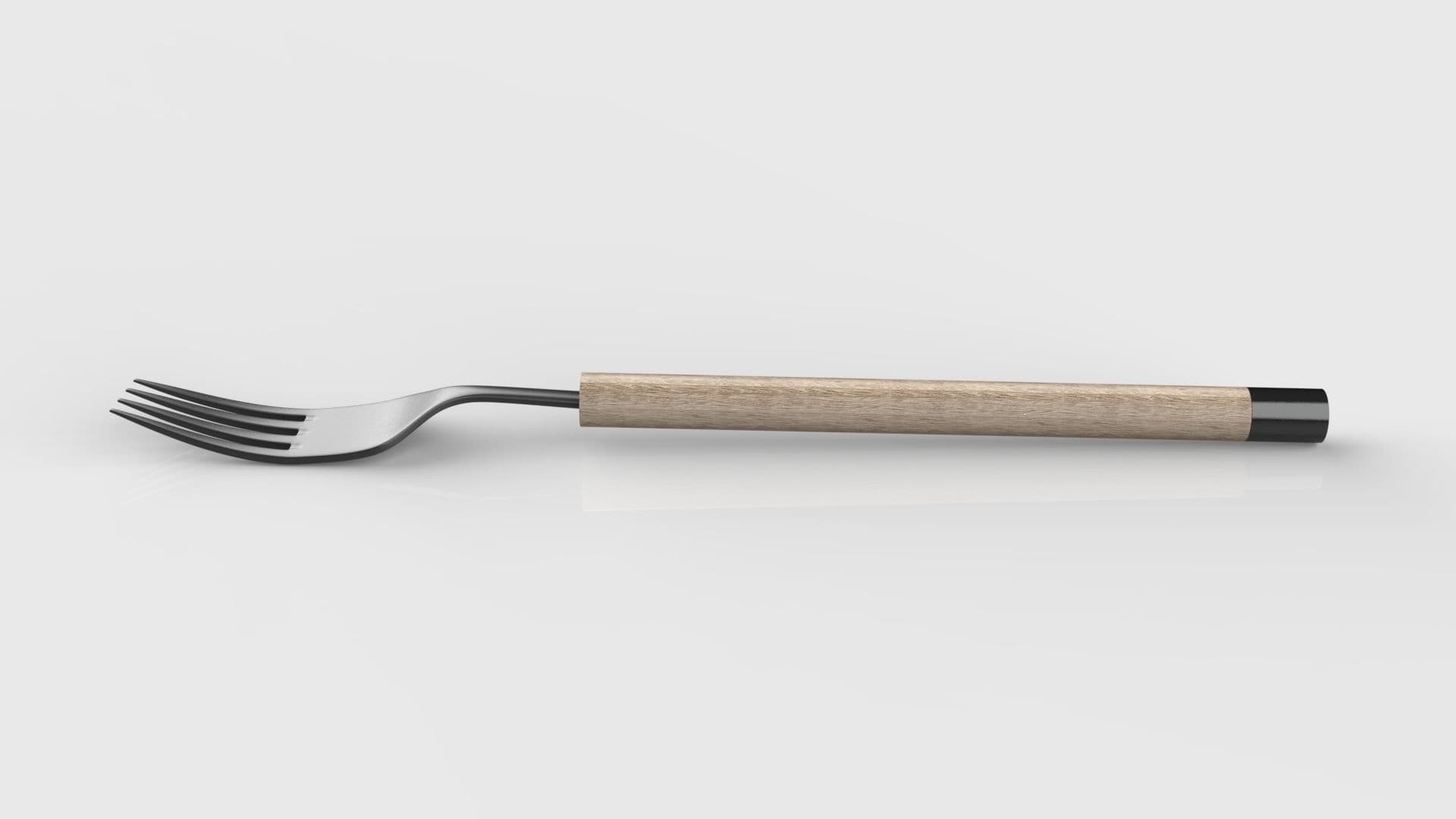
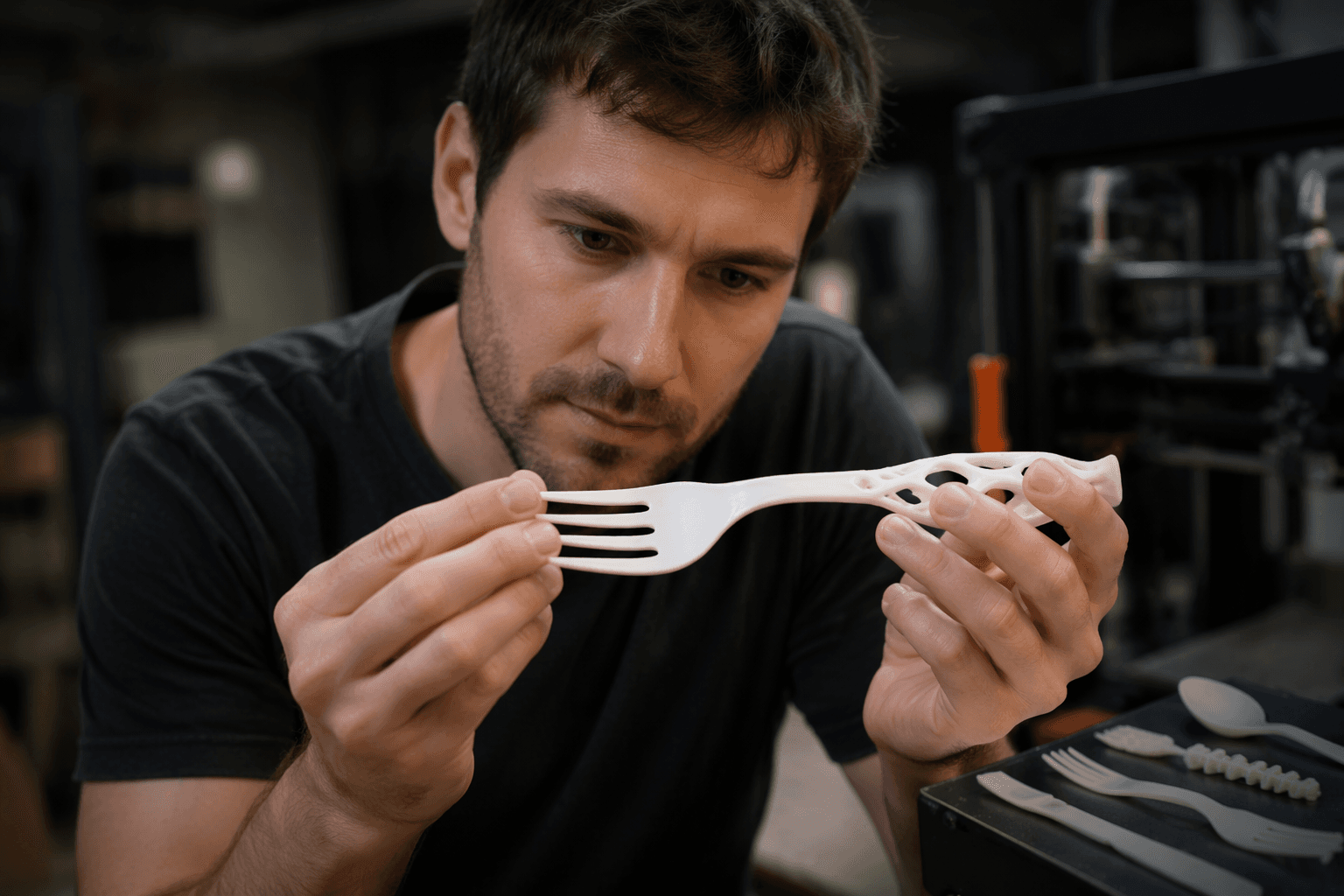
A fork is usually the last thing you’d call radical, which is exactly why Forks 3.0 works. By asking contemporary artists and designers to reimagine knives, forks, and spoons through 3D printing, the project turns a familiar tabletop tool into a clean test case for what additive manufacturing actually does well.
Shown at 3 Days of Design in Copenhagen, the broader Knife, Fork, Spoon 3.0 project is less about novelty for novelty’s sake and more about proving that cutlery sits right on the fault line between utility, sculpture, ergonomics, and manufacturing constraint. That is where 3D printing gets interesting, because the process does not just make objects, it changes the kind of objects you can responsibly try to make.
Cutlery is a better AM challenge than it looks
Cutlery is such an ordinary category that the shifts are easy to miss until you hold the object. A small change in tine spacing, handle thickness, bowl depth, or weight distribution can alter how a fork feels in the hand and how it performs at the table. With stamped or cast tableware, those choices are often filtered through conventional manufacturing limits before the design ever reaches a user.
3D printing loosens that filter. It gives designers room to push geometry in directions that would be awkward, expensive, or impossible with traditional methods, which is exactly why forks, spoons, and knives make such a useful case study. The object is simple enough to understand instantly, but specific enough that tiny formal decisions become obvious the moment you pick it up.
That is the real value of a project like Forks 3.0. It does not ask whether a printed fork can look interesting, because that is the easy part. It asks whether additive manufacturing can produce cutlery that feels deliberate in the hand while also carrying a design idea that conventional production would flatten out.
What 3D printing changes in the object itself
The biggest shift is freedom around form. When you are not locked into the logic of stamping or casting, you can treat a fork or spoon as a platform for proportion, texture, and balance rather than just a standardized utensil. That opens the door to forms that feel more expressive, more conceptual, and sometimes more personal than the polished sameness of mass-produced flatware.
A useful way to think about the difference is in the details:
- Geometry: 3D printing lets the designer reshape tines, stems, bowls, and handles in ways that can change use as well as appearance.
- Surface treatment: Texture can be part of the concept instead of a finishing afterthought, which matters when an object is meant to be touched every day.
- Ergonomics: Because the form is not dictated by a mold or a die, the grip can become more sculptural without automatically becoming unusable.
- Balance: Even a few grams or a subtle shift in mass distribution can change whether a utensil feels precise, awkward, playful, or luxurious.
That combination is why cutlery is such a clean demonstration of additive manufacturing’s strengths. A printed object does not need to shout about being printed. It just needs to show that the process made a better or more interesting object possible.
There is also a cultural upside here. A fork is not a bracket, a prototype jig, or a mechanical housing. It is something people associate with daily ritual, so the design choices read immediately. When the geometry is unusual, the reaction is not abstract, it is physical. You feel it before you intellectually parse it.
Why the exhibition setting matters
The fact that this project was staged as an exhibition is not a side note, it is part of the point. Los Angeles gallery Marta and curator Dung Ngo invited a selection of contemporary artists and designers to produce new knives, forks, and spoons using 3D printing, then presented the results in a curated design context. That framing matters because it shifts the conversation away from pure engineering and toward intent, authorship, and experience.
In an exhibition, additive manufacturing is not reduced to throughput or material efficiency. It becomes a language for experimentation, one that can support objects meant to be looked at, handled, and debated as much as used. That is a very different proposition from the usual 3D printing story, which often gets trapped in machine specs, build volume, and speed claims.
For the 3D printing community, that distinction is useful. It shows that AM does not have to compete only on manufacturing productivity. It can also compete on imagination, especially when the object is small, familiar, and loaded with expectations about how it should feel in use.
What Forks 3.0 says about design-for-AM
If you approach Forks 3.0 like a design-for-additive-manufacturing case study, the lesson is straightforward: the most valuable prints are not always the ones that save the most time or material. Sometimes the win is that the process lets you rethink a category people assume is already finished.
That is especially true for tableware, where convention usually favors standardization. 3D printing lets designers challenge that default by making utensils that are more expressive than stamped steel and more conceptually ambitious than the average dinner setting would ever ask for. In practice, that means the technology is doing two jobs at once, producing a functional object and testing how far everyday form can move before it stops feeling ordinary.
The reason that lands with makers is simple. Everyone knows what a fork is, which makes every deviation legible. When a printed fork changes the hand feel, visual rhythm, or silhouette enough to make you pause, the process has already done something valuable. It has turned a basic utensil into proof that additive manufacturing can reshape not just what we print, but how we think about the objects we touch every day.
In that sense, Forks 3.0 is not really about cutlery at all. It is about the moment a familiar object stops behaving like a commodity and starts behaving like a design argument, and 3D printing is the tool that makes that argument possible.
This article was produced by Prism’s automated news system from verified source data, official records, and press releases, then run through automated quality and moderation checks before publishing. The system is built and supervised by the people who set the standards it runs under. Read our full AI policy.
Did this article answer your question?