Formlabs Fuse 1+ Review: Affordable SLS, High Throughput, Notable Tradeoffs
Formlabs' Fuse 1+ brings true PA12 SLS into small shops with a sub-$25k printer and production throughput, but buyers must manage powder, PPE, and a small build envelope.
Formlabs' Fuse 1+ proved in hands-on testing to be the most accessible entry point to industrial-style SLS yet, delivering professional PA12 parts and production-level density without the six-figure price tag. The printer itself lists for under $25,000, and Formlabs' ecosystem of furnace, sift station, and accessories keeps the outlay below about $55,000 for a working SLS cell, a step change for shops that want SLS performance without a factory footprint.
I ran the Fuse 1+ on January 16, 2026, packing the chamber to demonstrate throughput: a single build accommodated roughly 120 small parts, showing how nesting and tight packing unlock per-build economics. Parts came out with the typical strength and heat deflection behavior buyers expect from PA12, and thermal control inside the chamber translated to consistent prints and low warp across dense builds. The Fuse Sift powder handling station proved especially useful for reclaim and sieving, cutting down on manual scooping and making recycling powder less of a mess.
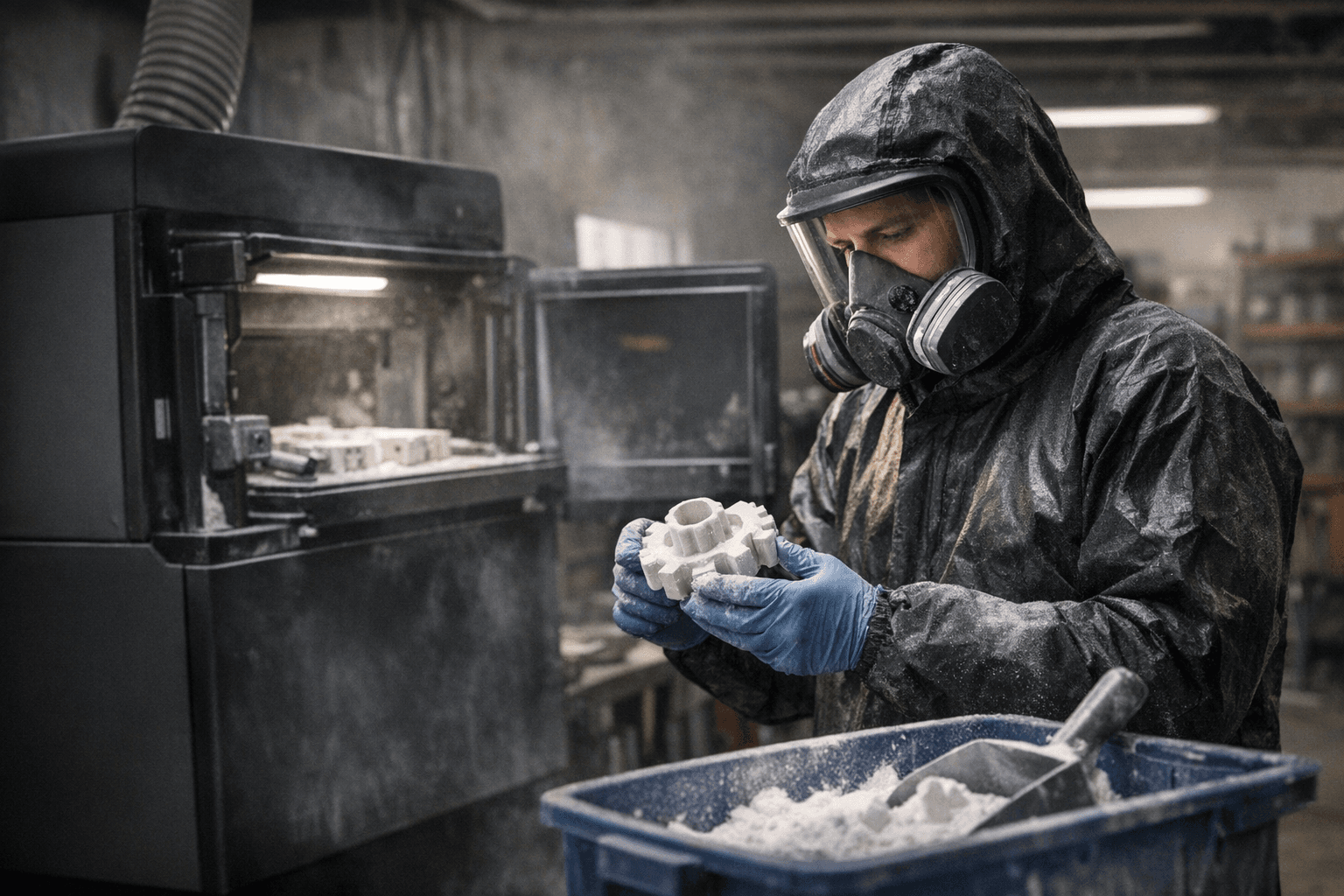
The system is not without tradeoffs. The build volume is modest at 165 × 165 × 300 mm, so large single pieces or wide batches require splitting or multiple runs. Powder handling remains the dominant operational concern - expect a noisy, powdery workflow that demands a plan for PPE, filtration, and dedicated cleaning routines. Compared with larger industrial SLS platforms, the Fuse 1+ makes design compromises in build envelope and absolute throughput, but it preserves core SLS advantages: isotropic strength, fine feature resolution, and high part density when you pack the bed.
User experience hits both highs and lows. PreForm software handles nesting and supports a camera for build monitoring, while an AI-based failure detection layer adds a safety net during long runs. These modern conveniences ease the learning curve compared with older SLS machines. The review included cost-per-part comparisons to FDM and SLA and found that SLS with the Fuse 1+ becomes cost-effective in mid-volume production where PA12 properties justify the workflow and cleanup overhead.
For readers considering a step up from filament or resin, the Fuse 1+ answers a clear need: a relatively compact, lower-cost way to run true SLS. Practical advice is straightforward - plan for powder management, invest in the Sift station or equivalent, optimize nesting to maximize throughput, and accept the smaller envelope as the tradeoff for a lower capital outlay.
The bottom line is that the Fuse 1+ makes SLS a reachable tool for small manufacturers and advanced hobbyists, shifting the decision from whether you can afford SLS to whether you can manage the powder and process.
This article was produced by Prism’s automated news system from verified source data, official records, and press releases, then run through automated quality and moderation checks before publishing. The system is built and supervised by the people who set the standards it runs under. Read our full AI policy.
Did this article answer your question?