Google releases Fitbit Air CAD specs for custom 3D-printed accessories
Google handed makers the exact Fitbit Air dimensions, tolerances and fit forces, opening the door to bands, mounts, clips and sensor-safe 3D prints that actually fit.

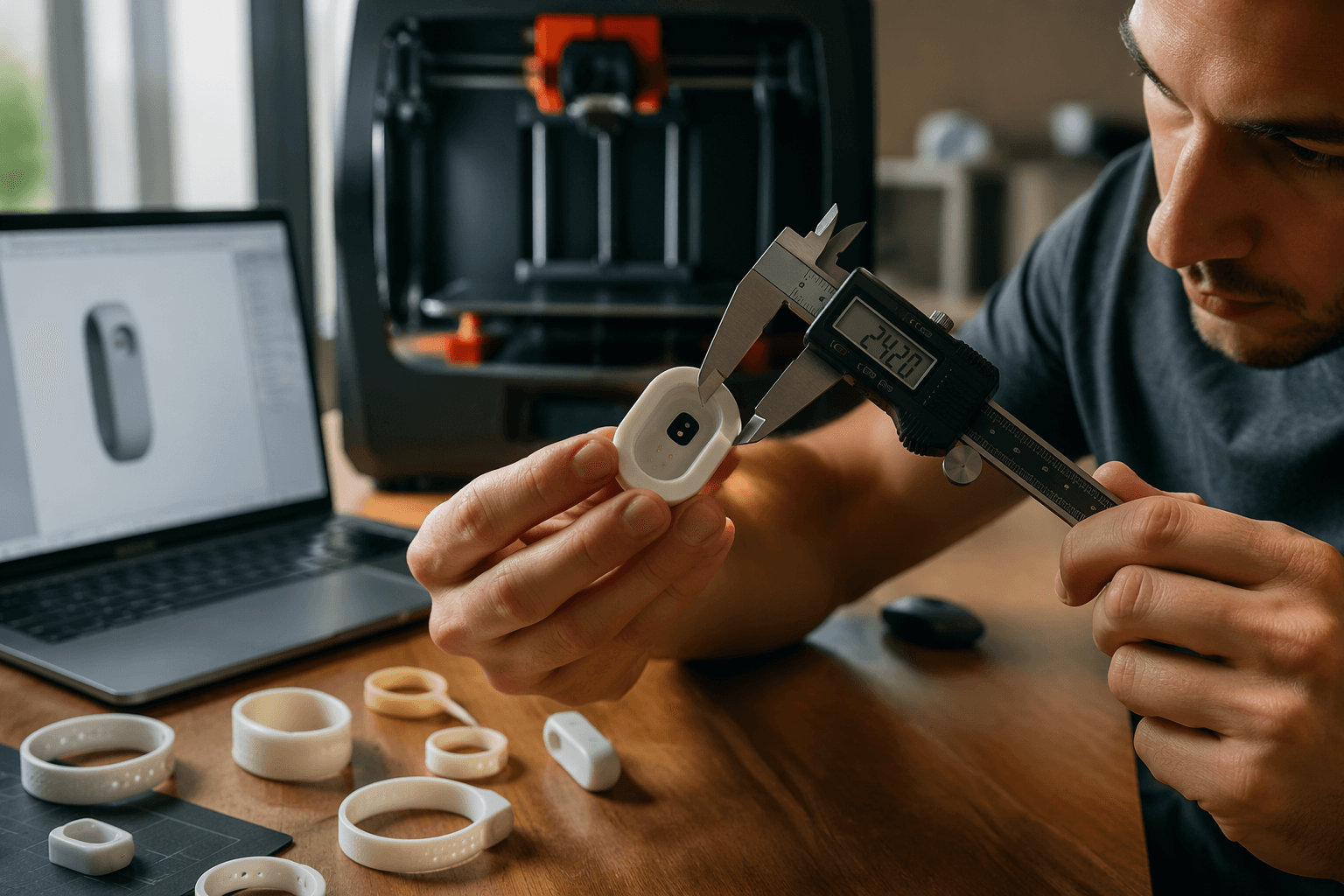
Google just took one of the most annoying parts of wearable modding off the table: the guesswork. By publishing Fitbit Air CAD specs and technical dimensions, the company gave 3D printer owners the measurements needed to build custom accessories that fit the screenless tracker without relying on trial-and-error.
The package went beyond a rough outline. Google released exact dimensions, mating dimensions, tolerances and mating-force specifications, then posted the announcement to r/fitbit with the kind of open-ended invitation makers usually wish they got from big hardware brands. That matters because Fitbit Air is not a bulky device with lots of spare real estate. Neowin reported the pebble itself measures 33.5 mm by 14.36 mm, with attachment force set at 10 to 25 Newtons and detachment force at 12 to 45 Newtons. For accessory designers, those numbers are the difference between a print that feels hand-fit and one that rattles loose.
The guidance also gives makers the functional guardrails they actually need. Google said accessories have to maintain consistent skin contact so the heart-rate and SpO2 sensors keep working, and the material rules restrict certain substances while requiring copper and brass alloys to be lead-free. That immediately shifts the job from guessing at a shell shape to engineering around a real device, which is exactly why the useful prints here are obvious: armband adapters, charging cradles, desk stands, clips, protective bumpers and accessibility-friendly mounts. Google’s accessory ecosystem even leaves room for certified parts to carry a Made for Google badge, a sign that this is meant to be a maker-facing lane, not just a partner-only one.
The timing lines up with Fitbit Air’s launch. Google introduced the tracker on May 7, 2026 as its smallest and most affordable Fitbit, a $99 screenless pebble with up to a week of battery life, fast charging and a three-month Google Health Premium trial. It tracks 24/7 heart rate, heart rhythm with Afib alerts, SpO2, resting heart rate, heart rate variability, and sleep stages and duration. Google also said the Fitbit app is becoming the Google Health app, with existing Fitbit users upgraded automatically.
That is why this CAD drop matters immediately. Google did not just hand out a contour drawing for the Fitbit Air. It handed the 3D printing crowd the dimensions, fit forces and sensor constraints needed to turn a plain tracker into something easier to wear, easier to mount and easier to personalize from the first print.
This article was produced by Prism’s automated news system from verified source data, official records, and press releases, then run through automated quality and moderation checks before publishing. The system is built and supervised by the people who set the standards it runs under. Read our full AI policy.
Did this article answer your question?