Haddy says large-format 3D printing should be judged by finished products
Haddy is betting that large-format 3D printing proves itself through finished furniture, fixtures, and architectural pieces, not flashy demo parts.
Haddy is trying to reset the way large-format 3D printing gets judged. Instead of treating the machine as a prototype factory, founder Jay Rogers wants the conversation to start with finished products that people can use, sell, and live with. That shift matters because it pushes additive manufacturing out of the “look what it can do” lane and into the harder business of making things that are durable, repeatable, and worth paying for.
From impressive samples to real inventory
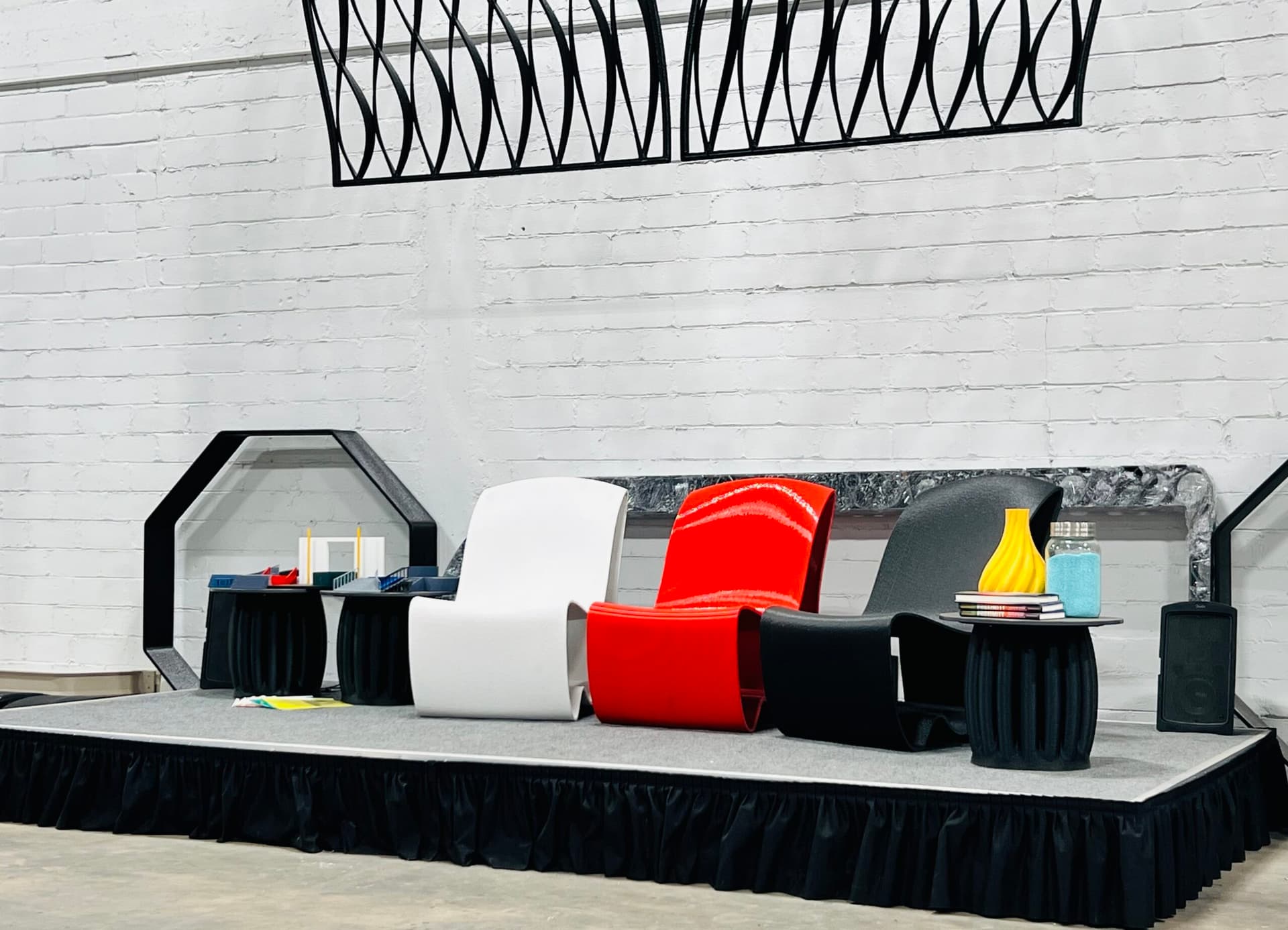
The clearest signal from Haddy’s setup is what sits in the front of the warehouse-like operation: completed pieces. That is a different kind of flex than the oversized test print or glossy showpiece that often anchors large-format demos. Furniture, fixtures, and architectural components are not just visual proof that the printer can move material around a big build area; they are proof that the workflow can survive the grind of actual use.
For anyone in the 3D printing world, that distinction is the whole game. A demo part can wow a crowd and still fail as a product if it cannot be reproduced cleanly, handled efficiently, or delivered with consistent quality. Haddy’s argument is that the print only becomes meaningful when it graduates from spectacle to something a customer can buy and sit on, install, or put to work.
Jay Rogers’ manufacturing philosophy
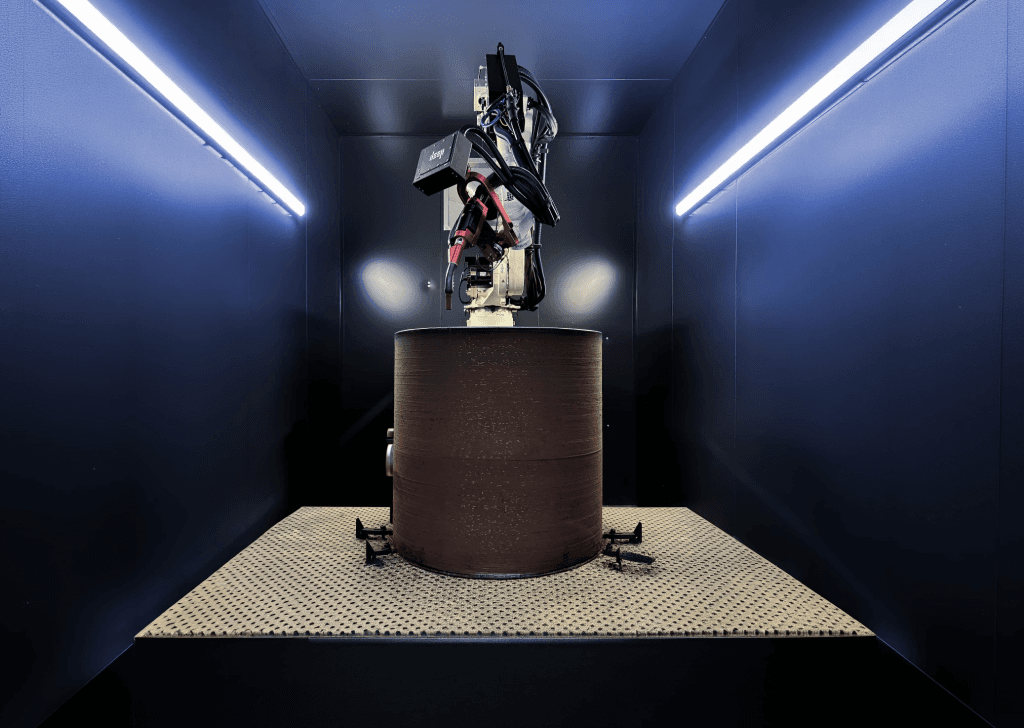
Rogers’ background comes through in the company’s larger pitch: 3D printing should be a production tool, not a prototyping curiosity. That is a familiar idea to makers who already rely on additive for brackets, jigs, replacement knobs, and custom parts, but Haddy is scaling the same logic up to room-sized systems. The company’s large robotic printing setup is presented as part of a broader shift toward distributed manufacturing, where digital design can feed local production of real-world objects.
That model changes what counts as success. In the prototype mindset, the goal is to get to a concept fast; in the product-first mindset, the goal is to get to something repeatable, useful, and commercially viable. Haddy is arguing that additive does not need to stay trapped in the small, highly engineered part category to matter economically.
What product-first printing actually requires
The difference between a flashy large-format print and a sellable one starts with repeatability. If a part is going to become furniture, a fixture, or an architectural component, it has to come off the system in a way that can be duplicated without constant handholding. It also has to stand up to the realities of end use, which means the production workflow matters just as much as the geometry.
That is where Haddy’s approach pushes past the usual demo-piece playbook. Large-format printing becomes more convincing when it is used to reduce tooling, simplify production steps, and turn digital files into finished goods with fewer supply-chain handoffs. In other words, the value is not only in printing something big, but in printing something big that can be made again, shipped out, and actually used in the world.
The lessons makers can borrow at bench scale
The company’s model is not a desktop story, but it still offers a practical filter for hobbyists and small shops deciding whether a print is genuinely production-ready. The question is not just whether the part looks impressive on the build plate. It is whether the part can be repeated, whether the workflow is stable, and whether the result solves a real need better than a one-off alternative.
A useful checklist emerges from that logic:
- Does the part serve a real function, not just a display purpose?
- Can it be produced again with the same results?
- Does the design reduce post-processing, tooling, or assembly steps?
- Would a customer actually buy it, use it, and expect it to hold up?
Those questions are especially relevant as shops look to move from one-off parts into small-batch production. They also matter for designers who want more freedom in geometry, because digital fabrication only becomes a business advantage when the design freedom leads to usable output. Bigger build envelopes and automated workflows help, but only if they end in objects that are ready for the market instead of the camera.
Why this story resonates beyond large-format systems
Haddy’s broader message is that the additive ecosystem is widening. The value proposition is no longer limited to saving time on prototyping; it is increasingly about making end-use goods with fewer supply-chain steps. That is a big statement, but it fits a pattern makers already understand: the more directly a printer can turn a digital file into something useful, the less it feels like a novelty and the more it feels like manufacturing.
That is why the finished pieces on Haddy’s floor matter so much. They make the claim tangible. A large-format printer judged by the products it turns out is a very different machine from one judged only by the size of its demo part, and Haddy is betting the industry will eventually prefer the former.
When a warehouse front is filled with completed furniture, fixtures, and architectural components, the message is hard to miss: the real benchmark is not whether the printer can impress a crowd for one afternoon. It is whether it can keep making the thing people actually need, again and again.
This article was produced by Prism’s automated news system from verified source data, official records, and press releases, then run through automated quality and moderation checks before publishing. The system is built and supervised by the people who set the standards it runs under. Read our full AI policy.
Know something we missed? Have a correction or additional information?
Submit a Tip