Inkbit 3D-prints Luneburg lenses for 100 GHz mmWave antennas
Inkbit printed a Luneburg lens as one continuous RF structure, not a stack of shell layers. The result reaches 100 GHz and points to harder geometry becoming printable.
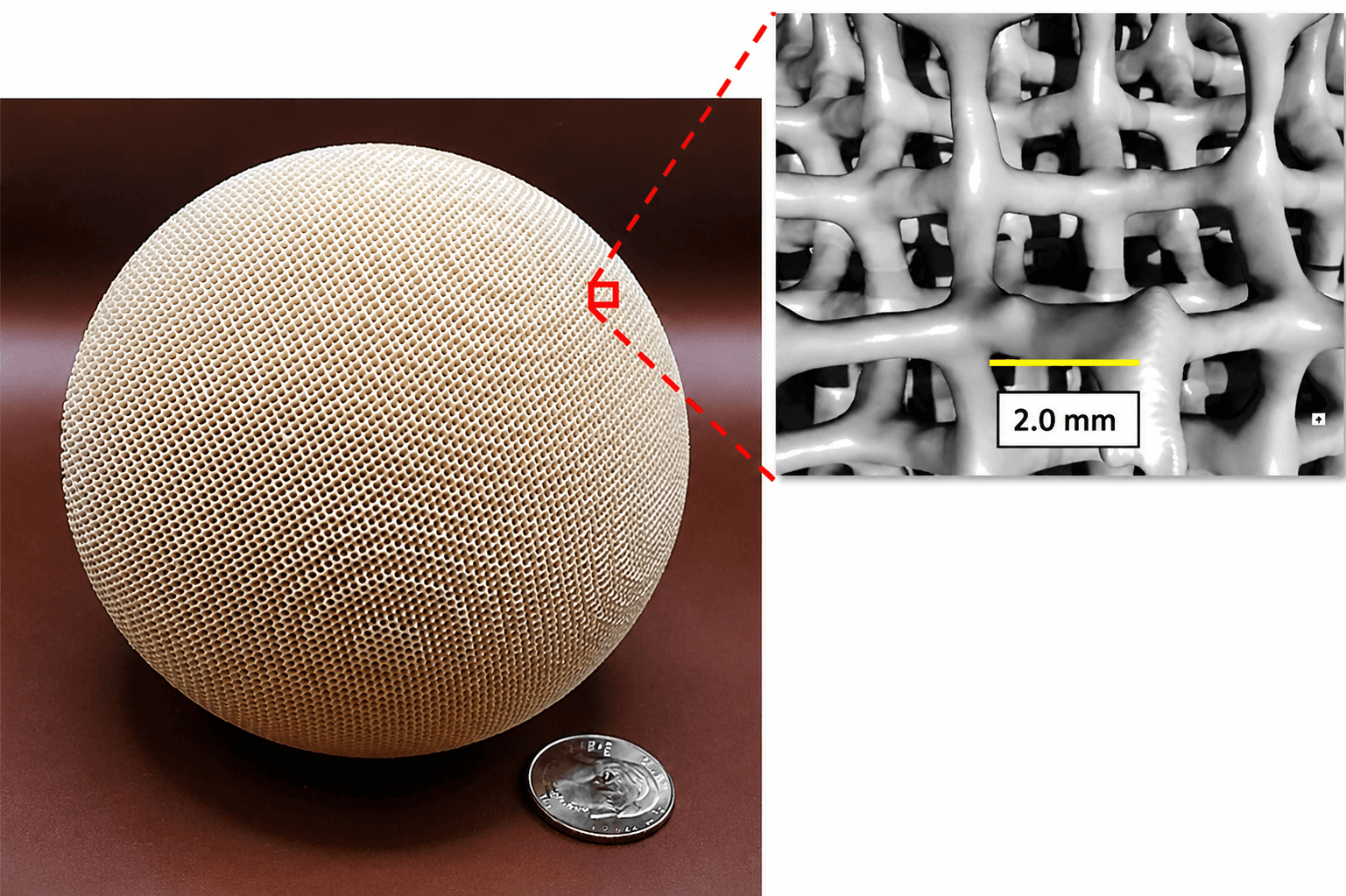
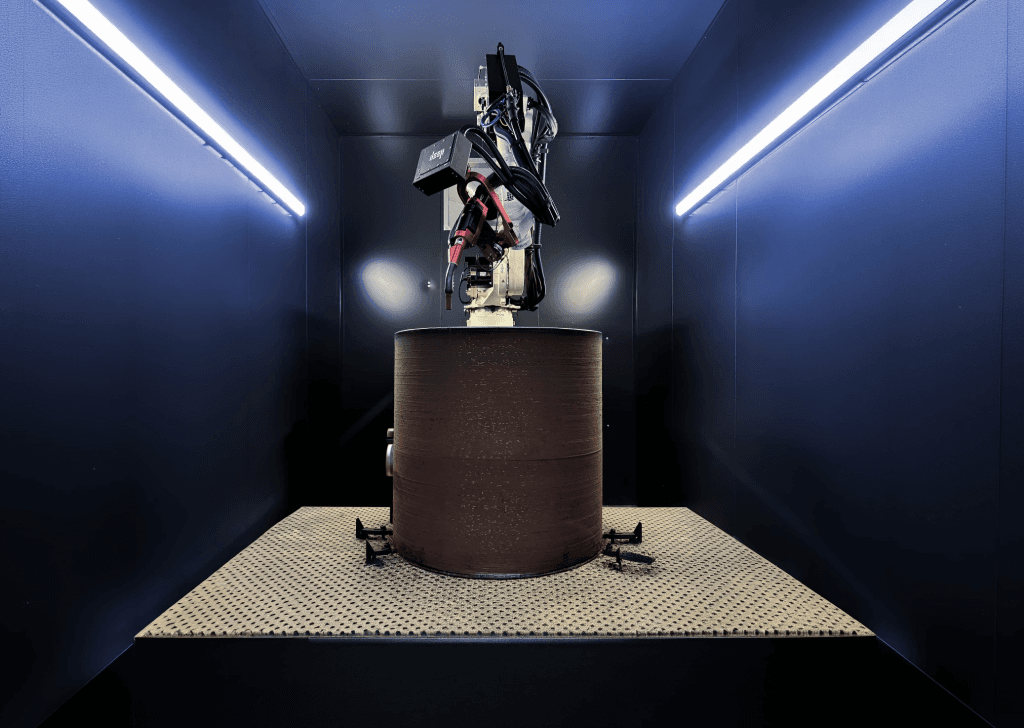
Inkbit just turned a classic antenna headache into a printable part. The company and University of Delaware researchers showed electrically large Luneburg lens antennas operating up to 100 GHz, using Vision-Controlled Jetting and a low-loss cyclic olefin thermoset that lets the lens print as a graded structure instead of a crude stack of dielectric slices.
That matters because a Luneburg lens only works when its permittivity changes smoothly across the part. Traditional builds usually fake that gradient with many discrete shells, which adds loss, complicates alignment, and leaves performance on the table. Inkbit’s approach goes after the real problem: geometry as function, where the internal lattice is the product.
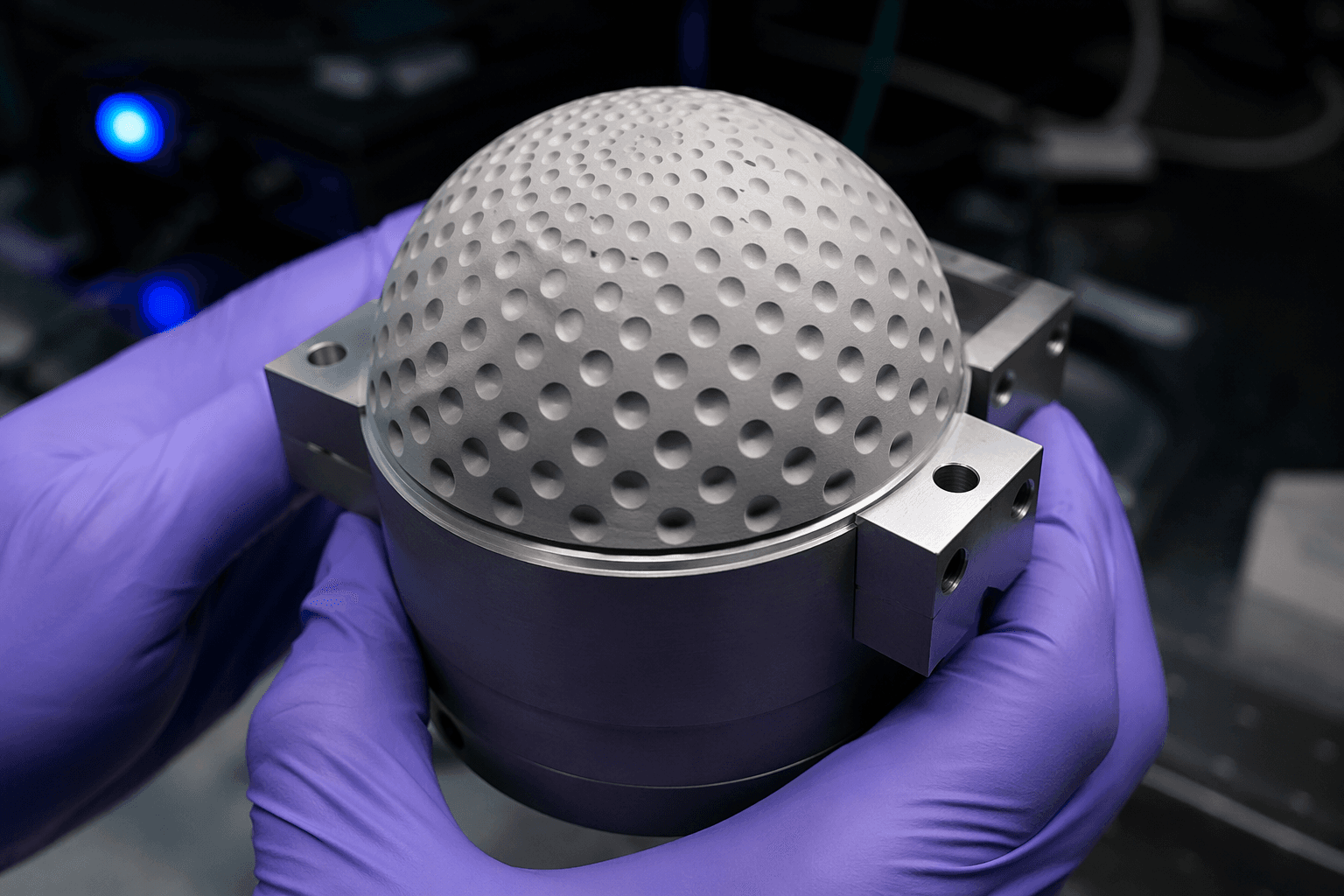
The work was presented at the IEEE International Microwave Theory and Technology Symposium, held June 7 through June 12, 2026, and the associated paper, “Fabrication and analysis of electrically large Luneburg lenses using vision-controlled material jetting,” was published in Optical Engineering on February 25, 2026. The authors listed on that paper are Colin Bonner, Zachary Nelson, Desai Chen, Liam Schwartz, Scott Twiddy, Batuhan Alasahin, Michael Richards, and Mark S. Mirotznik.
The University of Delaware abstract gives the clearest sense of how far the parts were pushed. The printed gradient-index lenses used subwavelength diamond and gyroid lattice structures with unit cells ranging from 2 to 5 mm, apertures exceeding 30 wavelengths, and realized gains above 34 dBi. That is a serious jump from the usual proof-of-concept 3D-printed microwave demo, which often stays small, narrowband, or both.
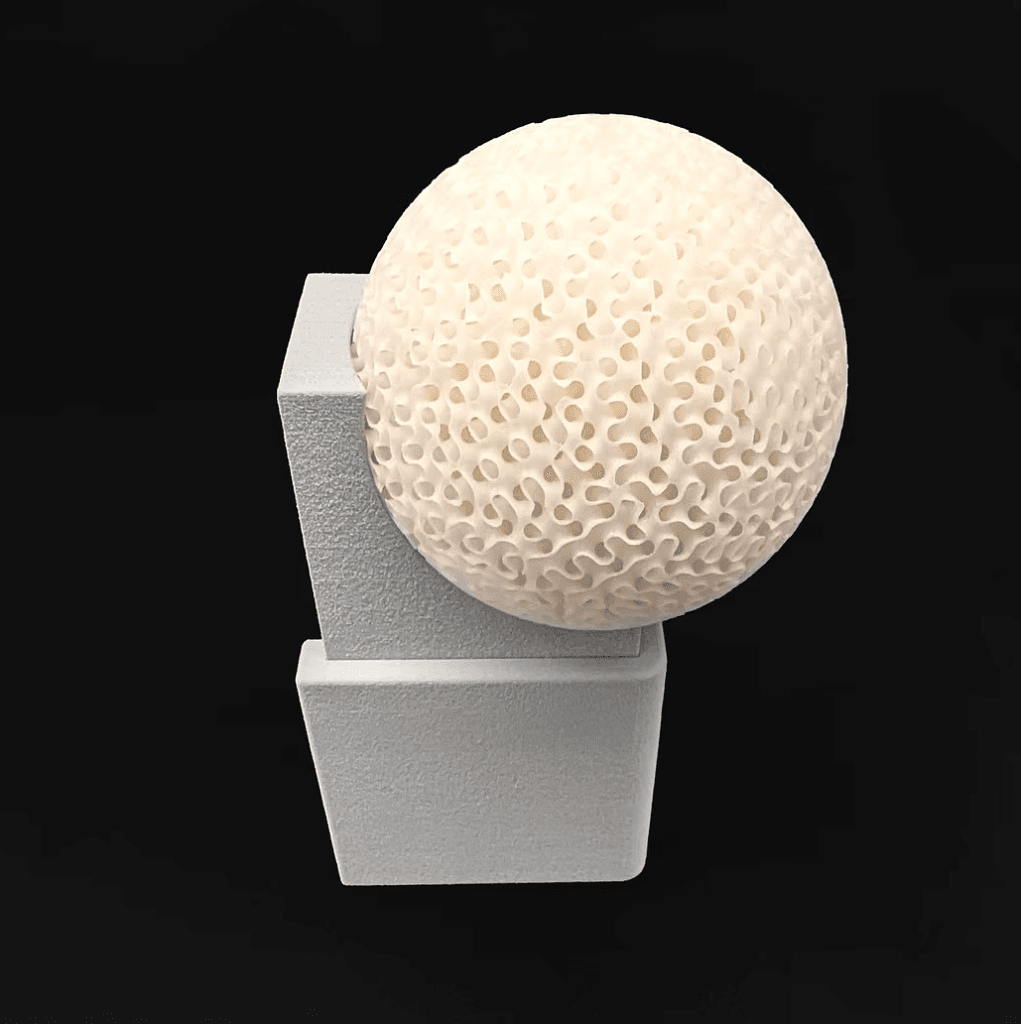
Inkbit’s own RF and microwave product page shows where it wants this to go next. The company now lists GRIN Luneburg lenses in 62 mm and 100 mm diameters, designed for operation up to 100 GHz, with Diamond and Gyroid lattice configurations. The target applications are just as concrete: automotive sensing, phased-array radar, UAV communications, satellite ground stations, and satellite backhaul.
The deeper hobbyist takeaway is bigger than one antenna shape. Rudolf Luneburg’s 1944 concept has always been attractive because it turns a beam-steering problem into a gradient-index geometry problem, but that geometry was hard to make cleanly. Inkbit’s result says additive manufacturing is starting to win where the part’s internal structure matters more than its outer skin. If printers can hold that kind of permittivity control, the next wave of RF hardware will not just be smaller or cheaper. It will be designed around shapes traditional fabrication was never good at making in the first place.
This article was produced by Prism’s automated news system from verified source data, official records, and press releases, then run through automated quality and moderation checks before publishing. The system is built and supervised by the people who set the standards it runs under. Read our full AI policy.
Know something we missed? Have a correction or additional information?
Submit a Tip