Henkel Unveils Energy-Efficient Dip Degreasing, Bonderite for 3D-Printed Parts
Henkel unveiled Bonderite C-AD 20202, a low-temperature dip surfactant that the company says cleans at 35–40°C and can cut dip-bath temperatures versus typical 60–65°C processes.
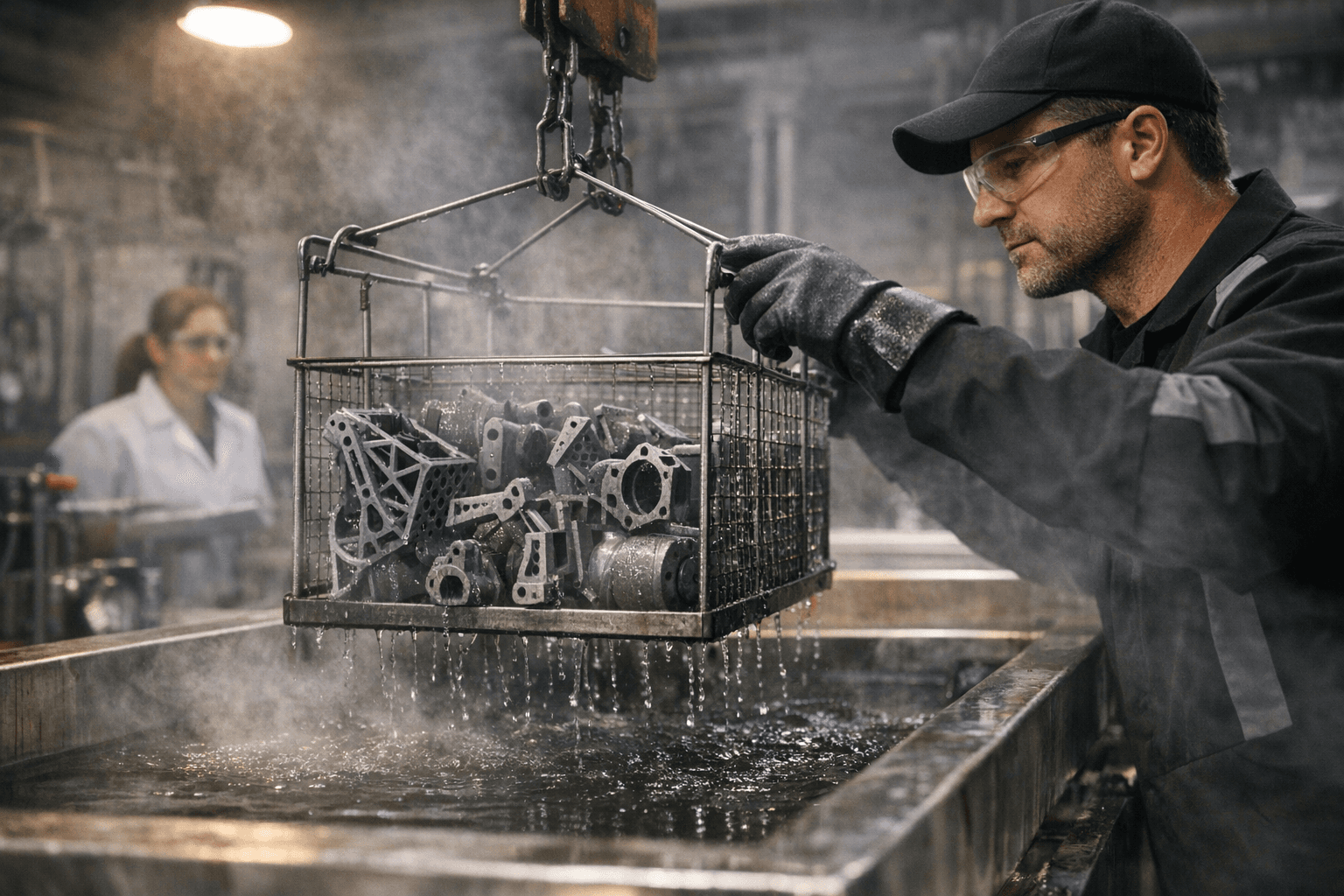
Henkel announced on February 18, 2026 that it is expanding its surface-treatment portfolio with Bonderite C‑AD 20202, a "low-temperature surfactant for industrial dip degreasing" the company says "cleans reliably at temperatures as low as 35 to 40 degrees Celsius." Henkel frames the launch as a retrofit-friendly option, saying Bonderite C‑AD 20202 "can be integrated into existing systems without investment by replacing the previous dip surfactant," and that lowering bath temperature has an immediate impact on operating costs.
The company positioned the chemistry as closing a specific product gap, noting "efficient low-temperature products have been available for spray degreasing for some time, but not for the dip cleaning process." Henkel emphasized dip degreasing remains "indispensable when complex geometries, concealed cavities or hard-to-reach surfaces need to be cleaned," calling out the need for "powerful chemicals" where mechanical support is less effective. Those capabilities are directly relevant to cleaning components with complex structures and concealed cavities common in advanced manufacturing.
Henkel supplied specific temperature comparisons in its materials. The new surfactant is described as effective at 35–40 degrees Celsius while conventional dip processes "usually operate at 60 to 65 degrees," and the company additionally states the "process temperature can be reduced by up to 35 degrees." The three figures appear together in Henkel's text; the 60–65°C versus 35–40°C pairing implies a typical reduction in the 20–30 degree range, so the "up to 35 degrees" claim will need clarification from Henkel about the baseline used for that maximum figure.
On validation and downstream processing, Henkel cites tests such as the water break test, saying those "prove complete surface wetting and thus optimal conditions for subsequent conversion treatment such as phosphating or nano conversion layer." The firm also reports the chemistry achieves "stable results" in demanding conditions, including in the presence of "non-water-miscible deep-drawing agents" and on "components with complex structures."
Henkel tied the lower operating temperature to environmental and economic benefits, stating that the reduction yields "significant savings in energy consumption and CO₂ emissions" and "combines cost efficiency with sustainability without compromising cleaning performance." The company added a process integration note: "If warm spray degreasing is used upstream, there is no need to heat the dip degreasing process at all."
Several operational specifics were not included in Henkel's release: the company did not publish dosing recommendations, technical data sheets, safety data sheets, quantified kWh or CO₂ savings, bath life numbers, regional availability or pricing in the materials provided. Those gaps leave open practical verification steps for shops considering a switch from 60–65°C baths to the new surfactant.
If Henkel's claims hold under independent testing and in customer pilots, Bonderite C‑AD 20202 could change pretreatment workflows for parts with hard-to-reach features by reducing or eliminating dip-bath heating and lowering operating costs. The launch fills a stated portfolio gap for dip cleaning and focuses attention on the process controls and verification data that will determine whether the chemistry delivers the energy and CO₂ reductions Henkel describes.
This article was produced by Prism’s automated news system from verified source data, official records, and press releases, then run through automated quality and moderation checks before publishing. The system is built and supervised by the people who set the standards it runs under. Read our full AI policy.
Did this article answer your question?