Hezbollah uses 3D-printed FPV drones and fiber optics to evade Israeli defenses
A $400 drone with 3D-printed parts and a fiber-optic tether is forcing multimillion-dollar armor to adapt, and the cost gap is the real warning.
A new kind of battlefield bargain
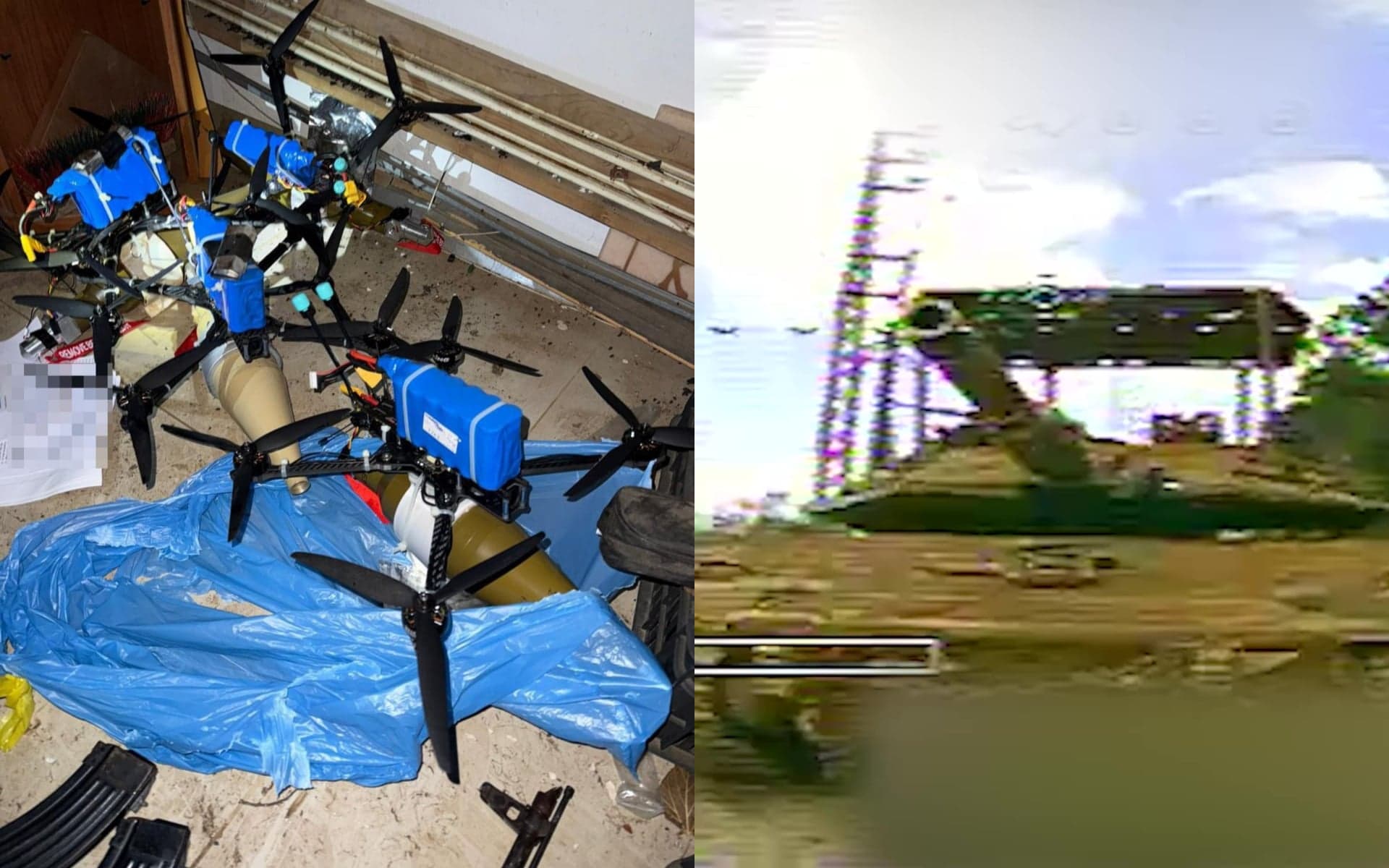
Hezbollah’s FPV drone campaign is a brutal reminder that modern conflict no longer belongs only to missiles, jets, and billion-dollar platforms. A drone that can be assembled for roughly $400 to $500, using 3D-printed parts, Soviet RPG grenades, FPV controls, and a fiber-optic tether, is now being used to threaten tanks worth millions. That cost imbalance is the story, and it is exactly why these strikes are drawing attention far beyond southern Lebanon.
What makes the tactic unsettling is not just that it works, but that it sits at the intersection of consumer-adjacent fabrication and frontline warfare. The components are small, cheap, and increasingly accessible, yet they can be combined into a system that slips past the assumptions built into traditional armored defense.
How the drones evade the usual defenses
According to recent reporting, some of Hezbollah’s small FPV drones are guided by a spool of fiber-optic cable, which makes them effectively immune to electronic jamming. That matters because it removes the radio-frequency link that many counter-drone systems are designed to detect, disrupt, or spoof. The drone still has a pilot in the loop, but it is no longer shouting over a jammable RF channel.
Low-altitude flight adds another layer of difficulty. These drones can stay below the radar picture that is optimized for rockets, anti-tank guided missiles, and larger aerial threats, then come in toward exposed roof areas on armored vehicles. That is a very different target set from the one Israel’s vehicle defenses were designed around, and it helps explain why tiny FPV craft are proving so hard to stop.
What Hezbollah has shown in video
Hezbollah has released multiple videos in recent weeks showing FPV strikes on Israeli armored vehicles, including Merkava tanks, a D9 bulldozer, and a Namer vehicle. The War Zone’s reporting on those clips said the attacks appeared to hit two Merkava Mk.4 tanks, a D9 bulldozer, and a Namer infantry fighting vehicle, though the damage visible in the footage was not fully clear.
One of the most consequential pieces of footage was released from a strike in Mays al-Jabal on April 11, 2026. The Times of Israel reported on April 27 that Hezbollah had shown a drone strike on an Israeli tank there, underscoring that this was not a one-off stunt but part of a sustained pattern. A separate April 26 strike in Taybeh was reported to have killed Sgt. Idan Fooks, 19, and wounded six other soldiers, marking the first fatal FPV drone attack on Israeli forces. That single incident captures the stakes: a small drone can force a strategic conversation normally reserved for much larger weapons.
Why Trophy is not a simple answer
Israel’s Trophy active protection system, built by Rafael Advanced Defense Systems, is already in operational use on platforms including Merkava Mark 4 tanks and Namer vehicles. Rafael has marketed Trophy as upgraded to better handle drones, which reflects how fast the threat environment is changing. The system is built to intercept incoming threats, but fiber-optic FPV drones complicate that mission because they do not depend on a jammable radio link and can arrive in ways that are harder to anticipate.
This is the hard truth hiding inside the technical detail: armor can be impressive, even elegant, and still be outpaced by a cheap threat profile that is optimized to exploit what the armor was never built to see. The issue is not that Trophy is obsolete. The issue is that the target set has shifted underneath it.
The Ukraine lesson that is shaping this campaign
Analysts have been pointing to the Russia-Ukraine war as the clearest preview of what Hezbollah is now borrowing. In that conflict, fiber-optic FPV drones emerged at scale in August 2024, and reporting from the Atlantic Council said they can strike at ranges over 30 kilometers with pinpoint precision. Defense News and other coverage have also emphasized why they are so valued: they are effectively unjammable and can provide a clearer video feed than many radio-linked setups.
That matters because it shows this is not a local curiosity or a one-off improvisation. Fiber-optic FPV drones have already changed battlefield tactics far beyond Ukraine, and Hezbollah’s use of them suggests the concept has crossed into another theater where armor, airpower, and electronic warfare have long been major Israeli strengths. The lesson is not that one side has found a magic weapon. It is that the cheapest tools, once good enough and easy enough to copy, spread quickly across conflicts.
What this means for 3D printing and maker-grade fabrication
For the 3D printing community, the uncomfortable takeaway is that the same accessibility that powers prototyping, replacement parts, and niche hobby builds can also feed warfighting systems. The printed piece is rarely the whole weapon, but it can be the enabler that makes a small airframe practical, repeatable, and adaptable in the field. When that is paired with off-the-shelf electronics and improvised ordnance, the result is a platform that can be built cheaply, iterated quickly, and fielded at scale.
This is where the familiar maker mindset collides with the darkest version of modular design. The parts are not exotic, and the assembly is not glamorous. Yet the effect is disproportionate: a drone costing only a few hundred dollars can threaten vehicles that cost millions, and it can do so in a way that undermines electronic defenses, radar assumptions, and the old comfort of distance.
The real story here is not battlefield novelty. It is the collapse of the price barrier between hobby-grade fabrication and serious military disruption, and that collapse is forcing armored warfare to adapt in real time.
Know something we missed? Have a correction or additional information?
Submit a Tip