Hi3D turns a text prompt into a printable 3MF project in minutes
Hi3D says it can take a text prompt to a printable 3MF in about five minutes, but the real test is whether the mesh, joints, and slicer handoff survive a serious print job.
A text prompt, a few minutes, and a printable 3MF project file is the pitch Hi3D is putting in front of 3D printing makers right now. In its own test, the platform turned a simple request for a chibi-style mecha into a usable project with very little manual cleanup, which is exactly the kind of shortcut figure builders have been waiting to see hold up in practice.
What Hi3D is claiming the workflow can do
Hi3D says the process starts with concept art generation, then moves into 3D reconstruction that produces a watertight mesh in about two minutes. From there, the system splits the model into logical printable sections, adds fixed or ball-joint connectors with tolerances, orients the parts, and exports an enhanced 3MF file. That is a much bigger promise than image generation alone, because the output is meant to be handled like a real print project, not a pretty render.
The company says the workflow used a prompt describing a multicolor, clean-background mecha, and its Multi-View Mode helped keep the head, torso, limbs, and mechanical detail aligned before reconstruction. That detail matters for character models and custom figures, where asymmetry and drifting proportions can wreck a build before it ever reaches a slicer. In this case, the point was not just style, but preserving enough structural consistency to get to printable geometry.
Why the print-prep part matters more than the concept art
For hobbyists, the jump from cool idea to successful print usually gets bogged down in the same places: mesh repair, part separation, connector planning, and print orientation. Hi3D’s pitch is interesting because it tries to absorb those chores into the model generation step instead of handing them off to Blender, CAD tools, mesh repair software, and a slicer pass. That is the difference between a novelty generator and something that starts to look like a real production shortcut.
The company frames the platform as an all-in-one AI 3D maker built by Math Magic and powered by its proprietary Sparc3D model. Its site also says the system is used by makers, artists, and engineers in more than 50 countries, and that it can reduce modeling time from days to minutes. Those are bold claims, but they point in the same direction: Hi3D wants to sit earlier in the workflow and do more of the structural heavy lifting before a file ever reaches the printer.
The strongest part of the pitch is not the speed claim by itself. It is the combination of watertight reconstruction, automatic segmentation, connector generation, tolerance optimization, and one-click 3MF export. That bundle is what makes the result sound closer to a preflighted print project than a raw AI asset.
How the handoff to a slicer changes the reality check
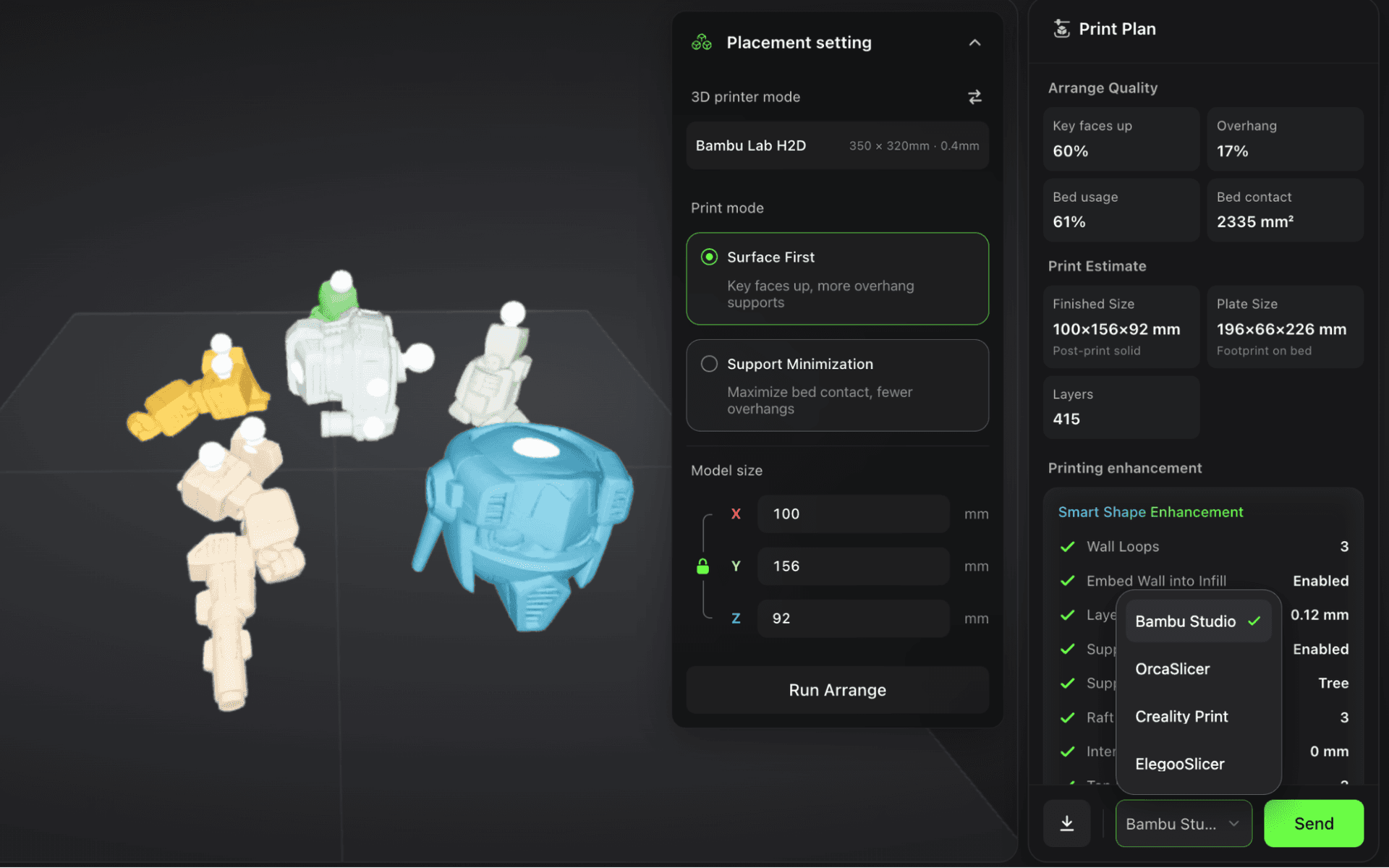
Hi3D says its workflow is compatible with major slicing ecosystems, including Bambu Studio, OrcaSlicer, Creality Print, and Elegoo Slicer. That matters because the slicer is still where scale, support strategy, layer direction, and bed placement get judged against the actual printer you are using. A clean export can save time, but it does not eliminate the need to verify whether the model fits the build volume, whether small joints need more clearance, or whether overhang-heavy armor pieces need support in the final layout.
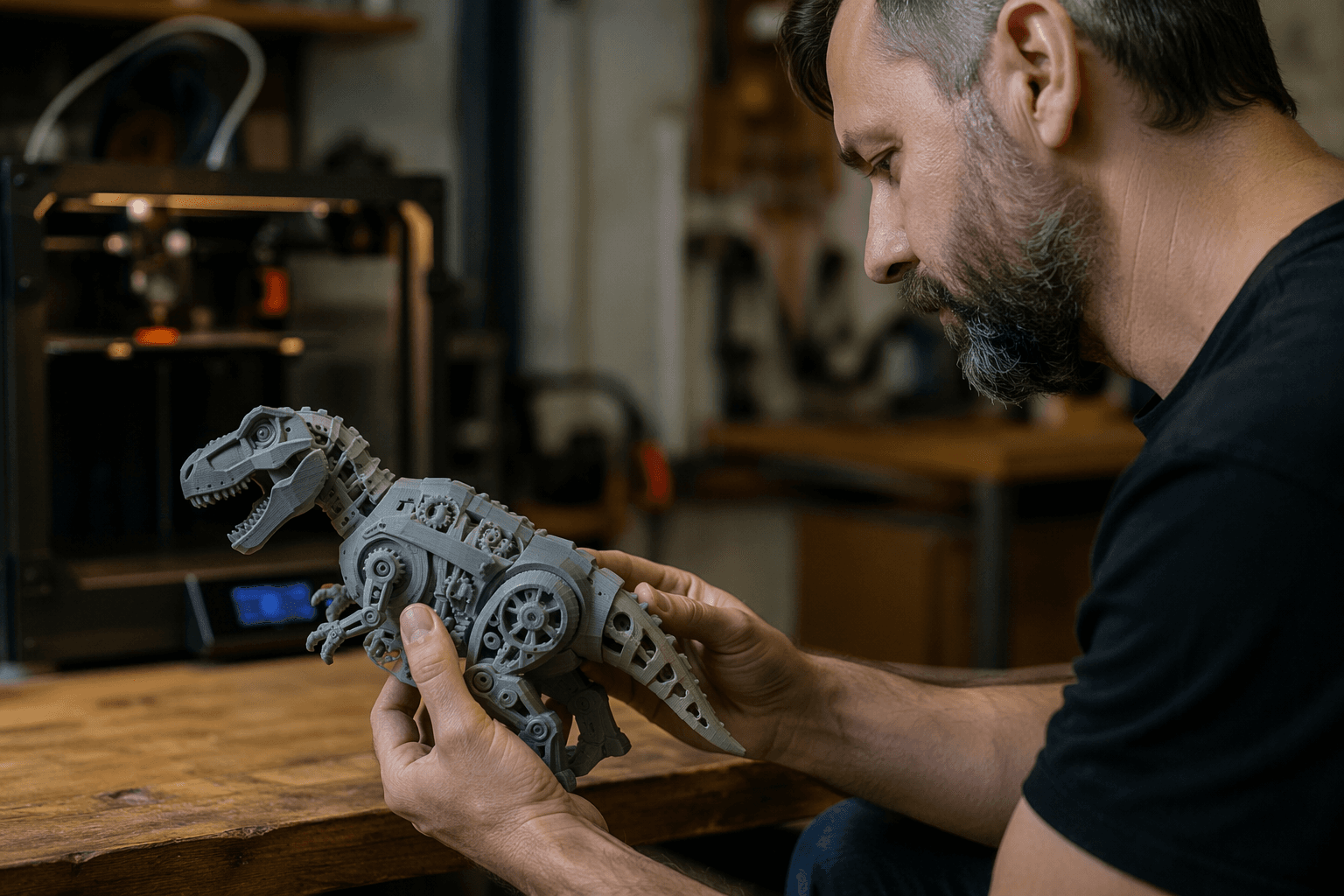
That is the real test for a mecha model. If the auto-segmentation and connector logic are good, the file can move into the slicer with far less cleanup than a typical AI mesh. If they miss, the weak points show up quickly in thin parts, tight joints, and any place where tolerances were guessed too aggressively. The workflow may shorten prep, but it does not repeal physics.
The 3MF export is the other key piece. Unlike a simple mesh dump, a project file can carry more of the print setup with it, which makes it better suited to a pipeline that wants to move from prompt to printable part without breaking the chain. For builders who are tired of spending an evening fixing topology before even thinking about supports, that is the practical payoff.
Where Hi3D fits in the larger AI-to-print push
Prompt-to-3D and image-to-3D tools are not new, but the market has been drifting toward a more specific goal: not just making something look real, but making it print-ready. The broader AI 3D scene has increasingly focused on watertight meshes, print-ready exports, and cutting down manual mesh repair, which makes Hi3D’s emphasis on segmentation and connectors feel timely rather than isolated.
Hi3D’s first-anniversary materials, published on June 24, 2026, frame the platform as more than a demo. The company used that launch moment to push a wider manufacturing workflow message, pairing prompt-to-print automation with build-plate optimization and the slicer compatibility that makes the output easier to use in actual hobby setups. That positioning suggests the company knows where the skepticism lives: not in whether AI can invent a mecha, but in whether the part still makes sense after the first slice.
The bottom line for figure makers
Hi3D’s five-minute promise lands because it goes after the slowest part of the hobby workflow, not the flashiest one. The question is no longer whether the model can be generated, but whether the mesh is watertight, the parts are split sensibly, the connectors hold tolerance, and the 3MF file survives the slicer without a long repair session.
That is the difference between a prompt that produces a picture and a prompt that gets you closer to a finished print. Hi3D is betting that hobbyists will care less about the AI stunt and more about the moment the mecha actually reaches the build plate ready to print.
This article was produced by Prism’s automated news system from verified source data, official records, and press releases, then run through automated quality and moderation checks before publishing. The system is built and supervised by the people who set the standards it runs under. Read our full AI policy.
Did this article answer your question?