Maker’s Pet launches Oomwoo, an open-source 3D-printed robot vacuum
Maker’s Pet’s Oomwoo pairs a 3D-printed chassis with Raspberry Pi, ROS 2 and local-only control, and the repo already drew about 1.9k stars.
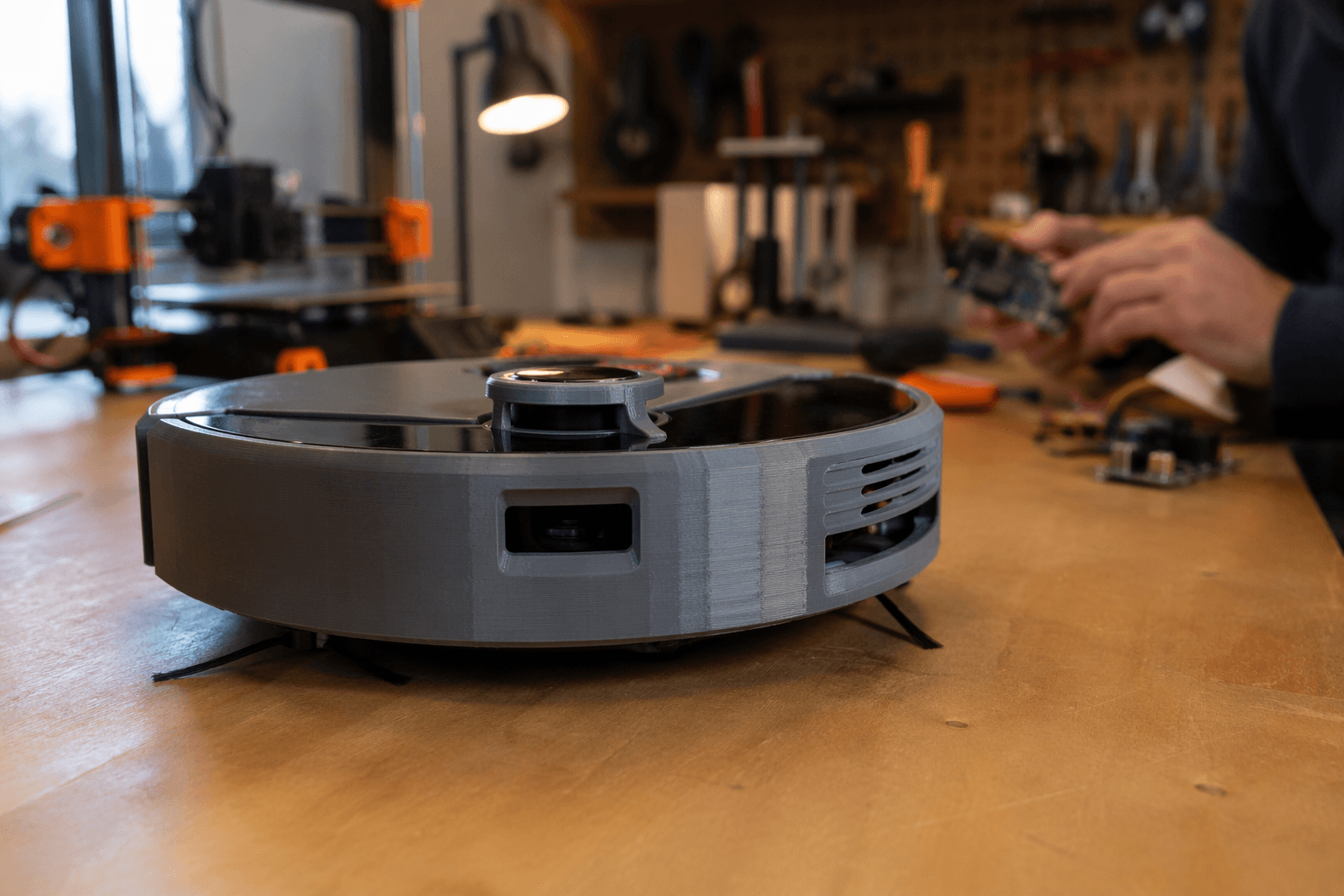
Maker’s Pet launched Oomwoo as a bet on where 3D printing actually adds value in a robot vacuum: the chassis, the modular structure, and the parts users may want to remix, not a glossy shell around a sealed appliance. The open-source machine starts with a 3D-printed frame and a Raspberry Pi, then layers in a low-cost 2D LiDAR sensor, ROS 2 software, Nav2 navigation, and Home Assistant integration with no cloud required for normal use.
The project is being built in public from the first commit, and Maker’s Pet is pitching it directly to the Raspberry Pi, ROS 2, Home Assistant, and 3D-printing communities. Its GitHub repository had about 1.9k stars and 87 forks, with files already laid out for BOM, build instructions, architecture, an RFC master list, and contributing.
The current v0 target covers the printed chassis, a ROS 2 Gazebo simulation, LiDAR mapping, and manual SLAM, while the compute path is still undecided between a Raspberry Pi 5, an ESP32 running micro-ROS, or both. The first bill of materials is targeted for mid-July, and the hardware is being split into self-contained modules so contributors can work in parallel and submit pull requests.
Suction, brush design, and obstacle avoidance are the user-facing problems worth solving first. LiDAR is structurally blind below its roughly 10 cm turret height, so camera-plus-AI vision avoidance is a later experimental goal rather than part of the minimum viable build.
CISA issued a 2025 advisory for ECOVACS DEEBOT devices that cited insecure Wi-Fi communication, hard-coded cryptographic keys, and update vulnerabilities, and another 2025 advisory for Dreame mobile apps warned of TLS weaknesses that could expose credentials and session tokens. Fortune Business Insights pegged the robot vacuum market at USD 8.16 billion in 2026, and RTINGS has tested 95 robot vacuums.
This article was produced by Prism’s automated news system from verified source data, official records, and press releases, then run through automated quality and moderation checks before publishing. The system is built and supervised by the people who set the standards it runs under. Read our full AI policy.
Did this article answer your question?