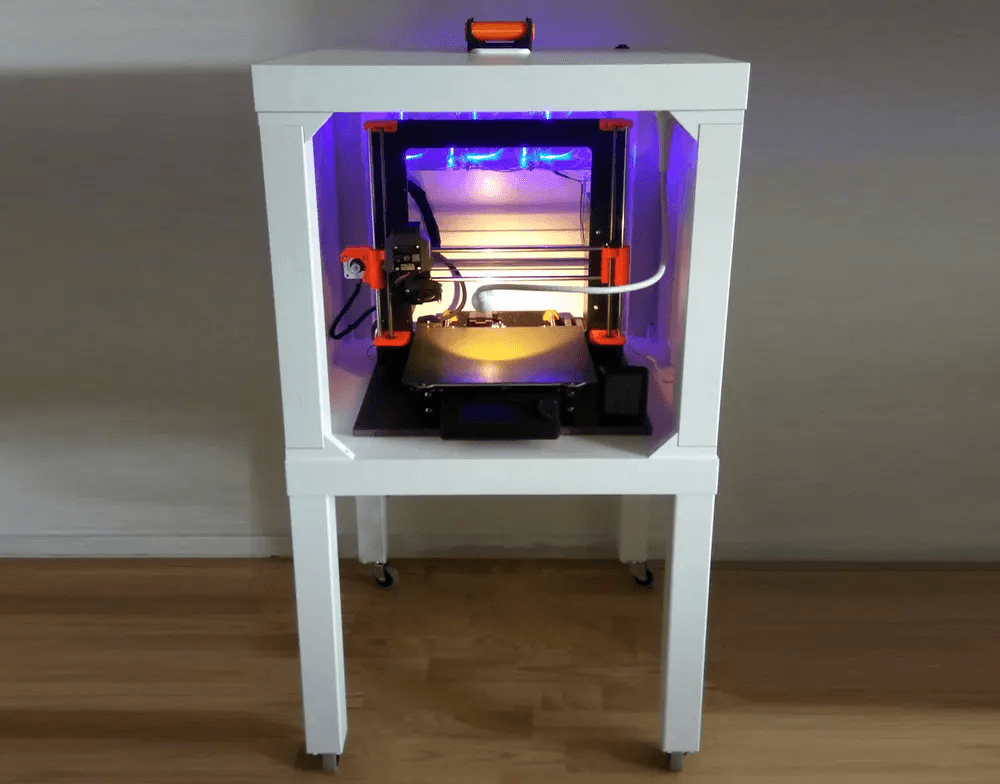
IKEA Lack enclosure turns a $60 setup into stable 3D prints
A $60 IKEA Lack build can still tame warping, quiet the printer, and clean up the bench. For many setups, it is the smartest weekend upgrade.
Why the Lack enclosure still matters
A budget enclosure built from IKEA Lack tables remains one of the most practical upgrades in 3D printing because it tackles the problems that still frustrate hobby machines: drafts, warping, noise, and clutter. All3DP frames the project as a professional-grade enclosure that can be built for under $100, with a roughly $60 setup landing right in the sweet spot for anyone who wants better prints without buying a costly cabinet.
The appeal is simple. A desktop printer does its best work when the environment around it is steady, and an enclosure gives you that control without turning the whole workshop into a renovation project. The result is not just prettier prints. It is a calmer, more repeatable routine every time you hit start.
What an enclosure actually changes
Prusa Research says enclosures help create a stable printer environment, and that the increased temperature inside that enclosed space is vital for advanced materials like ABS, PC CF, PP, and other filaments that are prone to warping. MatterHackers describes an enclosure as a box or assembly that keeps hot air in and cold air out, which is exactly why it helps with high-warp materials such as ABS.
That thermal buffer matters in day-to-day use. A printer sitting in a drafty room, near a vent, or in a colder corner of the house can lose consistency fast, especially on larger parts and long jobs. With an enclosure, the machine is less exposed to sudden temperature swings, and that usually means fewer curled corners, cleaner layer bonding, and less time spent re-running the same part.
There is a quieter benefit too. A Lack enclosure can make a printer feel less like a noisy bench appliance and more like a contained tool. That matters in shared rooms, apartments, garages, and anywhere else where the hum of fans, motors, and moving parts becomes part of the background. The enclosure does not eliminate every sound, but it softens the whole experience enough to make a big difference.
Why the IKEA Lack format won the maker crowd
Prusa says using IKEA Lack tables as printer enclosures is the most popular choice in the 3D printing community, and that popularity is easy to understand once you look at the table itself. The standard LACK side table measures 55 by 55 cm, or 21 5/8 by 21 5/8 inches, which gives makers a known footprint to build around. IKEA also describes the table as easy to assemble, lightweight, and strengthened by a honeycomb paper construction that keeps it sturdy without making it a burden to move.
That combination is exactly why the Lack keeps showing up in workshops. It is cheap enough to feel approachable, simple enough to build on a weekend, and modular enough to support all the add-ons that make an enclosure genuinely useful. Printed mounts, side panels, lighting, and filtration add-ons all fit naturally into the Lack ecosystem, which is why so many designs have evolved around it.
The table also has surprising longevity. IKEA’s U.S. page says the black-brown version has been in the range since 1979, which says a lot about how long this piece of furniture has been available for repurposing. In maker terms, that kind of stability matters. A widely available table with a fixed size and predictable construction makes it easier to share designs, standardize mods, and reproduce a build without chasing a rare part.
How a $60 build compares with a ready-made enclosure
A ready-made tent or enclosure buys you convenience. You open the box, set it up, and start printing with less DIY work. The Lack build, by contrast, gives you a lower price point and far more freedom to tune the enclosure to your printer, your space, and the way you actually use the machine.
That tradeoff is why Prusa’s enclosure guide points to three questions that really matter: how often you print high-temperature filaments, what your room environment is like, and how much you want to spend. If you only need occasional help with temperature-sensitive materials, the Lack approach gives you a strong return for a modest outlay. If your room is already stable and you print mostly easier materials, you may care more about convenience than enclosure performance.
The practical difference is customization. A ready-made enclosure is usually built to be generic. A Lack setup can be adapted with cut panels, cable routing, extra lighting, and filtration parts that match your exact machine and workflow. For many makers, that flexibility is the real win: the enclosure stops being a box and becomes part of the printer setup itself.
What makes the setup so usable in practice
The best part of the Lack route is that it scales with your printer rather than forcing your printer to fit a fixed product. That is why the format works so well for entry-level machines, upgraded rigs, and other desktop setups that benefit from environmental control. Once the frame is in place, the enclosure can evolve with the machine instead of needing a full replacement.
- Better temperature stability for materials that hate drafts
- Less warping on parts that need a warmer, more even environment
- A tidier bench, with the printer visually and physically separated from the rest of the workspace
A solid Lack build usually gives you three immediate gains:
It also leaves room for the accessories that matter most to daily use. Lighting helps with monitoring long jobs. Panels help keep the environment contained. Filtration add-ons can make the enclosure more comfortable to live with in a busy room. Those details are why this project has stayed relevant for so long: it solves the boring but important problems that make printing either enjoyable or annoying.
Why this upgrade still earns its keep
The Lack enclosure endures because it is not trying to be flashy. It is trying to make printing more dependable, and that is often exactly what hobby setups need. For under $100, and often around $60, it gives you a better shot at stable temperatures, fewer warping headaches, less noise, and a cleaner workspace.
That is the kind of weekend project that keeps paying off every time a print runs overnight and comes off the bed the way it should. In a hobby where small environmental changes can ruin a part or save one, the IKEA Lack enclosure remains one of the smartest low-cost improvements you can make.
This article was produced by Prism’s automated news system from verified source data, official records, and press releases, then run through automated quality and moderation checks before publishing. The system is built and supervised by the people who set the standards it runs under. Read our full AI policy.
Did this article answer your question?