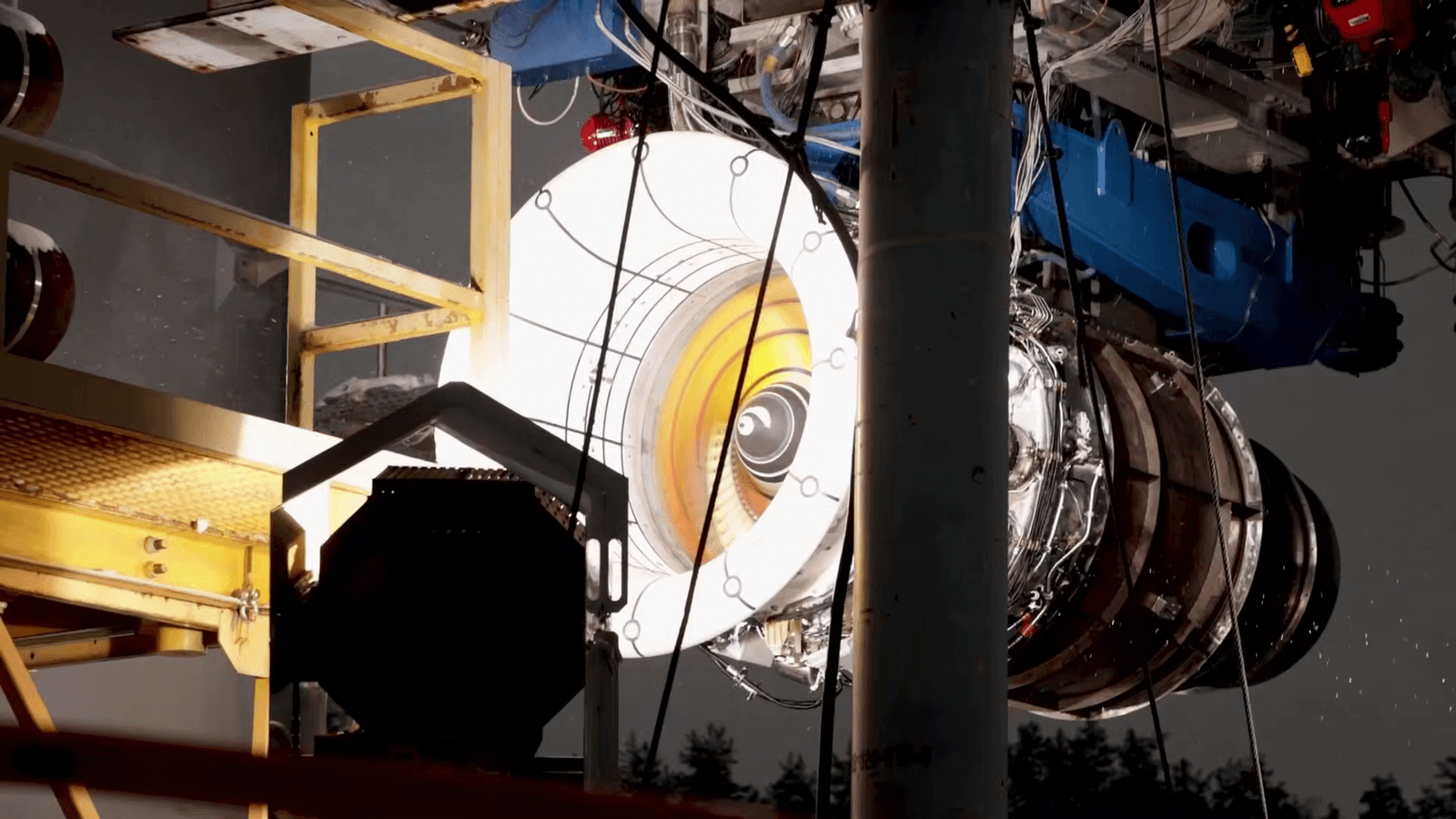
LEAP 71 prints world’s largest 3D-printed aerospike rocket engine
LEAP 71 and HBD printed a one-meter, 200 kN aerospike engine in 289 hours, with Noyron generating the geometry without human intervention.
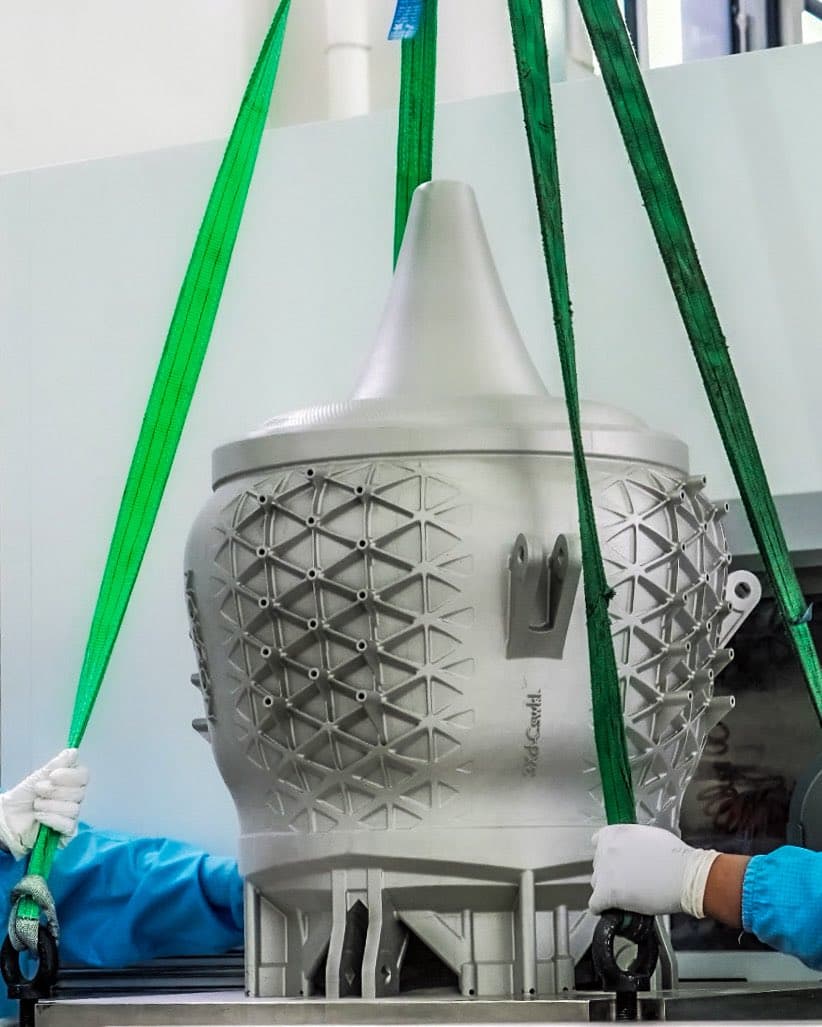
LEAP 71 and HBD said they had produced the XRA-2E5, a one-meter-tall aerospike rocket engine that was printed as a single metal part in 289 hours in Shanghai, China. The cryogenic methane and liquid oxygen engine is rated at 200 kN, or about 45,000 lbf, and HBD said it came off a ten-laser HBD 800 metal printer with no human intervention in the design process.
What makes the build matter for 3D printing is not just the scale. LEAP 71 said Noyron, its Large Computational Engineering Model, generated the manufacturable geometry autonomously using first-principles physics, engineering logic and manufacturing constraints. That pushes the conversation away from hand-modeled CAD and toward software that can create shapes people would not normally draw themselves, the same direction driving generative design and other topology-heavy parts already familiar to metal AM shops.
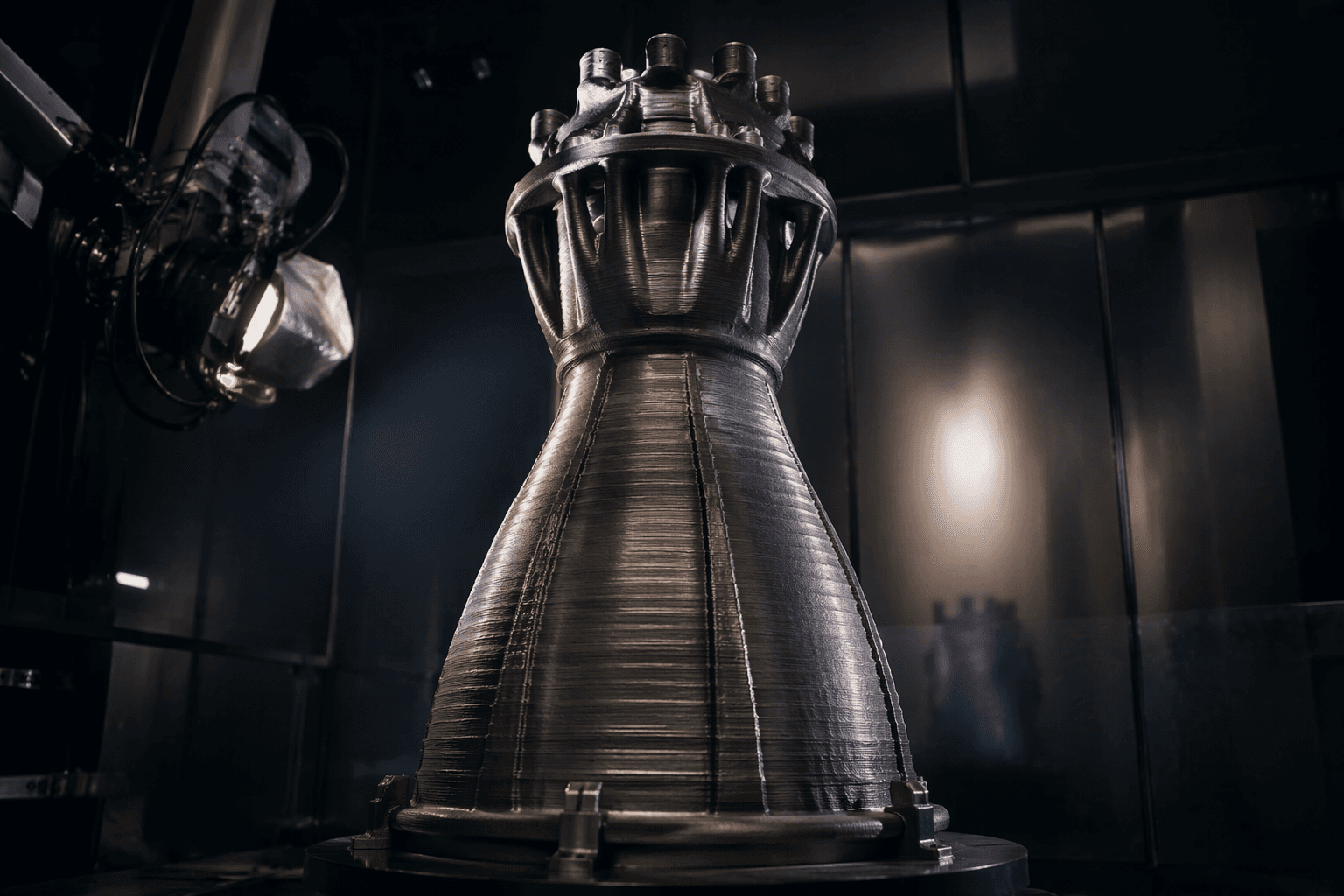
The XRA-2E5 is not a one-off stunt. LEAP 71 said the 200 kN design shares DNA with two earlier Noyron-generated aerospikes that it hot-fired over the previous 15 months, extending a program that had already validated smaller 20 kN engines in December 2025. The company has also said earlier methalox engines were designed, built and tested in less than three weeks, with one bell-nozzle engine reaching combustion efficiency above 93 percent.
Technically, the new engine is built for the upper stages of large reusable launch vehicles, where aerospikes are attractive because they hold efficiency from sea level to vacuum and support deep throttling. The XRA-2E5 also uses regenerative cooling, with the outer chamber cooled by cryogenic methane fuel and the central spike cooled by liquid oxygen. HBD said the print was possible on the HBD 800 because of its large 830 x 830 x 1250 mm build volume, but also noted that the aerospike geometry pushes metal additive manufacturing to its limits.

LEAP 71 and Aspire Space signed a formal development agreement at Dubai Airshow on November 19, 2025, in the presence of UAE Minister Dr. Ahmad Belhoul Al Falasi, and Aspire Space says the XRA-2E5 is the propulsion hardware milestone for its fully reusable Oryx spacecraft. For makers, the real shift is right there: software is no longer just drafting parts faster, it is generating printable rocket hardware that would be punishing to model by hand.
This article was produced by Prism’s automated news system from verified source data, official records, and press releases, then run through automated quality and moderation checks before publishing. The system is built and supervised by the people who set the standards it runs under. Read our full AI policy.
Did this article answer your question?