Made Smarter: University of Lancashire Hosts Hands-On 3D Printing Event
University of Lancashire hosted a hands-on 3D printing event with polymer and metal demonstrations for SMEs, showing how additive manufacturing cuts part count, waste and lead times.

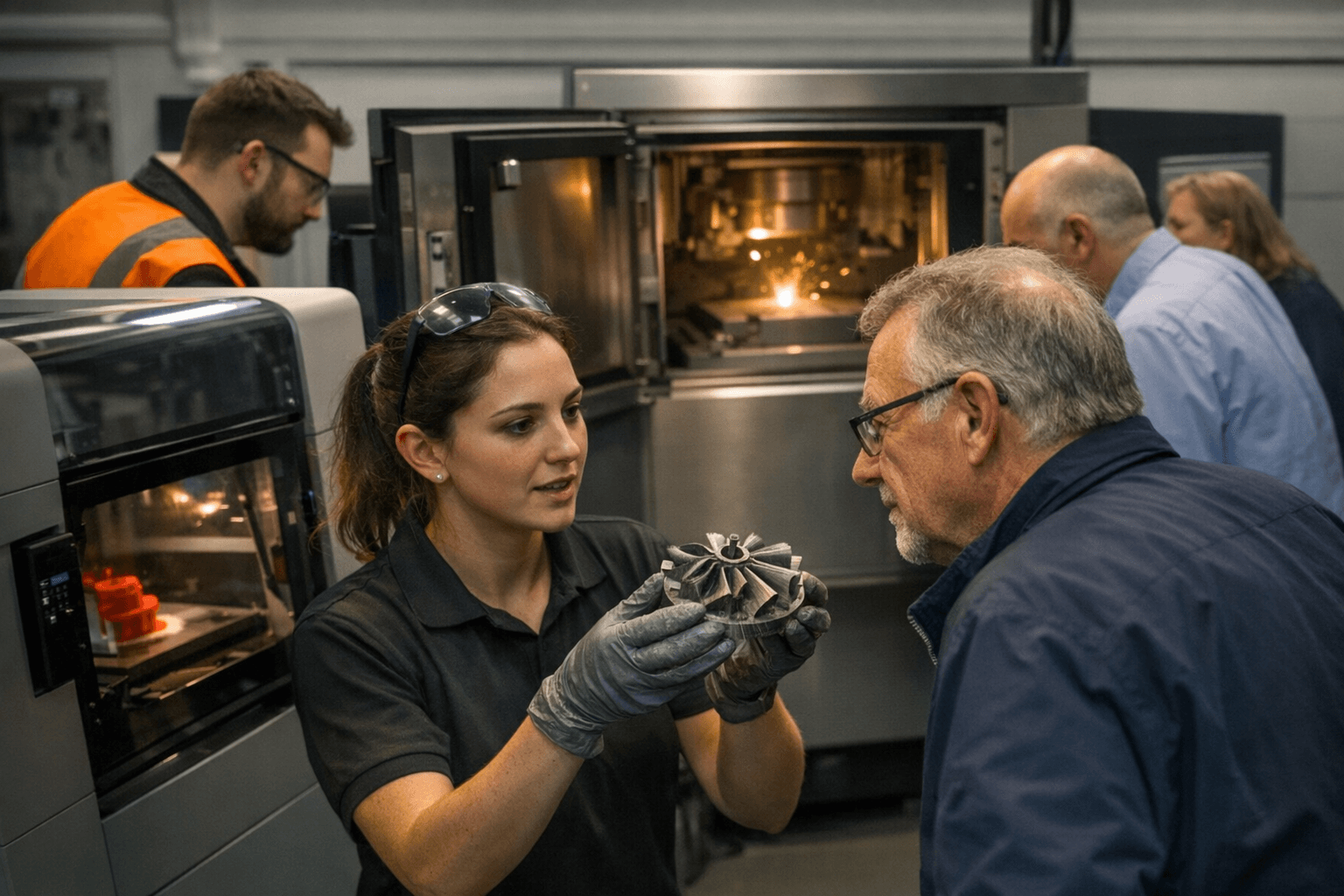
The Engineering Innovation Centre in Preston opened its doors to a half-day event that gave local manufacturers practical, hands-on exposure to additive manufacturing. Made Smarter - Discovering Additive Manufacturing brought polymer and metal 3D printing demonstrations, targeted at SME manufacturers, and illustrated real-world ways to reduce part count, cut waste and shorten lead times.
Presentations and demonstrations were led by a mix of local RTOs, academics and technology providers, and the programme concentrated on material selection, material qualification and case studies showing cost and productivity gains. Attendees moved from machine-side demonstrations through material workflows to examples of how additive techniques replaced multi-part assemblies with consolidated parts, lowering assembly labour and inventory costs.
For the maker community, the event translated industrial language into practical takeaways. Live demos of polymer and metal processes let visitors compare build times, surface finish trade-offs and downstream finishing needs. Sessions on qualification and material selection clarified the differences between consumer-grade filament and production polymers, and what is required to move from prototype prints to certified production components. Exhibitors also highlighted supplier relationships and local support routes that can shorten the learning curve when scaling a project beyond the workshop bench.
The half-day format favoured action over theory. Rather than long lectures, the schedule balanced shop-floor demos with case studies that quantified savings in lead time and part cost. That approach underscored familiar maker concerns: how to manage post-processing bottlenecks, how to validate a new alloy or polymer for a functional part, and how to justify the capital and operational costs of digital manufacturing. The presence of research and technology organisations provided direct pathways to testing, qualification and collaborative development without long procurement cycles.
Community relevance was clear: the event connected small manufacturers and independent makers with local expertise and potential supply-chain partners. For those looking to turn a successful print into a repeatable production run, the session offered concrete next steps, identifying suitable materials, understanding qualification milestones, and linking with regional technical support to tackle powder handling, machining or finishing requirements.
Made Smarter's Preston showcase aimed to move additive manufacturing out of the speculative stage and into practical deployment. For makers and small manufacturers, the immediate benefit was clearer routes to scale, tangible examples of cost and time savings, and contacts that make the jump from hobby project to production more achievable. Check the Engineering Innovation Centre for future sessions and local training if you want to follow up on the techniques and partnerships introduced at the event.
Know something we missed? Have a correction or additional information?
Submit a Tip