Maker Prints Plastic Steam Whistles That Echo Historic Locomotives
AeroKoi turned FDM parts and compressed air into locomotive-style whistles after a pre-chamber redesign finally made the tone sound right.
Plastic parts usually stop at display models, but AeroKoi pushed FDM into something far stranger: a whistle that can echo the sound of a steam locomotive. After months of iteration, the maker showed that compressed air, careful geometry, and a few sharp design choices could get much closer to historic railroad tone than a simple printed horn ever could.
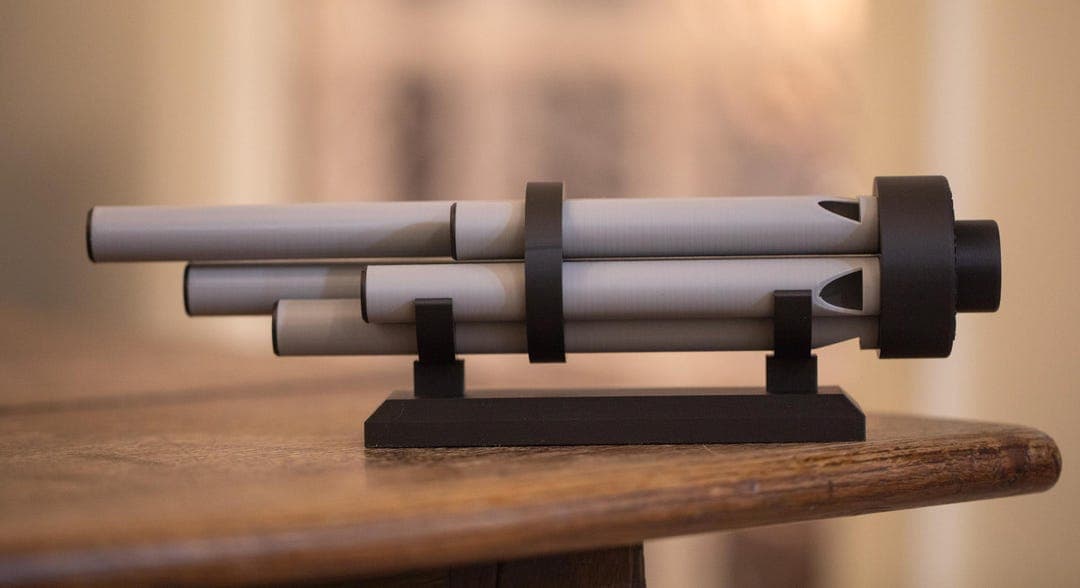
The project began with PVC-pipe attachments that behaved like basic single-tone whistles, a reminder of how steam whistles work at their simplest: an air jet crossing an edge. But locomotive whistles moved past that harsh single note and toward chime designs because the old sound was often criticized. AeroKoi’s first fully printed versions included a 2.5-inch four-chamber whistle and later a larger three-inch six-chamber build, printed upside down with a spiral outer form to reduce support material. Those early attempts widened the range, but the result still leaned more toward a signal horn than a train whistle.
The breakthrough came when AeroKoi changed the air path. Instead of sending air straight to the sound gap, the design added a pre-chamber so pressure could collect and expand before striking the edge. That small change made the tone far more convincing. Because plastic did not need to survive real steam, AeroKoi could also sharpen the bell edge more aggressively than metal would safely allow, a detail that helped the whistle lock into a more authentic response.
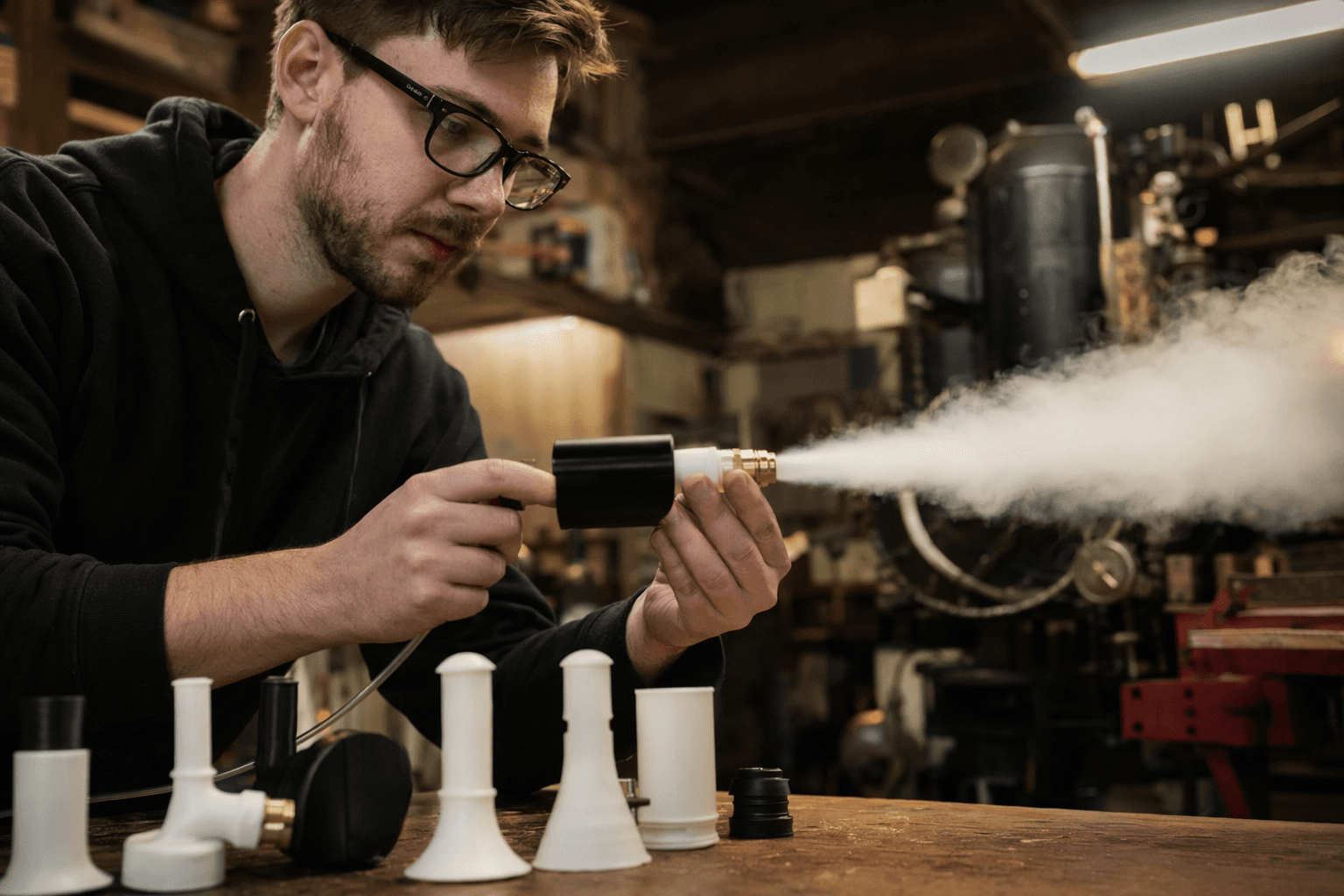
The finished family of prints included scaled-down replicas inspired by real locomotive whistles, including Santa Fe 6 Chime and Northern Pacific 5 Chime versions around ten centimeters in diameter, plus a larger Big Boy-style build that needed a stronger half-inch connection because of the air demand. AeroKoi published the models on Thingiverse on May 3, 2026, turning the project into a downloadable challenge rather than a one-off stunt. The listings warn that the whistles are for compressed air only, tested only up to 120 psi, and should not be used with steam. They also recommend hand, eye, and ear protection.
That safety note matters, because railroad whistles have always been about distance and urgency. The Federal Railroad Administration says horns and whistles have been used as a universal safety precaution since railroads began, especially at grade crossings, and railroad history credits engineer Adrian Stephens with the first train whistle in the mid-to-late 1800s. AeroKoi’s result shows why projects like this matter in 3D printing: they prove the machine can do more than make something look historic. It can make something sound alive.
This article was produced by Prism’s automated news system from verified source data, official records, and press releases, then run through automated quality and moderation checks before publishing. The system is built and supervised by the people who set the standards it runs under. Read our full AI policy.
Did this article answer your question?