New ultrasound-guided 3D printing could create implants inside the body
Ultrasound now does the job of a printer nozzle inside the body, heating a target by about 5 C to lock implants, drugs, and cells in place.
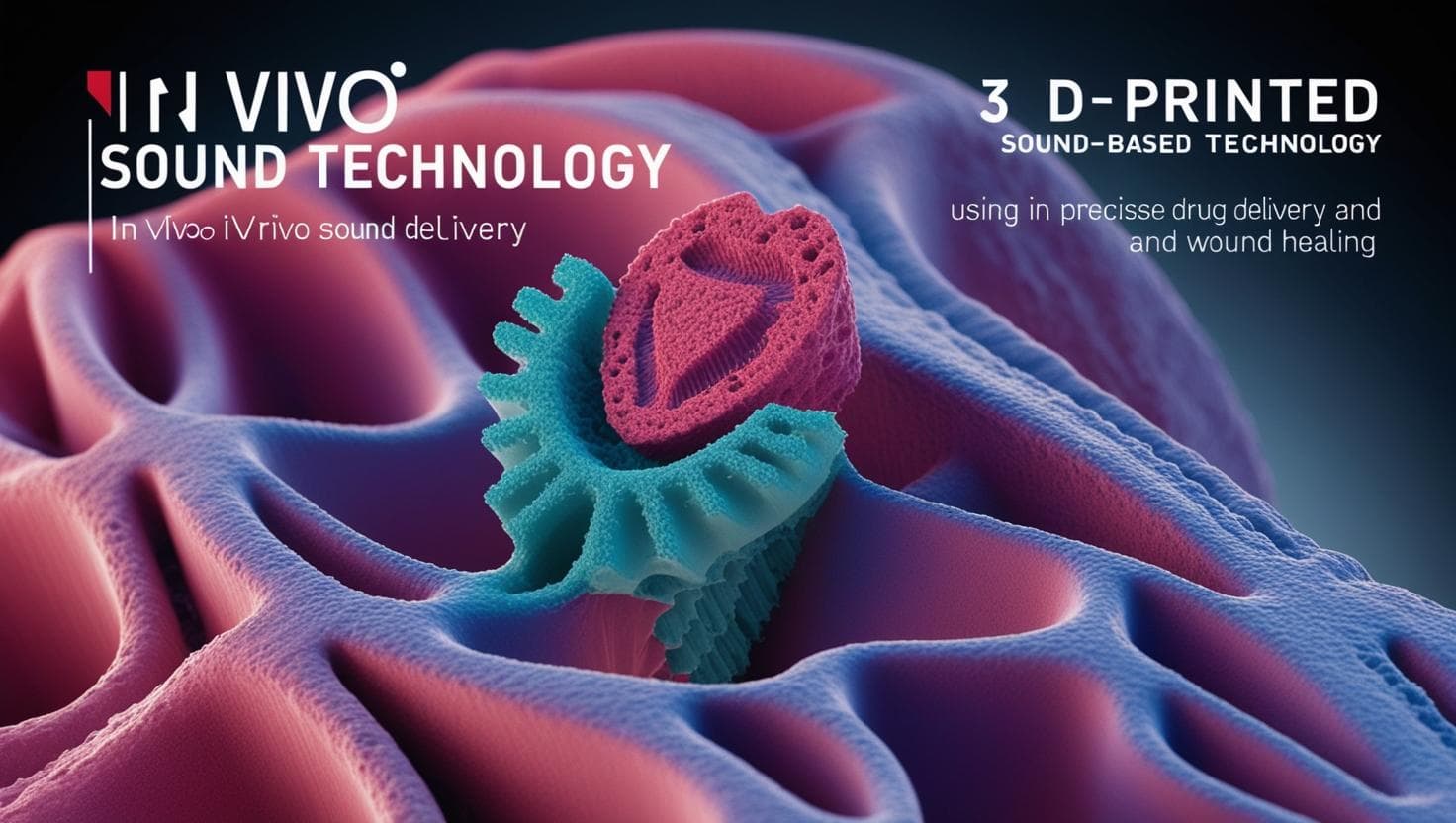
For years, the big limiter in bioprinting has been simple: you can print a scaffold on the bench, but getting it into deep tissue usually means surgery. A team led by Elham Davoodi and Wei Gao has now pushed the workflow into a stranger place entirely, using focused ultrasound and real-time imaging to trigger 3D printing inside the body.
The method, called deep tissue in vivo sound printing, or DISP, was detailed in Science on May 8, 2025. Instead of building an implant first and then trying to fit it in, DISP delivers ultrasound-responsive bioinks that cross-link only when a targeted spot is hit with focused sound. Caltech said the ultrasound can raise the temperature in that region by about 5 degrees Celsius, enough to trigger printing where the material is needed and nowhere else.
The bioinks are doing the heavy lifting here. The system uses cross-linking-agent-loaded, low-temperature-sensitive liposomes, along with gas vesicles that serve as ultrasound imaging contrast agents. That combination lets the team see the target, steer the beam, and then lock the material in place on demand. In practice, that opens the door to cell delivery, drug delivery, localization of bioelectric materials, and wound healing, all without the usual exposed-tissue setup that has boxed in earlier bioprinting methods.

That shift matters because it moves additive manufacturing out of the familiar desktop-printer mental model and into deep tissue, where access is the real problem. The paper builds on a 2023 Science study that showed ultrasound-activated 3D printing in opaque media at voxel resolution of about 100 micrometers, with the idea that it could work inside living tissue. DISP takes that idea from ex vivo demonstrations to in vivo fabrication in deep tissue.
The author list spans Caltech, UCLA, the University of Utah, and the Terasaki Institute for Biomedical Innovation, with names including Paul S. Weiss, Jason Williams, Hossein Montazerian, Jiahong Li, Xiaotian Ma, Sunho Lee, Jee Won Yang, and Ali Khademhosseini. Caltech says the next step could be machine learning to localize and aim focused ultrasound more precisely, and even autonomous printing in moving organs like a beating heart. That is the real leap here: not just printing smaller, but printing where a conventional nozzle never could go.
This article was produced by Prism’s automated news system from verified source data, official records, and press releases, then run through automated quality and moderation checks before publishing. The system is built and supervised by the people who set the standards it runs under. Read our full AI policy.
Did this article answer your question?