Newcomer TOP.E brings five-axis FFF printer to Kickstarter
TOP.E’s R1 paired five-axis motion with a heated enclosure and four-spool color support, but the real test was whether it cut supports on awkward parts.
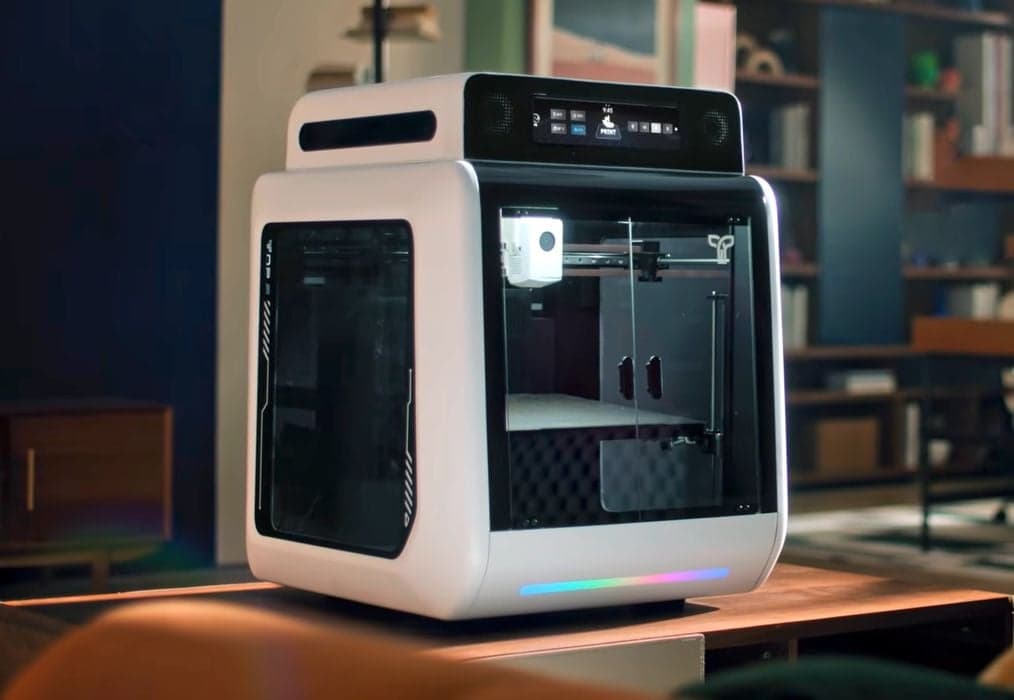
A five-axis FFF printer was an eye-catcher, but TOP.E’s R1 mattered for one practical reason: it tried to reduce supports on shapes that standard X-Y-Z machines struggle to handle. The newcomer had lined up the large enclosed system for Kickstarter, and its pitch was not just speed or multicolor printing, but a mechanical trick that let the build plate tilt and change the way the nozzle met awkward geometry.
That mattered because TOP.E was not a familiar name in desktop 3D printing. The machine came from High Energy Numerical Manufacturing (Xi'an) Technology Co., Ltd., a company founded in 2021 in Xi'an, Shaanxi Province, with a business centered on solid-state battery production lines and dry electrode production lines. That industrial background made the Kickstarter route feel ambitious, because it asked hobby buyers to trust a company better known for manufacturing equipment than for printers. TOP.E was already asking for a $30 deposit to reserve access to a Kickstarter VIP price.
The R1’s own specs pushed well beyond a typical enclosed FFF box. TOP.E listed a 350 x 340 x 320 mm build volume, a chamber heated to 60 C, a hot end rated to 350 C, print speeds up to 500 mm/s, dual cameras, automated calibration, HEPA filtration, a visible status light bar, a cloud-based slicer, optional nozzles, and a four-spool hub. TOP.E also showed demo videos for five-axis printing, including a helical pillar, along with text-to-3D generation and printing. On paper, it looked like a machine aimed at users who want more than a faster bedslinger.
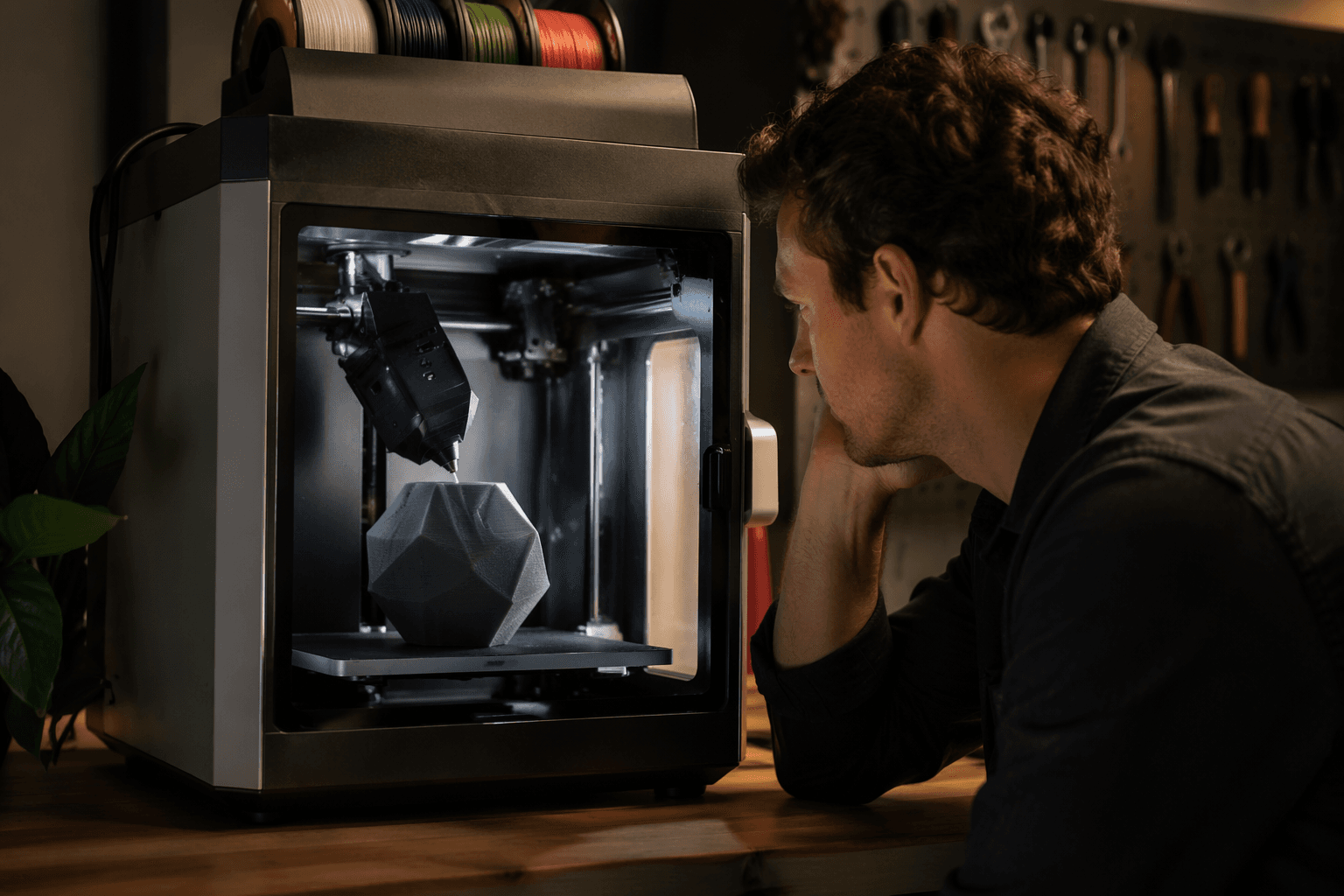
The real question was not whether five axes looked cool on video. Coverage around the R1 put the bed tilt at about 30 degrees, while other reporting said the plate could tip only 17 degrees, yet TOP.E said the machine could handle 62-degree overhangs without supports. That is the kind of claim that only matters if the workflow holds together, calibration stays manageable, and material support does not become a headache. Independent research on support-free five-axis additive manufacturing found print-time reductions of 13.76% to 26.93% and material savings of 17.24% to 29.29% in tested cases, which is the benchmark TOP.E had to meet. If the R1 can turn that into fewer supports, less cleanup, and better surface quality on awkward parts, it will be a real desktop manufacturing leap. If it cannot, five-axis printing will remain the sort of spec that looks smarter on a reservation page than it does on a bench.
This article was produced by Prism’s automated news system from verified source data, official records, and press releases, then run through automated quality and moderation checks before publishing. The system is built and supervised by the people who set the standards it runs under. Read our full AI policy.
Did this article answer your question?