Old 3D printers get second lives as recycled filament makers
Your old printer can do more than collect dust: turn it into a PET filament maker, a foam cutter, or a motion platform before it becomes e-waste.
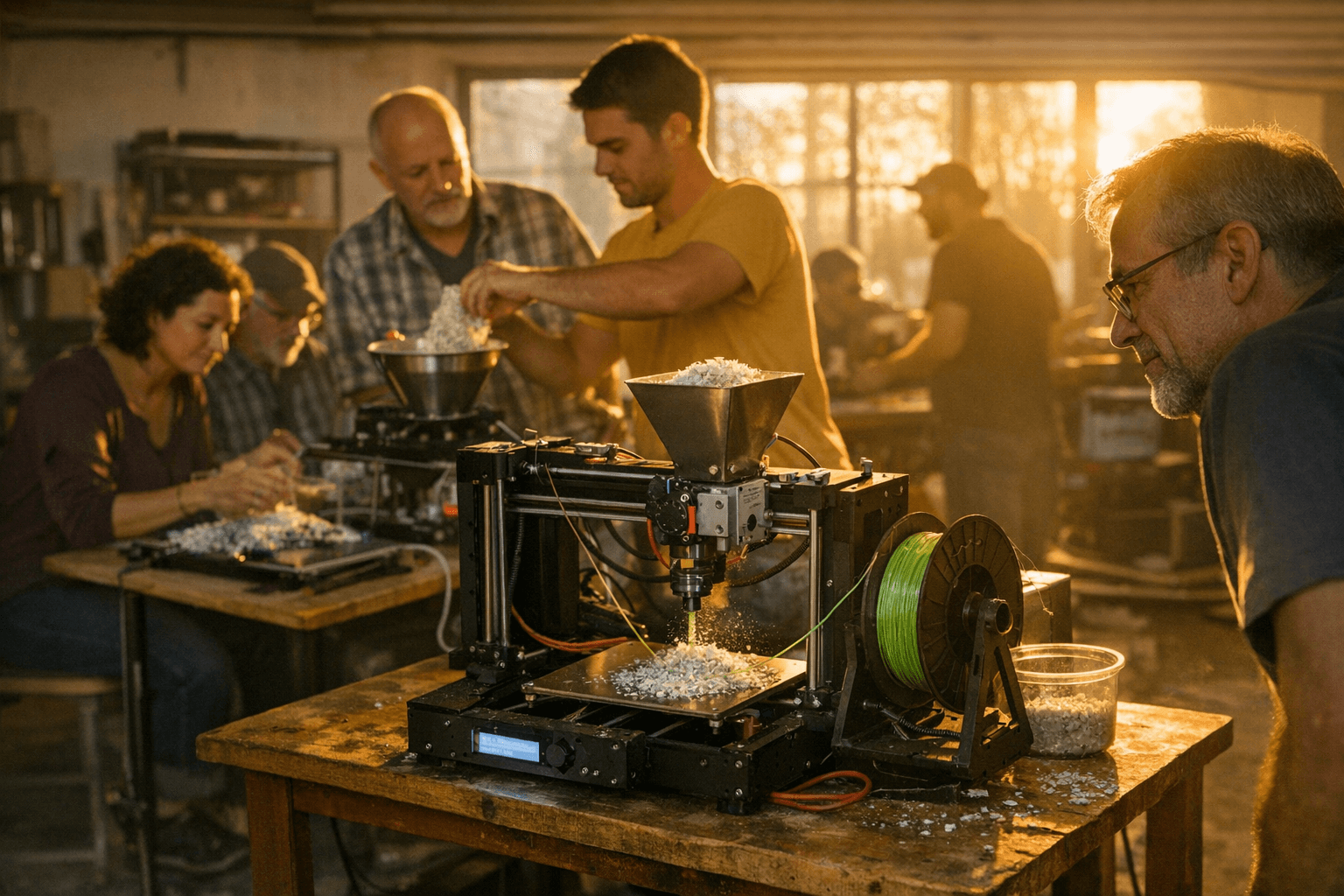
The best upgrade for an old printer is often a new job
Your old printer does not need to become shelf clutter the minute a faster machine takes its place. If the frame still moves cleanly and the hardware still has life in it, that box of rails, steppers, and belts can become something more useful than a backup you never power on.
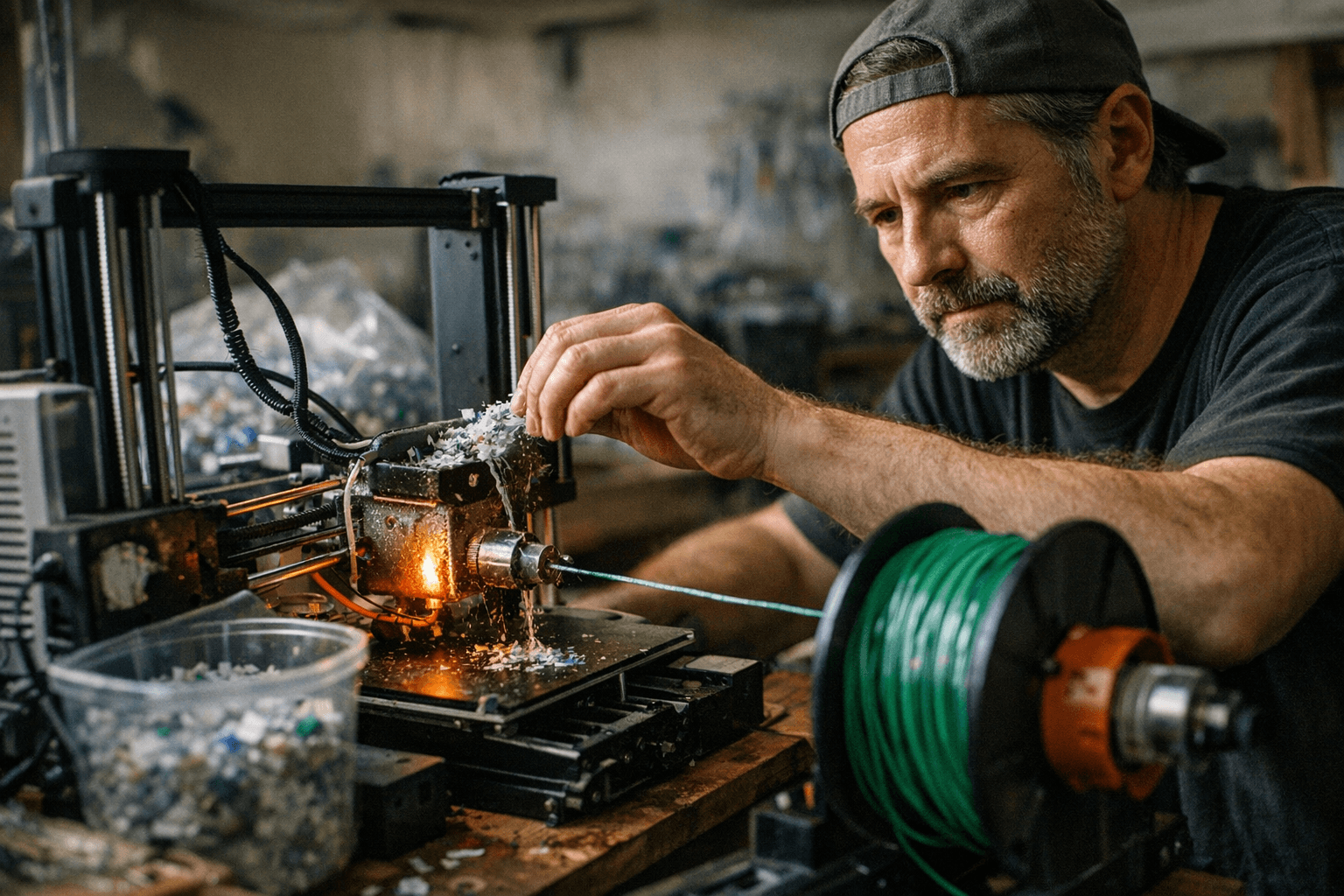
That is the core idea behind Recreator3D, which treats a retired printer as a motion platform for a different kind of fabrication. Instead of chasing sentimentality, it asks a much better question: what can this machine still do well enough to save money, reduce waste, or unlock a new workshop capability?
From printer frame to filament maker
Recreator3D describes itself as a low-cost DIY pultrusion unit for turning PET #1 plastic bottles into DIY filament. The key difference from a normal extruder is the process: it does not melt pellets and push them through a hot end. It pulls prepared bottle stock through a modified setup, then winds the resulting strand onto a spool.
That matters because it turns a tired printer into a machine that feeds the rest of your hobby. The MK3 Lite & Pro page says the compact version can strip, reform, color, and spool in one continuous pull cycle, and it comes in under $220. For a lot of garages and small shops, that is the kind of price point that makes a conversion feel realistic instead of theatrical.
The practical appeal is simple. If you have already upgraded your main printer, the older one can keep earning its keep instead of drifting toward e-waste. Recreator3D’s MK5 kit page makes that argument plainly, and it adds another useful reality check: unrefurbished returned printers are described there as extremely cheap on eBay, around $50 to $100. Once a machine has fallen to that level, the question stops being whether it is valuable and starts being whether it is valuable in the same role.
Why the bottle-to-filament idea is more than a gimmick
This is not a brand-new stunt dreamed up for social media. Hackaday covered PETBot in 2021 and described it as slicing PET bottles into tape before turning that material into filament, and Recreator3D says earlier PETBot efforts helped inspire Josh Taylor’s open-source pultrusion approach.
The technical case is getting stronger too. A 2024 Springer paper reported that 10 mm PET strips produced 1.75 mm filament with a mean diameter of 1.80 mm and tolerances of -0.03 mm and +0.04 mm at 245 C. Those are serious numbers for a bottle-to-filament workflow, not the kind of rough output that only makes sense as a novelty.
A separate 2024 sustainability paper went a step further and argued that continued research and standardization could make recycled-PET filament a meaningful part of the 3D-printing future. That lines up with what makers want from a reused printer: not just a clever hack, but repeatable output you can actually feed into the rest of the shop.
The community around the build is part of the value
Make: says it first encountered Josh Taylor and Recreator3D at the East Coast RepRap Festival in fall 2022, which is fitting because that show was built for exactly this sort of open-source hardware problem-solving. The 2022 event in Bel Air, Maryland, at Harford Community College, drew about 1,600 attendees, more than 60 corporate sponsors, and almost 50 exhibitors. It also marked a post-pandemic return to in-person show-and-tell for open-source printer builders, which gave the whole scene a visible boost.
That community matters because conversion projects live or die on iteration. Recreator3D’s manual says Josh Taylor brought the project to ERRF 2022 to promote turning waste plastic into filament, and it points builders to the PET Pultruders United Facebook group. The Printables listing for the MK5 kit also points users to a Discord invite, which is exactly the sort of support network these builds need when a homemade feed path, a bottle strip, or a spool tension issue refuses to behave.
Recreator3D’s own kit story also shows how these ideas evolve. The MK5 concept originally focused on Ender 3 parts, then broadened into a more universal kit. The company also says the MK5Kit Mini is in development with LDO Motors. That shift matters because it tells you this is not a one-off museum piece. It is a living conversion platform that keeps absorbing whatever the community learns next.
When upcycling saves money, and when it just delays the inevitable
Here is the blunt version: upcycling is worth it when the old printer still has good bones. A square frame, reliable motion, and serviceable electronics can be worth far more as a second machine than as a weak resale listing. If the printer has already been upgraded and you are staring at a decent machine that just no longer deserves prime bench space, a filament-maker conversion can be a very smart buy.
But upcycling can also become procrastination with screws. If the machine is badly worn, the belts are shot, the carriage binds, or the electronics are flaky, you are not saving money by bolting on a new purpose. You are just delaying the decision to part it out, recycle it, or move on.
The sweet spot is a printer that is obsolete as a daily printer but still mechanically honest. That is where Recreator3D’s logic makes sense: use the motion system you already paid for, then give it a job that benefits from steady movement more than pristine print quality.
A second life does not have to mean filament
Recreator3D is the headline conversion, but it is not the only one. Hackaday and Instructables both show a well-established maker pattern of turning an old 3D printer into a CNC hot-wire foam cutter. That swap uses the same basic assets, rails, motors, and control logic, but points them at a completely different fabrication task.
That is the larger lesson hiding inside these projects. A retired printer is rarely useless all at once. Sometimes it becomes a parts donor. Sometimes it becomes a filament machine. Sometimes it becomes a foam cutter or a test platform for whatever idea you want to prove next. The smartest move is not to keep every old printer printing forever. It is to make sure the machine keeps doing real work, on your terms, before it turns into dead weight.
This article was produced by Prism’s automated news system from verified source data, official records, and press releases, then run through automated quality and moderation checks before publishing. The system is built and supervised by the people who set the standards it runs under. Read our full AI policy.
Did this article answer your question?