Open-Source Tool Turns SVG Files Into Dirt-Cheap 3D Printed Stencils
An open-source SVG-to-stencil generator slashes PCB solder stencil costs from $20 to just one cent.
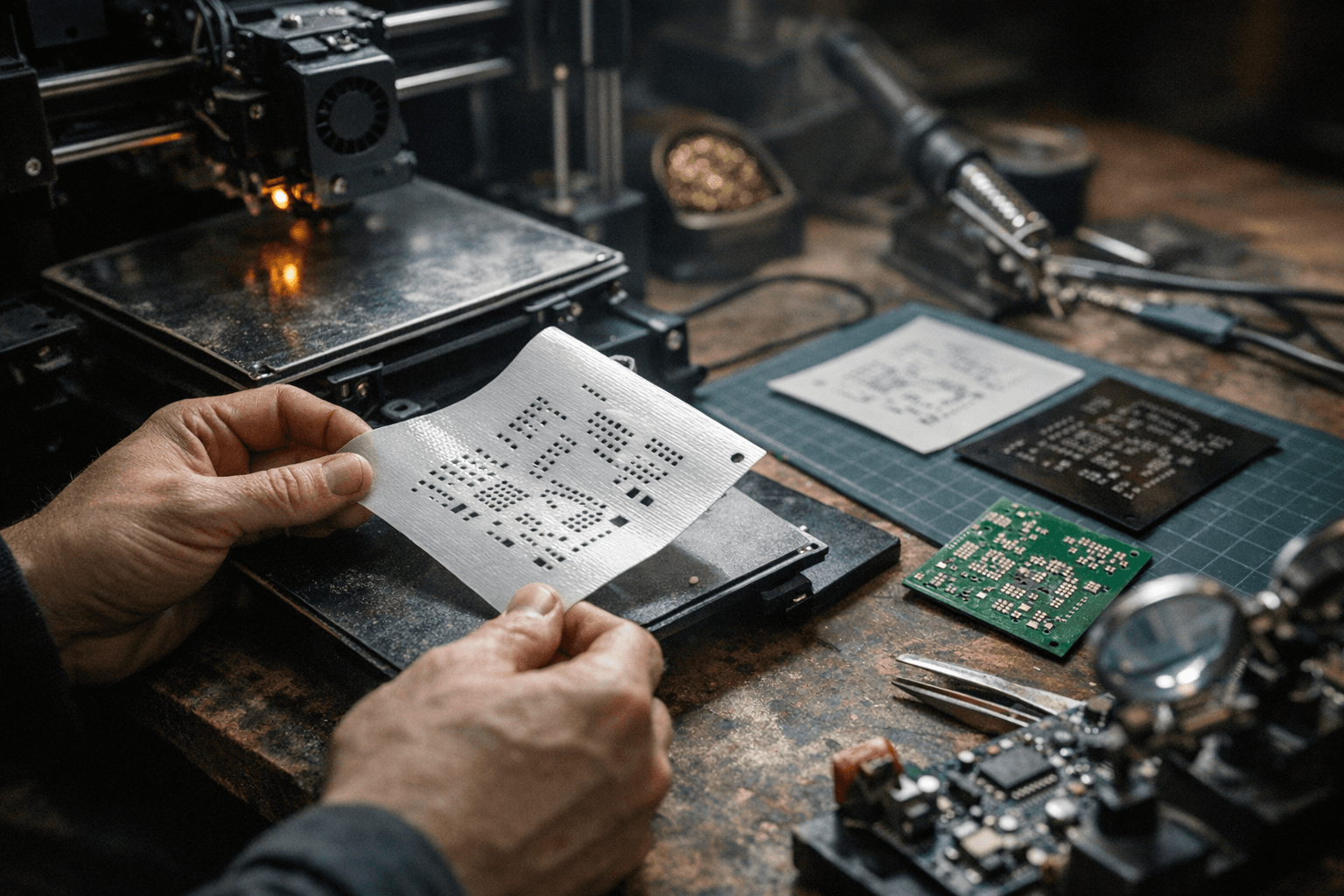
A new open-source generator that converts SVG files into 3D printable PCB solder stencils has cut production costs from $20 down to $0.01, making small-batch electronics prototyping dramatically more accessible to makers working outside professional fab environments.
The tool takes standard SVG files and produces stencil geometry optimized for FDM printing, bypassing the commercial laser-cut Mylar stencils that have long been the default for applying solder paste to PCBs. At $20 per stencil from typical suppliers, iterating on a prototype design gets expensive fast. At a penny per print, you can afford to remake the stencil every time you tweak a footprint.
That 2,000x cost reduction is the kind of number that reshuffles what's practical at the hobbyist and small-studio scale. Solder paste stencils are a critical step in surface-mount assembly: the stencil sits over the bare PCB, paste gets squeegeed through the apertures, and then components are placed before reflow. Getting that stencil wrong means wasted paste and misaligned joints, which is exactly why makers have historically just paid for the professional version rather than improvise. A printable alternative that's genuinely viable changes that calculus entirely.
The generator's SVG input format is significant. Most PCB design tools, including KiCad, can export the paste layer directly as an SVG, meaning the workflow from schematic to printed stencil requires no intermediate conversion step or specialized file handling. That kind of low-friction pipeline is what separates a tool people actually use from one that sits bookmarked and forgotten.
Viable for small-batch prototyping is the key qualifier here. High-volume production still demands the dimensional precision and durability of metal stencils. But for the maker who's assembling five or ten boards to validate a design, a 3D printed stencil that costs a cent and prints in under an hour represents a genuinely useful rung on the prototyping ladder that didn't exist before.
This article was produced by Prism’s automated news system from verified source data, official records, and press releases, then run through automated quality and moderation checks before publishing. The system is built and supervised by the people who set the standards it runs under. Read our full AI policy.
Did this article answer your question?