OpenCAL brings lightning-fast computed axial lithography to makers
OpenCAL turns computed axial lithography from a lab curiosity into an open machine makers can study, rebuild, and push toward support-free, ultra-fast prints.

OpenCAL makes a strange promise feel practical: a part appears inside a spinning vat, not layer by layer, but all at once. Computed axial lithography, or CAL, replaces the usual nozzle path or stacked slices with projected light that cures a 3D shape inside photopolymer resin, and the result is the kind of build that looks closer to a replicator trick than to ordinary 3D printing.
How CAL works, in plain maker terms
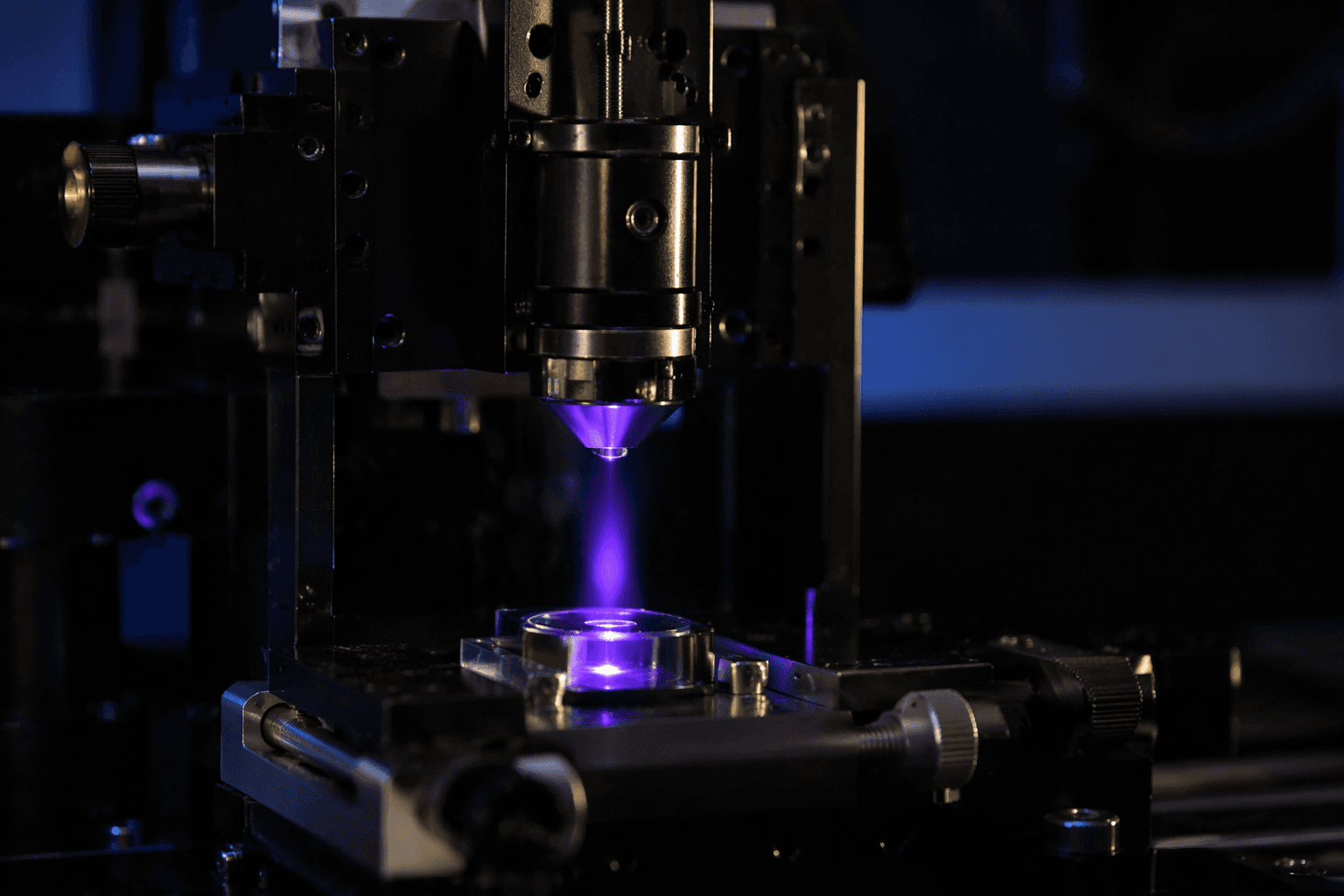
The core idea is beautifully odd. Instead of tracing a cross-section, CAL projects patterned light into a rotating volume of resin, and the light dose is synthesized tomographically until the object exists throughout the vat. Berkeley’s team describes it as forming all points of a 3D object simultaneously, which is why the process can produce centimeter-scale parts in tens of seconds, with some prints forming in less than a minute.
That speed changes the feel of the workflow. The original Science paper reported print times of 30 to 120 seconds for diverse centimeter-scale objects, and the Berkeley project page says CAL can use roughly 10 to 100 times less optical energy than comparable industry-standard processes. For hobby readers used to watching FDM machines crawl through infill or resin printers peel through layer after layer, that is a serious leap in mechanism, not just a modest spec bump.
Why OpenCAL matters
CAL has always been one of the most exciting ideas in additive manufacturing, but it was also one of the least reachable. OpenCAL is the move that pushes it out of the closed lab lane and into the hands of people who want to understand it, build it, and experiment with it. The project was created because multiple research groups wanted CAL printers for materials work and new applications, and now the hardware and software live in separate GitHub repositories instead of disappearing into private development threads.
That open structure matters because it lowers the barrier in a very specific way: you are not just looking at a proof-of-concept video, you are getting a documented system built from commercially available components and standard rapid prototyping tools. The 2025 paper frames OpenCAL as a low-cost CAL-based printing and post-processing platform meant for academic makerspaces and hands-on education in photopolymer science and computational imaging. It also says the system helps undergraduate and graduate researchers get their hands on volumetric manufacturing without needing to recreate a national-lab setup from scratch.
The access model is open, but not unlimited. OpenCAL is free for non-profit, research, and educational uses under GPL3, while commercial use still requires case-by-case licensing. That makes the project feel like the kind of open hardware that really does invite tinkering, but still belongs in a serious research conversation.
What the machine actually looks like on the bench
OpenCAL is designed to run headless on a Raspberry Pi 5, with a hardware LCD and encoder interface for local control. That choice says a lot about the project’s priorities. It is not trying to be a polished consumer appliance; it is trying to be understandable, reproducible, and practical for builders who want to see the whole stack.
The hardware philosophy is equally direct. The CAL organization describes configuration flexibility using commercially available optical components and 3D printed parts, which makes the machine feel less like a bespoke lab artifact and more like a platform others can remix. One of the most important workflow changes is that CAL avoids the usual FEP-vat routine and instead relies on a rotating resin vessel. That is part of why the process can move so fast, and it is also part of why the geometry story gets so interesting.
Because the object is cured volumetrically, CAL opens the door to shapes that are awkward in layer-based printing. The original research reported printing around preexisting solid objects and enabling over-printing, the kind of behavior that starts to resemble insert molding or overmolding more than conventional desktop printing. For makers, that is where the real novelty lives: not just a faster print, but a different relationship between the part, the resin, and the geometry being built.
The post-processing piece is part of the story
OpenCAL does not stop at exposure. The 2025 paper describes a paired post-processing path with standardized solvent-based removal of uncured resin and a centrifugal cleaning module for better material recovery. That is important because volumetric printing is only half the battle. If the build comes out fast but the cleanup is messy, opaque, or unsafe, the machine remains a demo rather than a tool.
The broader appeal of OpenCAL is that it lets you study several disciplines at once: optics, resin chemistry, computational imaging, and machine control. It also normalizes the idea that meaningful 3D printing innovation can come from geometry and physics, not only from faster bedslingers or ever more elaborate multi-material FDM systems. In that sense, OpenCAL is a maker project with a research backbone, not a novelty project looking for a press photo.
What still stands between curiosity and a garage-built CAL machine
The barriers are real. Optics are unforgiving, resin handling is not casual, and calibration matters more here than it does in a lot of familiar desktop workflows. A CAL setup depends on how precisely the projected light dose matches the resin behavior as the vat turns, so misalignment or imperfect optical tuning can wreck the part before it ever fully appears.
Material handling is just as serious. The Hackaday coverage notes the need to respect resin safety, and that warning fits the technology. This is still photopolymer work, which means gloves, cleanup discipline, and a healthy respect for uncured material are part of the price of admission. Add in the need to control a rotating volume, a projector path, and the software stack that drives it all, and it becomes clear that OpenCAL is accessible in the open-source sense, not effortless in the hobby sense.
That tension is exactly what makes the project compelling. OpenCAL turns a once-remote process into something makers can inspect and build around, but it does not pretend the hard parts have vanished. The machine still asks for precision, patience, and respect for the chemistry. What it offers in return is the thrill of watching an object emerge in seconds, inside a glowing vat, as if the future briefly slipped out of the lab and landed on the workbench.
This article was produced by Prism’s automated news system from verified source data, official records, and press releases, then run through automated quality and moderation checks before publishing. The system is built and supervised by the people who set the standards it runs under. Read our full AI policy.
Know something we missed? Have a correction or additional information?
Submit a Tip